Why did the GDP of the Song Dynasty account for 75% of the world’s total, but it still couldn’t beat the enemy in the north?

Generally, dynasties in history can maintain relatively abundant martial arts from the early days to the peak of their national strength, but in the Song Dynasty, the population accounted for 35% of the world and the GDP accounted for 75% of the world. From today’s point of view, it is a standard world power, but it seems that it still can’t compete with the Liao country in the north. What caused this rare situation in history?

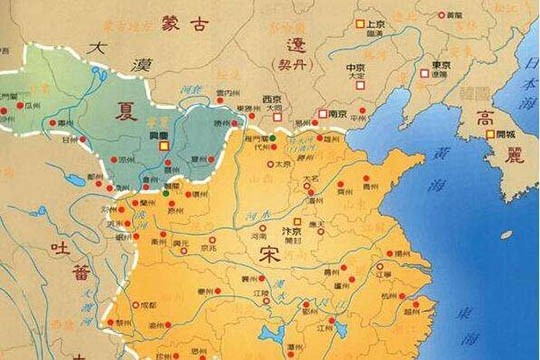
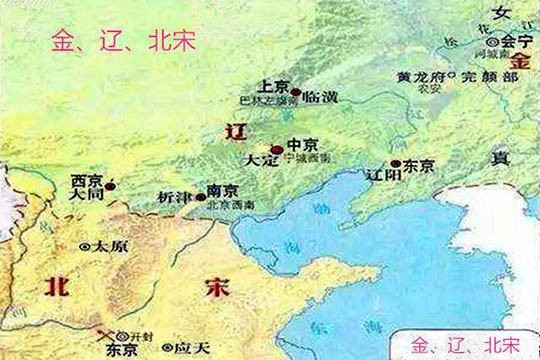
Full-domain map of northern song dynasty

1. The right to release soldiers by drinking a glass of wine opened up the armed policy of the Song Dynasty, which was different from that of the previous generation.

In the early years of the Northern Song Dynasty, the army could not defeat Liao, or it was impossible to defeat Liao after Zhao Kuangyin’s death. This is mainly because the Northern Song Dynasty and Liao State were fundamentally under two different systems. The difference in system determines the strength of their army.

The Liao army or the military organization of the Khitans did not fight against the Central Plains army until the establishment of the Northern Song Dynasty. Not to mention the early tribal ambush in the Tang Dynasty, there were several records of Qidan troops going south to conquer the Central Plains in the Five Dynasties. In the confrontation with the five dynasties warlords at that time, both sides won and lost. However, the Liao army never occupied an absolute advantage, or gained a great advantage in a certain aspect. There is even an embarrassing record that after the warlord troops surrounded the five dynasties, they were rushed out of the position by their opponents and defeated the whole army.

2. In the Five Dynasties, the Khitans fought against the Central Plains Army.

However, it was also in the Five Dynasties that warlords or local military groups of our time all posed a great threat to centralization. Therefore, the political development of the Five Dynasties gradually developed from the initial late Tang model to the Northern Song model. Militarily, this development path is concentrated in the deployment of local elite soldiers to serve in the imperial army in the capital. The weakness of the border guards after the Northern Song Dynasty was the final result of this evolutionary route.

3. The areas that traditionally produced high-quality soldiers were not in the actual control area of Song Dynasty.

On the other hand, as several border regions with strong fighting in the Tang Dynasty, the Northern Song Dynasty basically didn’t touch any of them. In addition to occupying part of Hedong area, Youzhou and the whole Hetao are not under their actual control. These places are exactly the places that are the easiest to produce high-quality soldiers from the Han Dynasty to the Tang Dynasty. Because the local people have lived on the border between nomadic and farming culture for a long time, they are good at fighting and martial arts, and their folk customs are extremely tough. A large number of defectors from Central Asia and grasslands will also be stationed in the local area. These conditions are beyond the reach of mainland military sources.

The status of soldiers was suppressed to a very low level in Song Dynasty, and they were like slaves.

Since the military base is not good, and the military power and status of generals are not guaranteed, the army naturally cannot have good combat effectiveness. Even if it inherited the imperial army left by Zhao Kuangyin and the remaining Shatuo cavalry at that time, it would soon take the initiative to degenerate under this repressive system.

5. Liao country is also centralized, but it is more like the Federation.

On this basis, the Central Army of Liao State was established, including a large number of cavalry units and corresponding light cavalry forces. There are also many original Qidan aristocratic troops in the local area, which exist in the form of similar private armies. However, these private armies have never become subversive forces to overthrow the legalists, which is the advantage of the Liao federal system. Ordinary local soldiers are also feudal cavalry who depend on land for their livelihood. People with a certain status will have a small number of vassals. In battle, they will form a cavalry unit with the smallest unit.

6. Local autonomy provided Liao with a strong local army.

As for the local troops composed of other ethnic groups, including Han, Xi, Bohai, Mongolian and some Shatuo people, they all have their own infantry and cavalry organizations. The former may rely on cities and villages as units, while the latter may exist as units of cavalry or feudal leaders. When they faced Song Jun, they were often willing to play for Liao. In fact, it is also protecting its own way of life from being eroded by the more northern song dynasty.

These are the reasons why the Northern Song Dynasty could not defeat the Liao army in the founding of the People’s Republic of China. This reason is also accompanied by all the periods when the two dynasties coexisted, even when the Liao regime was wiped out by the Jin Jurchen.

After 14 years, CCTV will broadcast Japanese animation again. How many opportunities will Japanese entertainment have?

Author | Li Na Mao

Editor | Li Chunhui


In the first year of 2021, China, Japan and South Korea ushered in a rare "honeymoon period of three countries" in the field of cultural cooperation.-In the past, the familiar spell of "China-Japan friendship depends on South Korea" and "China-South Korea friendship depends on Japan" was finally broken, and this situation can be regarded as a long-lived sight.


The clear signal was sent by CCTV. On this side, CCTV is holding hands with KBS, only to hear that the "Korean restriction order" whose name is not seen has finally been lifted. It is even more legendary that Korean movies will land in domestic cinemas, and the first one is the new work of former national husband Song Joong Ki;


On the other hand, CCTV introduced Japanese animation again after a lapse of 14 years, and the Chinese version of "Working Cell" caused a heated discussion on Weibo because of its magical northeast dialect. The film version of "Working Cell" has also been confirmed, and the schedule is to be determined.


In the folk, the initial rating stage of the two men’s team draft "Youth with You 3" and "Creation Camp 4" was broadcast one after another. The number of Japanese players in "Creation 4" was large and strong, and many viewers said that "give more debut positions, don’t want overseas pearls to be dusty"; Although there is only one Japanese player in "Qing 3", a song "Sudden Love" (the theme song of "Tokyo Love Story") also attracted my sister’s sympathy.


However, it should not be ignored that while the official clearly released the friendly signal, the friction between Chinese and Korean netizens continued. With the popularity of "Chuang 4", some domestic audiences expressed dissatisfaction with Japanese players out of national feelings.


And unlike the Korean Wave, which actively explored the European and American markets after leaving China,Japanese entertainment, which led the Asian entertainment trend in the 1980s and 1990s, is just like Japan’s "lost decade" and "lost twenty years" in the economic field, and the cultural field is also in a state of malaise.In the past decade, it can only be said that the enclosure has sprouted, and the decline in external influence is an indisputable fact.


China’s post-80s and post-90s generations are undoubtedly deeply influenced by Japanese culture, but how much love can we have when we return to the Japanese entertainment market in China 14 years later?


Fourteen years of reunion, animation myth is difficult to continue.


Japanese media generally regard the return of "Working Cell" to CCTV after 14 years as a great benefit, and some optimists say that with the broadcast of "Working Cell", the scene of Japanese animation sweeping Chinese mainland in that year will reappear.


However, I’m afraid "Working Cell" will disappoint them. 


On February 13th, "Working Cell" premiered on six CCTV movie channels. Although it is a Spring Festival file+winter vacation file, the new broadcast has not caused much discussion. Many of them have already seen the original version of "The Second Prickling Ape", saying that it is better not to read the imported version if it must be deleted.


It was not until the last day of February that a blogger edited the dubbing part of "Working Cell" in Northeast China, and this animation caused widespread concern and discussion among netizens. From the broadcast to the topic, "Working Cell" has been fermented for two weeks, and the results are not bright.


Japanese animation was once invincible in China, which was related to the dividend of the times. In 1980s, with the honeymoon period of Sino-Japanese relations, a large number of Japanese audio-visual products were introduced to China. Animations such as saint seiya the Saint, Slam Dunk Master and Detective Conan have become childhood memories after 1980s and 1990s.


At that time, China’s animation, although there were many excellent works such as Hulu Brothers, Shunk and Beta, was on the low side for the whole age group, and the painting style was somewhat old-fashioned in the eyes of teenagers at that time. Japanese anime, which focuses on teenagers and even all ages, quickly captured the hearts of teenagers.


At the end of 1980s and the beginning of 1990s, domestic animation still stayed at the stage of "telling stories to children", while Japanese animation has developed to the stage of "adult stories in young coats". Even primary school students’ animations such as Cherry Maruko, Crayon Shinchan and Doraemon have some thought-provoking parts that export social phenomena.


The exquisite adult painting style, the visual effect presented by the Japanese animation industry system and the depth of the story itself swept China in the 1990s. Today, many content workers who are in their prime of life in China are deeply influenced by the spread of Japan (such as Jing M.Guo).


In 2006, with the release of the Notice of the State Administration of Radio, Film and Television on Further Standardizing the Broadcasting Management of TV Cartoons, TV stations at all levels in China are not allowed to broadcast overseas cartoons from 17: 00 to 20: 00.. The influence of Riman in the new generation of children has declined rapidly, and with the rise of Guoman, it has become a generation that looks at Guoman after 00.


The post-80s and post-90s generations are the most profoundly affected by the Japanese flooding. But in the past, teenagers have become migrant workers, and their attention to entertainment is not as enthusiastic as in the past. On the one hand, Generation Z has no childhood filter for Riman, on the other hand, it has a stronger sense of national pride and more channels to obtain information. Guoman, Han Man and even Mei Man all have a place.

With the end of the three "migrant workers" of Death, Huo Ying and One Piece, Japanese animation has entered a long bottleneck period, and "magic works" are not magical, but "charming houses" are popular.


On the other hand, Guoman has the advantages of huge market and Internet industry model, and the explosions of Fox Demon Little Matchmaker, Under One Man, Soul Street and so on continue. In the Z generation group, Guoman’s influence has surpassed that of Riman.


Idol first, can Japanese music rejuvenate again?


A few months ago, when the list of players was officially announced, the masses were still complaining about "too many Japanese" and "refusing to protect foreigners with double tracks". With the broadcast of "Chuang 4", it was really delicious for only a moment. While Japanese players conquer Xiufen by virtue of their strength, can Niyin rejuvenate the China market by this wave of "idols first"?


It is a thing of the last century that Japanese pop music dominated Asia. How many popular songs in Hong Kong and Taiwan that we are familiar with all came from Japanese music, and Miyuki Nakajima even has the reputation of "feeding Hong Kong and Taiwan pop music with only one person".

However, with the rise of the Korean Wave, the dominance of Japanese music in Asia is gone. Although musically, Korean Wave, which focuses on toxic melody, is simply the difference between street fast food and private kitchen stir-fry compared with professional euphemistic Japanese sound. However, fast food has a low threshold and is reproducible and imitative. It is reasonable that Korean Wave, which started by imitating Japanese sounds, can catch up later.


The strength of a country’s cultural momentum is directly related to its economy. At that time, Japanese voice was invincible in Asia and shined brilliantly on the international stage, which was also the most arrogant time for Japanese economy. Japan’s economic bubble burst in the early 1990 s, but the hundred-footed worm died without being stiff.The influence of Nishino continued until around the Millennium, until it ended with the end of the Japanese diva era.


For example, today’s music has lost its influence, but japanese pop people have not stopped pursuing musicality, but this pursuit is biased towards domestic communication and self-entertainment, and its ability to go to sea has become worse.


In the past, the spread of Japanese golden songs, in addition to the appeal of several big singers and bands themselves, Shenfan will also bring red BGM. At the same time, Digital Baby became popular with OP《butterfly, and the singer Wada Kouji was called "an old friend of China Eryuan". However, as mentioned above, Riman’s influence in China has fallen sharply, and the chance to bring the divine comedy is gone.

In addition, China, Japan and South Korea have always had folk opposition caused by historical problems. Compared with the "stealing nature" of Koreans, the war of aggression against China has made the Chinese and Japanese folk sentiments more complicated and easier to be over-interpreted.


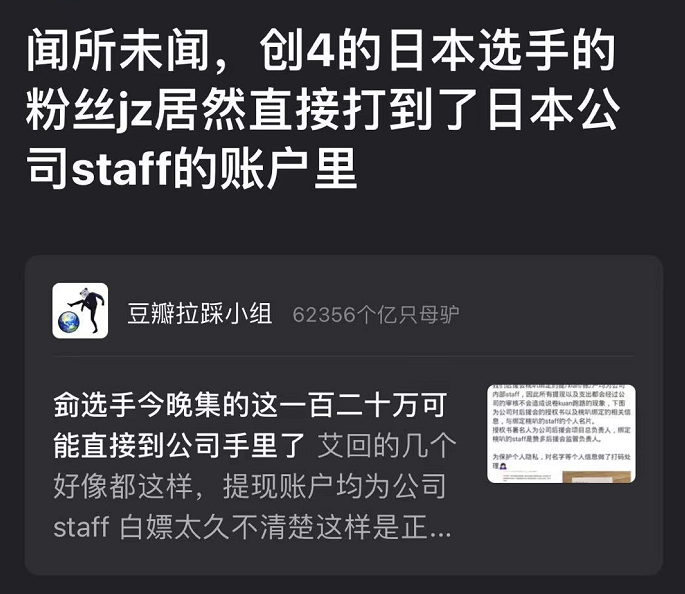
This time, the Japanese players of "Chuang 4" shined brilliantly and attracted a lot of entertainment. In order to send their younger brother out, it is natural to raise funds and play the list. Therefore, some netizens found that, unlike domestic players’ unified fund-raising to the support club, the final flow of funds raised by several Japanese players was remitted to the staff account of the company to which the players belonged.

Supposedly, every year, there is a fund-raising scandal that the support club runs away and the management likes to mention the sea view room. It is also a way to protect the fund-raising funds by the company’s main control. But in the eyes of some netizens, who knows if they will use the money for special purposes when they hit foreign companies?


In addition, Xiufen sells Amway too hard, so it is reasonable for fans to say something "above". But it can’t stop passers-by from being rebellious. Qing Lian, a Japanese player who performed well on the initial stage, has been accused of similar discrimination against women, and her debut is a bit more uncertain.


Japanese shadow, Japanese drama and Japanese synthesis, adaptive complementary geometry


With the "lifting of the ban" on animation, idols working abroad, and the bombing of several IP animated films last year, if the policy is further relaxed, it is also worth paying attention to whether Japanese TV dramas can make a difference in the China market.


Compared with the restricted Korean dramas, Japanese movies and Japanese dramas have not been introduced in recent years, but at least they have the opportunity to meet the audience in China every year. However, compared with Korean dramas and American dramas, the influence of Japanese dramas is more confined to fixed circles.


The fact that the shadow of the sun can’t be widely discussed in China is related to the taste deviation of the audiences in the two countries. Neon Gold has a special liking for animated films and real people. In 2020, the Japanese box office champion "The Blade of the Ghost" earned a total box office of about 32.5 billion yen. The second place was a real-life adaptation of "I am a mobile phone", with a box office of about 5.4 billion yen; Even the decades-old IP Doraemon won the fourth place at the box office of 3.35 billion yen.

Animated movies and real-life movies are invincible in Japan, which is of course related to Neon Jin’s deep love for the second element. But the same content, I’m afraid it won’t work in China market. Doraemon and Conan, the big IP that dominated China TV stations in the 1990s, can also attract post-80s and post-90s children into the cinema by their feelings. Besides hardcore second dimension, it is difficult to incite other people to watch movies.


Except for animated films and real people, other types of Japanese films tend to take a slow-paced and implicit route, which is not in line with the Chinese people’s taste of watching movies. In 2018, Hirokazu Koreeda’s "Thieves’ Family" won the Palme d ‘Or Award and Douban 8.7 points, but it still failed to exceed 100 million at the box office in China. Hard candy lovers are deeply sorry.


The same is true of Japanese dramas. Although there is a lot of word of mouth, Japanese drama lovers are surprised to find that Amway just can’t be sold. On the contrary, it is a Korean drama that follows the route of running dogs and catching horses next door, which has attracted countless people to jump into the pit actively.

Japanese drama "I’ll live well in the next life"


This may be because the theme of Japanese drama has already shifted to the questioning of what is true fairness and justice, personal desire and other value issues. Even with the same social issues as the starting point, such as "cheating" and "social animals", although Korean dramas are bloody, they are still cool and logical, but Japanese dramas always have a lingering sense of loss.


Life is already so hard, why bother asking for it? In the mainland market where sweet pets and cool dramas are popular, it is conceivable that Japanese dramas are not to be seen.


Different from the direct introduction of film and television dramas, the influence of Japanese synthesis in China depends on the extent to which it can "serve us".


South Korea’s Luo PD is a deity in China. Apart from the quality of the program itself, it also thanks to the "reference" of its peers in China. As a "mentor", Japanese comprehensive once enlightened the development of various arts in Han Zong, Guozong, Taiwan Province and other countries and regions, but now it is more focused on dialogue-oriented, small and beautiful Japanese comprehensive, which is probably no longer suitable for the current China market.


Whether the Japanese comprehensive is wonderful or not depends to a great extent on the openness of the actors. You dare to ask me, I dare say that the punishment link is not lenient because the other party is a big star. If the same punishment is transplanted to domestic programs, don’t think about it, fans will immediately call the hotline to defend their rights.

Street talk shows such as Yue Yao are more suitable to appear on short video platforms, although they have stems and tears. As for the alternative male and female variety "Wolf Jun" and "What’s the harm of having a heart" introduced by Hard Sugar Jun before, it may not even pass the examination because of the scale and other issues.


In any case, the current situation of open cooperation among the three East Asian countries is a good thing. But for Japanese entertainment as a whole, the Asian market, including China, has already changed. However, the internal entertainment, which has been catching up for many years, suddenly stood in front. In the absence of anyone to imitate, where will the internal entertainment lead? Apart from the huge market, what kind of culture and model can internal entertainment export? The revolution has not yet succeeded, and comrades still need to work hard.

There are local snowstorms in rainy and snowy weather in many places across the country, and the emergency management department has deployed prevention and response work.

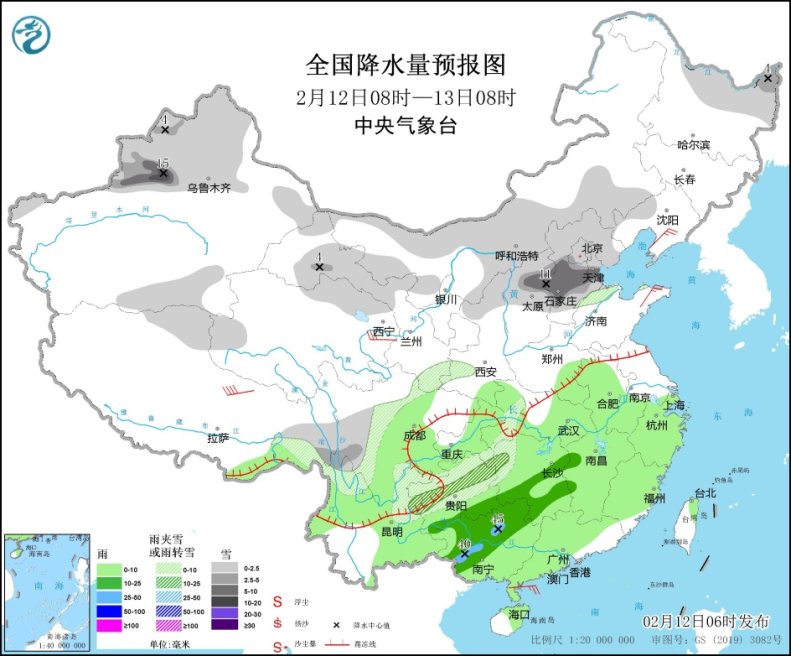
  According to the forecast of the meteorological department, there will be a large-scale rain and snow weather process from west to east in China from February 11th to 13th. There will be small to medium snow or sleet in northern Xinjiang, central and eastern Qinghai-Tibet Plateau, central and eastern Northwest China, central and eastern Inner Mongolia, most of North China and most of Northeast China, among which there will be heavy snow and local snowstorm in Beijing, Tianjin, north-central Hebei, northwestern Shanxi, south-central Inner Mongolia and Yili Valley in Xinjiang. From 14th to 15th, there was light snow in central and eastern Inner Mongolia, most of North China, northern Heilongjiang, eastern Jilin, and most of Liaoning, with local snow.

  On February 12th, The Paper learned from the Emergency Management Department that on the morning of the same day, the Emergency Management Department organized a special video consultation and scheduling meeting to discuss and judge with the China Meteorological Bureau, and connected the emergency management departments and bureaus, fire rescue corps and forest fire brigade of 11 provinces including Beijing, Tianjin, Hebei and Guizhou, and deployed all localities to do a good job in the prevention and response of this round of low-temperature rain, snow and freezing weather.

  The meeting pointed out that the current rain and snow process has a wide range of influences, a large amount of snowfall and a large cooling rate, especially at the peak of the return trip of the Winter Olympics and Spring Festival travel rush, and it is of great significance to do a good job in disaster prevention and response.

  The meeting stressed that it is necessary to further strengthen ideological understanding and responsibility implementation. Strengthen risk awareness and bottom line thinking, start emergency response in time according to emergency plan, strengthen arrangement, deployment, supervision and inspection, and compact work responsibilities layer by layer. It is necessary to further strengthen consultation, judgment and information release. Pay close attention to weather changes, hold rolling consultations with meteorological, transportation, energy and other relevant departments in time, strengthen information sharing, and accurately judge disaster risks and development trends. Actively coordinate relevant departments through various channels, widely publish disaster prevention and avoidance tips, and do a good job in safety management such as mass travel safety, coal, electricity and gas consumption, and the Winter Olympics. It is necessary to further strengthen emergency preparedness and rescue. Supervise the transportation, energy, industry and information technology, heating and other relevant departments and enterprises to do a good job in the implementation of rescue teams, preparation of deicing and snow removal equipment and facilities, material supply and communication guarantee, water supply, power supply, gas supply and heating, and expert support. Focus on the key areas where freezing rain and snow disasters have adversely affected people’s production and life, accurately preset emergency rescue forces and materials and equipment, and quickly and effectively deal with sudden dangers and disasters. Strengthen disaster relief for the affected people, allocate relief materials in time, and ensure warm and safe winter. It is necessary to further strengthen emergency duty and information reporting. Strictly implement the 24-hour duty and leadership shift system, report major dangers and disasters as soon as possible, and deal with sudden disasters in a timely manner.

  On the 11th, the Emergency Management Department issued a notice to relevant regions, requesting to strengthen measures such as consultation and judgment, information release, emergency preparedness and rescue, and earnestly do a good job in preventing and responding to low-temperature rain, snow and freezing disasters.

Weng Weijian, a TCM health expert: Health should be kept sooner rather than later.

Mr. Weng Weijian is a professor at Beijing University of Chinese Medicine and a famous health care expert. Anyone who meets Professor Weng himself is moved by his special temperament. At the age of 83, his body is tough and his skin is delicate, which is completely unlike an old man. Mr. Weng founded the first Chinese medicine nutrition specialty in China before his death, and made outstanding contributions in many fields such as Chinese medicine teaching, scientific research, diet therapy, health preservation and rehabilitation. The theory and method of health preservation advocated and practiced by him are precious wealth for future generations.

Professor Weng said that the purpose of TCM nutrition and health care is not just to treat diseases and prevent diseases. From a deeper level, it is to use natural diet to keep the human body in the best or even extraordinary state. He believes that the two characteristics of food performance, tonic and diarrhea, can best reflect the theme of TCM nutrition. He said that food supplements replenish qi, nourish blood and replenish essence; Diarrhea can relieve exterior syndrome, fire and poison. He developed thousands of recipes for China health food (longevity diet) and medical health food (medicated diet). Mr. Weng’s medicated diet is not a food containing drugs, but a natural food containing drugs, which is harmless to human body. Medicine and food should be eaten together. In his view, only color, taste, fragrance and shape are not comprehensive, and "quality" should be added. This quality is rich in nutrition and has a health care effect.

Professor Weng Weijian has been engaged in health care for 20 years, and summed up a set of health care experience from "eating, pulling, sleeping, urinating and walking": "If you want to live longer, your stomach will be clear; Don’t be partial to food, don’t blame food, and eat omnivores. " To eat miscellaneous food, eat at least 30 kinds of various foods every day, and eat breakfast seriously; Have enough stool every day, preferably twice. For this reason, eat more fiber-rich food and drink more boiled water, and drink at least 8 cups of boiled water in ordinary water cups every day. Old people go to bed early and get up early, and their sleep time is sporadic. They should let nature take its course, and they can sleep at any time when they are sleepy. Bite your teeth tightly at the moment of urination and don’t make any noise, which can make your teeth strong. As long as you persist for a long time, the troubles such as poor urination will be alleviated or even disappeared; People are old before their feet, and there are more than 20 acupuncture points on the soles of their feet. It is a good way to keep stimulating and walk for one hour every day. No matter what the season is, we should insist on scalding our feet with hot water for 15 minutes before going to bed. One or two Chinese medicinal rhubarb can be broken, wrapped in gauze, boiled for 15 minutes, and then washed with this water, which has the functions of diminishing inflammation, sterilizing, promoting blood circulation and removing blood stasis.

He also said: it is better to keep in good health sooner than later. Health preservation is not a science of providing for the aged. People’s aging has already begun before the arrival of old age, and health and longevity activities should be carried out in many aspects of life as soon as possible.

Powell: It is still far from the time when the Fed will start to reduce its bond purchases and raise interest rates this year.

  China news agency, new york, August 27-Jerome Powell, chairman of the Federal Reserve Board of the United States, said at an online seminar on the 27th that the Federal Reserve may reduce its monthly bond purchases from this year. He also said that it is still far from raising interest rates for the first time.

  On the same day, the Federal Reserve Bank of Kansas City held the annual Jackson Hole Economic Seminar. The theme of this year’s conference was "Macroeconomic Policy under Unbalanced Economy", and Powell made a keynote speech via video link. He said that the US economy has experienced an unprecedented rapid decline due to the COVID-19 epidemic, and the road to recovery is difficult.

  Powell said that the goal of the Fed’s monetary policy is still to seek full employment and price stability. Recently, the labor market has made remarkable progress, and the inflation rate has made "substantial further progress" towards the goal. Like the point of view at the regular monetary policy meeting in July, he believes that it may be appropriate for the Fed to reduce its asset purchase plan from this year.

  Since December last year, the Federal Reserve has promised that it will continue to increase its holdings of US Treasury bonds at a rate of at least $80 billion per month and purchase institutional mortgage-backed securities at a rate of not less than $40 billion per month. In this speech, Powell said that he believes that even if asset purchases are completely stopped now, the long-term bonds held by the Federal Reserve in large quantities are enough to maintain loose financial conditions.

  On raising interest rates, Powell stressed that the timing and pace of reducing the asset purchase plan will not directly send a signal about the time of raising interest rates for the first time, and the criteria for considering whether to raise interest rates are not only different but also stricter than those for reducing the purchase of bonds. Citing a case in the 1950s, he pointed out that monetary policy makers should not try to offset short-term inflation fluctuations, because responding is likely to be counterproductive, especially when the target range of the federal funds rate is close to zero.

  The Wall Street Journal reported that the minutes of the July monetary policy meeting released by the Federal Reserve had shown that most officials believed that it might be appropriate to start reducing the asset purchase plan this year. Although Powell’s statement did not give a detailed timetable for code reduction, it made investors more convinced that the Fed is more likely to start reducing its bond purchases this year. In addition, his speech also revealed an important message, that is, it is still far from the time to raise interest rates for the first time.

  On the same day, the three major indexes of the US stock market rose collectively, among which the Nasdaq Composite Index and the Standard & Poor’s 500-stock index hit record highs at intraday and closing points. Bloomberg quoted analysts as saying that Powell’s speech was biased towards doves, and the market was more willing to accept doves’ remarks. In addition, investors continue to be optimistic about the $3.5 trillion infrastructure construction budget framework and subsequent economic data, and the market investment sentiment has not been affected by the reduction of bond purchase information.

  The annual Jackson Hole Symposium used to be held in Grand Teton National Park, Wyoming. In recent two years, due to the impact of the COVID-19 epidemic, the conference was adjusted to be held online. (End)

"Pure Blood" Hongmeng is really here, can it successfully cross the line of life and death this year?

"Pure Blood" Hongmeng is getting closer and closer to the public.

On January 18, Huawei announced that HarmonyOS NEXT Hongmeng Galaxy Edition (i.e. Developer Preview Edition) is officially open for application, and plans to launch a developer beta version with more complete features in the second quarter. By the fourth quarter, HarmonyOS NEXT will also launch a commercial version.

Huawei started the pre-research of Hongmeng system in 2015, and has since launched HarmonyOS versions 1.0 to 4.0 one after another. In order to ensure daily use by users, Hongmeng’s user versions so far are compatible with Android.

The release of HarmonyOS NEXT is a dividing line, it will break away from the Android architecture and become a truly independent operating system, also known as "Pure Blood Hongmeng".

according toManaging Director of Huawei, CEO of end point BG, Chairperson of Smart Car Solutions BUAccording to Yu Chengdong, HarmonyOS has achieved breakthroughs in the core technologies of some operating systems, including AI frameworks, large models, design systems, programming frameworks, programming languages, compilers, etc.

As of now, more than 200 software vendors have started the development of Hongmeng native applications, accounting for 90% of the top Internet applications. Huawei’s short-term goal is to reach 5,000 cooperative APPs in the middle of this year, and eventually more than 500,000 applications will join the native Hongmeng camp.

For the reason why Huawei launched HarmonyOS, Gong Ti, president of Huawei’s end point BG software department, said that one is to solve the continuity of experience after sanctions, but this is no longer a problem; the other is to change the status quo of the industry, such as jumping out of the original Android shackles and doing a soft and hard core cloud integration architecture.

Apple has set a precedent in this regard, and the great success of iOS is due to the comprehensive self-development of its chips and operating systems. Due to the higher compatibility of software and hardware, the performance of hardware can be better played, making the operation experience smoother.

The core factor for the success of any system is ecological prosperity. So far, only the two giants iOS and Android have successfully established an ecosystem in the global mobile ecosystem. Microsoft Windows Phone Store, Samsung Tizen, and Alibaba Cloud OS have all been defeated by the ecosystem.

Therefore, since the end of last year, HarmonyOS NEXT has been working hard to expand Moments.

The expansion speed of Hongmeng ecology is faster than expected by the outside world. At present, the software manufacturers that have started the development of Hongmeng native applications cover travel navigation, audio and video entertainment, news reading, practical tools, travel accommodation, financial management and other fields, and include some leading APPs, such as Alipay, Meituan, JD.com, Qunar, Xiaohongshu, etc.

Leading apps have joined the Hongmeng camp one after another, and the core lies in the expectation of commercial benefits.

As the Internet user growth dividend continues to decline, traffic costs are rising, and the high "tolls" of traditional channels make Internet manufacturers miserable. The appearance of Hongmeng may help change the rules of application distribution.

After the chip constraints are resolved, Huawei’s user scale is still attractive to partners. A developer cooperating with Hongmeng told Interface News that the industry is generally optimistic about the rebound in Huawei’s mobile phone shipments. Since Huawei and Apple account for a higher proportion of high net worth users, the potential commercial value is also higher.

An engineer involved in the development of Hongmeng’s native application said that the sooner you cooperate, the more recommended locations you can get at the press conference, as well as free recommendation spots in the app store, to increase the opportunity for APP display.

But before getting real benefits, another consideration for software vendors is development costs. To this end, Huawei’s "Yaoxing Plan" invests 7 billion yuan to encourage developers to innovate more in Hongmeng’s native applications, meta-services, SDK and other aspects.

Zhu Yonggang, president of Huawei End Point Cloud, said that Hongmeng Ecology has passed the first stage, which is to complete the verification and development of ecological bases and large-scale games, tools and other applications. Next, it will enter the second stage to gradually complete the power builder and accelerate the application of Hongmeng in various industries.

Due to the scarcity of Hongmeng engineers in the early stage of ecology, the salary of related positions is generally high. According to Maimai platform information, the monthly salary given by Meituan Hongmeng infrastructure engineers is between 40,000 and 60,000 yuan. Huawei has cooperated 305 universities and 286 companies to conduct relevant course training, and said that in the future, it will train 100,000 Hongmeng developers every month.

When traffic costs are high, the mobile market no longer needs an operating system dominated by traffic bidding rankings, but a more intelligent and full-scenario platform. This is Hongmeng’s opportunity, but whether it can form a long-term prosperous ecosystem that benefits both developers and users is also its challenge for a long time.

Huawei has made a definition internally. For an operating system ecosystem, software usage and market share are the core factors for its survival and success. 16% market share is a life-and-death line, and this year will also be a critical year to determine whether Hongmeng can cross this line.

Some people yearn for people’s hearts and worry about what are the risk points of "holding a group to support the elderly"

  Investigation motive

  In recent years, with the continuous improvement of the pension system, the economic level of the elderly has been continuously improved, and the demand for spirit and services has been increasing. However, on the one hand, family children are too busy with work to attend to; On the other hand, some old-age care institutions are professional but lack family-style emotional care. In this case, some old people who are old colleagues, old classmates, old friends or live in the same village or community, or have common interests and hobbies spontaneously "live in groups", and they help each other and live in harmony. This new pension model, known as "holding the group to support the elderly", has made many elderly people look forward to it.

  At present, China has entered an aging society, and the issue of providing for the aged has been highly concerned by all sectors of society.

  Not long ago, some media reported the first case of "holding a group to support the elderly" in China: 13 elderly people in Hangzhou, Zhejiang Province lived together under one roof for nearly half a year.

  As a spontaneous way of providing for the elderly, "holding a group to support the elderly" highlights the expectations of the elderly for collective mutual assistance and the demand for spiritual comfort. What expectations do the elderly have for "supporting the elderly" and what concerns do they have? The "Legal Daily" reporter investigated this.

  Some elderly people are willing to try new models.

  Zhang Zuoying (pseudonym), 67, is a retired employee of a state-owned enterprise in Beijing, and currently lives with his wife in Sanjianfang Town, Chaoyang District, Beijing.

  "Children can’t take care of the elderly, and the elderly are alone at home, ‘ Holding a group to support the elderly ’ It is a good choice. " Zhang Zuoying told reporters that he supports and hopes that he can try the way of "supporting the elderly".

  Zhang Zuoying believes that "holding a group to support the elderly" can solve the psychological problems of empty nesters to a certain extent.

  "The retirement life of the elderly is generally boring, and the old couple will feel lonely when they live alone. ‘ Holding a group to support the elderly ’ Often, old people with common interests live together, and everyone can chat and play chess, and the fun of life will increase a lot. " Zhang Zuoying said, "Old people also need to socialize and have people to talk to."

  "In addition, ‘ Holding a group to support the elderly ’ You can also share the cost of living and reduce the per capita cost of living. " Zhang Zuoying added, "The elderly live alone. Eating three meals a day takes time and energy, and there are often leftovers, which wastes a lot of food. Living with many people can avoid these problems to a certain extent. "

  In addition to Zhang Zuoying, other elderly people also expressed their willingness to try this new way of providing for the elderly.

  "It is really good to be able to support the elderly with like-minded friends. It is often inconvenient to live with children." Zhang Xianglan (pseudonym), 61, told reporters that she also has the idea of "supporting the elderly" and has been looking for opportunities to realize it.

  Zhang Xianglan lives in Chaoyang District, Beijing. Her wife died many years ago. Now she lives with her son and daughter-in-law.

  "I don’t want to trouble my children. They all have jobs and children. " Zhang Xianglan said, "German elderly people have always had this mode of cohabitation and mutual assistance, and everyone takes care of each other. China already has ‘ Holding a group to support the elderly ’ The case of. ‘ Holding a group to support the elderly ’ It is my ideal old age. "

  Worried about sudden illness and no one to take care of it.

  Some elderly people are looking forward to "holding a group to support the elderly", but some people are worried about some follow-up issues of "holding a group to support the elderly".

  Li Jianbin (pseudonym) is 55 years old, works in a financial foreign company, lives in Huang Zhuang, Haidian District, Beijing, and now lives with his wife.

  Li Jianbin believes that "holding a group to support the elderly" also has certain requirements for the economic foundation of the elderly, which is also a difficult point in the promotion of this old-age care model.

  "The need for insurance and retirement wages is quite secure, otherwise it will not be so easy. From the perspective of venues and facilities, the conditions cannot be bad." Li Jianbin said, "A considerable number of elderly people still like to live next to their children, and they like to watch their grandchildren grow up."

  The physical condition of the elderly is also a pension model that needs to be considered.

  "Personally, I think, ‘ Holding a group to support the elderly ’ It is more suitable for the elderly who are not too old. Can get out of bed and walk around, and go anywhere; If you can only lie in bed, you will be in trouble. If you are too old to walk, you still need children to take care of you or go to a nursing home. " Li Jianbin said.

  Chen Jiaxiang (pseudonym), who lives in Yanqing District, Beijing, also holds the same view on the applicability of "holding a group to support the elderly".

  Chen Jiaxiang is 57 years old and lives with her daughter and son-in-law.

  "Healthy old people participate in ‘ Holding a group to support the elderly ’ There is not much problem. In fact, the most difficult thing is those elderly people who are sick and unable to take care of themselves. " Chen Jiaxiang thinks.

  “‘ Holding a group to support the elderly ’ Like a private apartment for the elderly, this is also a way, provided that there is room, money and activity. " Chen Jiaxiang said, "There is a suite in one place. Let’s get together a few old people who can talk to each other, eat your house today and my house tomorrow, and have fun at ordinary times and help each other if something happens. This is the old age music. However, it is indeed difficult to achieve, because everyone is old, and it is inevitable that there will be some problems in the body, or personal care is needed. "

  In this regard, Chen Jiaxiang put forward an idea of his own. "In fact, it is also good for everyone to discuss going to a nursing home together. The venue is large, the fitness and entertainment facilities are relatively complete, and there are professionals to take care of it, so that it is easy to solve physical emergencies."

  Someone suggested signing a contract to clarify the responsibility.

  Li Jianbin told reporters that the original intention of "holding a group to support the elderly" is very good, but it needs constant running-in in actual collective life, especially for people who live together, their qualities and living habits need to be very similar.

  "People in nursing homes have no economic relations with each other, and they all have economic relations with nursing homes. The seemingly voluntary combination actually has a mandatory meaning, and the relationship is alienated, and there are fewer contradictions; And ‘ Holding a group to support the elderly ’ The forms seem to be closely related to each other, and it is difficult to maintain them in practice. Sometimes there are some petty feelings among the old people. " Li Jianbin said.

  In the first successful case of "holding a group to support the elderly", one experience that is considered to be more successful is that the elderly signed the "Partnership Pension Agreement".

  According to media reports, "the agreement has made provisions on sanitation and greening, not asking about personal privacy, housing rent, food expenses, duty, etc., with a total of 11 articles, all of which are involved ‘ Holding a group to support the elderly ’ People have signed it. "

  Li Zhihua (pseudonym), who just retired from a state-owned enterprise in Beijing, expressed his views on the agreement of "holding a group for the aged".

  "I feel that problems will appear slowly, and without clear legal responsibilities, it is possible to end up in discord. ‘ Holding a group to support the elderly ’ The agreement needs to be further tested in practice. It is difficult to meet each other and live together. " Li Zhihua thinks it’s best to consult relevant lawyers and sign a contract.

  "Are old people, one thousand had an accident, the risk is too great. For example, what if there is a conflict and an old man has a heart attack and has adverse consequences? " Li Zhihua said that the relevant government departments need to do a good job in the management and service of "supporting the elderly".

Shared office is sought after, and there are huge business opportunities to help office buildings "destock"

  Xinhua News Agency, Chengdu, November 6 (Yang Wenhao, Hu Xu) Shared office is booming under the wave of sharing economy and double innovation. Many shared office enterprises, including SOHO China, have recently set their sights on Chengdu. With a large number of projects landing one after another, the long-term surplus office market in Chengdu has also ushered in a "warm winter".

  WORK+ joint office space located in Tianfu New Valley, Chengdu High-tech Zone, has become one of the hottest shared office projects in Chengdu at present because of cutting-edge and fashionable decoration design and housekeeper-style intimate service. Its two-story space of nearly 8,000 square meters provides more than 800 workstations, which have served more than 50 small and micro enterprises.

  WORK+ is just a microcosm of shared office being sought after in Chengdu. In recent years, Chengdu’s "double innovation" policy has been further promoted, entrepreneurial groups have been growing, and a large number of small and micro enterprises have emerged rapidly. Start-up companies have small teams and insufficient funds, and the shared office with relatively high cost performance has become their first choice.

  The increase in demand immediately leads to the expansion of supply. Many well-known shared office service providers, such as Dream Plus, Chivalrous Island, Sugar Cube Town and Walnut, have settled in various office buildings in Chengdu. The latest entrant is SOHO 3Q shared office project under SOHO China.

  Pan Shiyi, chairman of SOHO China, believes that from the perspective of market acceptance, Chengdu’s main population has been on the same starting line as first-tier cities, and there are huge business opportunities for sharing office.

  According to the data released by Colliers International, a real estate service company, the vacancy rate of Chengdu office market has remained above 30% for a long time due to long-term oversupply. In the third quarter of this year, although two new projects brought a huge supply of nearly 100,000 square meters, the average vacancy rate increased slightly by only 0.1% from the previous month.

  In this regard, Colliers International reported that with the continuous optimization of the economic and investment environment, the upgrading of industrial structure and the expansion of the consumer market in Chengdu, a large number of domestic and foreign enterprises have expanded here, especially the rapid development of science and technology and joint office industries, which has led to a significant increase in the cases of bulk leasing and rent expansion in the Grade A office market.

Rush to Zhengzhou for 48 hours

After the flood in Henan Province, the Ministry of Housing and Urban-Rural Development immediately coordinated the guidance of the system to help Henan Province carry out rescue and disaster relief, post-disaster recovery and supply protection. At 18:00 on July 21st, the rescue forces of the housing and urban-rural construction system in Hubei Province took the lead in setting out to aid Henan. Up to 18:00 today, five rescue teams continued to carry out rescue and relief work against time. The time nodes in these 48 hours finally formed the following timeline.

48 hours of wind "Yu" in the same boat, "live" you against disasters!

At 18:00 on the 21st, Hubei Provincial Housing and Urban-Rural Construction System Rescue Team set out.

Hubei Provincial Housing and Urban-Rural Construction System arranged for reinforcements to rush to Zhengzhou. Wuhan Water Affairs Department urgently dispatched 26 vehicles including 1 command vehicle, 16 large-scale pump trucks (Longshui) and 9 logistics support vehicles and 85 rescue and relief personnel, with a total pumping capacity of 41,300 cubic meters per hour.

At 21:30 on the 21st, Shandong Provincial Housing and Urban-Rural Construction System Rescue Team set out.

Shandong Provincial Department of Housing and Urban-Rural Development organized Jinan Water Affairs Bureau and Linyi Urban Management Bureau, and according to the instructions of the Ministry of Housing and Urban-Rural Development, quickly organized and arranged four forced-discharge pump trucks and three support trucks to support the flood fighting and rescue work in Zhengzhou, Henan Province overnight.

At 23:30 on the 21st, Shaanxi Housing and Urban-Rural Construction System Rescue Team set out.

Shaanxi Provincial Department of Housing and Urban-Rural Development acted quickly, and coordinated and organized a rescue team consisting of 47 people from Xi ‘an Urban Management and Comprehensive Law Enforcement Bureau, Xi ‘an Water Group, Xianyang Urban Management and Law Enforcement Bureau, Weinan Housing and Urban-Rural Development Bureau and Xixian New Area Urban Management and Transportation Bureau overnight; A total of 15 pumping and drainage projects and support vehicles, such as "dragon water absorption", drainage rescue vehicles and dredging vehicles, were dispatched; Carefully prepare all kinds of professional equipment, logistics support and epidemic prevention materials.

At 10:30 on 22nd, Zhengzhou Drainage Office provided logistics support.

After a period of intense rescue work, Zhengzhou Drainage Office sent oil and food to Shandong rescue team to provide logistical support.

At 11:40 on the 22nd, the rescue team of Shandong Provincial Department of Housing and Urban-Rural Development retreated 10 meters.

Near the First Affiliated Hospital of Zhengzhou University (Huiji Campus), Jingsha extends under the overpass in the north. After forced drainage for 4 hours, it drains more than 10,000 yuan, with a length of 10 meters, and the drainage effect is obvious.

At 12:30 on the 22nd, Zhengzhou citizens sent hot meals.

Hubei rescuers are preparing to eat bread and drink mineral water, and enthusiastic citizens have sent meals. Although the dishes are simple, the hot food warms the heart.

At 16:00 on the 22nd, the water level of Linyi Urban Management Bureau in Shandong Province dropped by 3.5 meters after pumping!

The rescue team sent by Linyi Urban Management Bureau of Shandong Province crossed the overpass under Longhai Road in Erqi District of Zhengzhou. After nearly 8 hours of intense operation, it pumped about 30,000 cubic meters and the water level dropped by about 3.5 meters.

At 17:00 on 22nd, the total displacement of Jinan Urban Construction Rescue Team was 30,000 cubic meters.

After nearly 7 hours of work by Jinan Urban Construction Rescue Team, the total displacement at the intersection of Jingguang Road and Hongda Road in Huiji District is about 30,000 cubic meters.

At 17:00 on the 22nd, Shaanxi rescue team pumped and drained 67,000 cubic meters.

Shaanxi Provincial Department of Housing and Urban-Rural Development has dispatched 15 pumping and drainage projects and support vehicles, such as "Dragon Suction", drainage rescue vehicles and dredging vehicles. As of 5 pm on the 22nd, Shaanxi Rescue Team had pumped and drained 67,000 cubic meters!

At 18:00 on the 22nd, Wuhan supported Zhengzhou rescue team to evacuate nearly 230,000 square meters.

As of 18: 00 on the 22nd, 16 dragon suction pump trucks supported by Zhengzhou rescue team deployed at 11 locations including Future Road, Chengdong Road and South Third Ring Road tried their best to drain the urban accumulated water, with a cumulative drainage of nearly 230,000 cubic meters, and the accumulated water decreased by 0.8-2.8 meters. The accumulated water in the underground passage of Chengdong Road and the underpass of huanghe road Interchange has been drained, which is qualified for traffic.

At 20:30 on the 22nd, the rescue team of Beijing Drainage Group pumped up about 9,000 cubic meters of water.

After Beijing Drainage Group supported Zhengzhou Emergency Commando to reach Zhengzhou, it cooperated with the disposal of two stagnant waters. The first place is the water accumulation point under the Beijing-Hong Kong-Macao Expressway Bridge on Zhengkai Road. A 3600 combined unit was put into use, and by 8:30 pm, about 5000 cubic meters of water was pumped up. The second place is the "east side of Qilihe South Road" water accumulation point, and three large units, namely two 1500-dragon suction pumps and a high-lift pump truck, have pumped up about 4000 cubic meters of water by 8:30 pm.

At 23:00 on the 22nd, the Shaanxi rescue team rotated to ensure that the rescue did not stop.

In order to fully ensure the safety of rescue team operators, equipment and operation, optimize the operation efficiency and improve the pumping capacity, the temporary headquarters of Shaanxi Rescue Team organized a comprehensive investigation at night, inspected the drainage situation at points on the spot, checked the operation status of equipment, rationally arranged personnel grouping, and established a shift rotation system to ensure that the work was not stopped and the equipment was not stopped.

2The rescue team of Anhui Provincial Department of Housing and Urban-Rural Development set out late at night on the 2nd.

The Housing and Urban-Rural Development Department of Anhui Province urgently organized Huaibei, Bozhou and Bengbu to mobilize five emergency power pump trucks (pumping capacity of 10,600 cubic meters per hour), one engineering rescue vehicle and three material support vehicles, with a total of 9 drainage rescue vehicles and 29 rescue personnel. On July 22, they went to Zhengzhou overnight to carry out emergency drainage and rescue work.

At 0:00 on the 23rd, Wuhan Rescue Team tackled the problem of waterlogging points in Hongzhuan Road Tunnel.

Wuhan Rescue Team mobilized its strength to tackle the problem of waterlogging in Hongzhuan Road Tunnel in Zhengzhou City, and concentrated on five dragon suction pump trucks in Hanyang District, Qiaokou District, Jiang ‘an District, Economic Development Zone and Caidian to grab and drain waterlogging.

At 5:00 on the 23rd, the rescue team in Wuhan, Hubei Province pumped about 100,000 cubic meters of water.

The future road tunnel, which has attracted much attention, ended pumping at 5: 30 am on July 23 and entered the site cleaning stage.
The rescue team in Wuhan City, Hubei Province pumped the pump truck for 24 hours, with a total pumping capacity of about 100,000 cubic meters, successfully breaking through the tunnel traffic bottleneck.

At 8:00 on the 23rd, the backwater length of Jingsha North Extension underpasses the overpass in Huiji District is 45 meters.

After 24-hour uninterrupted operation, the Jingsha North Extension of Huiji District of Zhengzhou City, which is in charge of rescue support by Shandong Rescue Team, drained about 50,000 cubic meters and the length of water withdrawal was 45 meters.

At 8:30 on the 23rd, Anhui Rescue Team rescued the victims.

Huaibei Housing and Urban-Rural Development Bureau started to work under the overpass of Xishan Road Railway in Zhengzhou.

At 12:40 on the 23rd, the rescue team of Beijing Drainage Group pumped up the water accumulation point of Lianhu Road under the tunnel.

The third water accumulation point under the tunnel of Lianhu Road, which is under the responsibility of Beijing Drainage Group, began to be pumped up, with a pumping capacity of 2,700 cubic meters per hour.

At 13:00 on 23rd, Shaanxi rescue team completed the pumping and drainage under the Longhai Railway on Xinzheng Road.

Shaanxi rescue team pumped 25,000 cubic meters under the Longhai Railway in Xinzheng Road, Guancheng District, and basically finished pumping. The workers took off their wet shoes and took a nap, and the smile on their faces bloomed.

At 15:00 on the 23rd, the water level of the pedestrian underpass in the West Square of Anhui Rescue Team Railway Station dropped by 16 meters.

Zhengzhou Shinan Road Railway underpasses the overpass at 3: 00 pm. The water level of the pedestrian underpass in the west square of the railway station dropped by 16 meters, and the water level of Fulong International Community dropped by 2.2 meters.

At 18:00 on the 23rd, Wuhan Drainage Rescue Team pumped nearly 610,000 square meters.

As of 18: 00 on the 23rd, 16 dragon suction pump trucks of Wuhan Drainage Rescue Team at seven locations including Hongzhuan Road, South Third Ring Road and Weisi Road in Zhengzhou City tried their best to drain the urban accumulated water, with a cumulative drainage of nearly 610,000 cubic meters, and the accumulated water decreased by 1.2-4 meters.

The wind is in the same boat, and the rescue of housing and urban and rural construction systems is in progress!

In April, the national economy continued to recover to a good situation, and most indicators increased year-on-year

  People’s Daily Online, Beijing, May 16 (Reporter Yang Xi) According to the National Bureau of Statistics, in April 2023, China’s economy and society resumed normal operation in an all-round way, most production and demand indicators increased year-on-year, service industry and consumption recovered quickly, employment prices were generally stable, and economic operation continued to recover to a good trend.

  Fu Linghui, spokesperson of the National Bureau of Statistics and director of the National Economic Statistics Department, said that overall, in April, the national economy continued to recover and the positive factors accumulated. However, we must also see that the international environment is still complicated and severe, domestic demand is still insufficient, and the endogenous driving force for economic recovery is not strong. In the next stage, we should adhere to the general tone of striving for progress while maintaining stability, implement the new development concept completely, accurately and comprehensively, accelerate the construction of a new development pattern, comprehensively deepen reform and opening up, combine giving full play to the effectiveness of policies with stimulating the vitality of business entities, actively restore and expand demand, accelerate the construction of a modern industrial system, promote the effective improvement of quality and reasonable growth of quantity of the economy, and strive to promote high-quality economic development.

  The service industry continued to pick up, and the contact-gathering service industry improved significantly.

  In April, the national service industry production index increased by 13.5% year-on-year, 4.3 percentage points faster than last month. By industry, the production index of accommodation and catering, wholesale and retail, transportation, warehousing and postal services, information transmission, software and information technology services increased by 48.7%, 18.8%, 17.6% and 13.2% respectively, which was 18.8, 7.9, 5.7 and 1.2 percentage points higher than that of last month. From January to April, the national service industry production index increased by 8.4% year-on-year, 1.7 percentage points faster than that in January-March. From January to March, the operating income of service enterprises above designated size increased by 5.0% year-on-year. In April, the business activity index of service industry was 55.1%, and the expected business activity index was 62.3%. Among them, the business activity index of railway transportation, air transportation, accommodation, telecommunications, radio and television, satellite transmission services, culture, sports and entertainment and other industries was in the high boom zone of more than 60%.

  Industrial production is generally stable, and the equipment manufacturing industry is growing rapidly.

  In April, the added value of industrial enterprises above designated size increased by 5.6% year-on-year, 1.7 percentage points faster than last month; The chain decreased by 0.47%. In terms of three categories, the added value of the mining industry was flat year-on-year, with the manufacturing industry increasing by 6.5% and the electricity, heat, gas and water production and supply industries increasing by 4.8%. The added value of equipment manufacturing industry increased by 13.2% year-on-year, 5.3 percentage points faster than last month. In terms of economic types, the added value of state-owned holding enterprises increased by 6.6% year-on-year; Joint-stock enterprises increased by 4.4%, and foreign-invested enterprises from Hong Kong, Macao and Taiwan increased by 11.8%. Private enterprises increased by 1.6%. In terms of products, the output of new energy vehicles and solar cell products increased by 85.4% and 69.1% respectively. From January to April, the added value of industrial enterprises above designated size increased by 3.6% year-on-year, 0.6 percentage points faster than that in January-March. In April, the purchasing manager index of manufacturing industry was 49.2%, and the expected index of enterprise production and operation activities was 54.7%.

  Market sales grew rapidly, and online retail sales increased rapidly.

  In April, the total retail sales of social consumer goods was 3,491 billion yuan, up 18.4% year-on-year, 7.8 percentage points faster than last month; The chain increased by 0.49%. According to the location of business units, the retail sales of urban consumer goods reached 3,039.8 billion yuan, up 18.6% year-on-year; The retail sales of rural consumer goods reached 451.3 billion yuan, up by 17.3%. By consumption type, the retail sales of commodities reached 3,115.9 billion yuan, up by 15.9%; The catering revenue was 375.1 billion yuan, an increase of 43.8%. The sales of upgraded goods grew rapidly, and the retail sales of gold, silver and jewelry, sports and entertainment goods and cosmetics above designated size increased by 44.7%, 25.7% and 24.3% respectively. From January to April, the total retail sales of social consumer goods was 14,983.3 billion yuan, up 8.5% year-on-year, 2.7 percentage points faster than that in January-March. The national online retail sales reached 4,410.8 billion yuan, up 12.3% year-on-year, 3.7 percentage points faster than that in January-March. Among them, the online retail sales of physical goods was 3,716.4 billion yuan, up by 10.4%, accounting for 24.8% of the total retail sales of social consumer goods.

  The scale of investment in fixed assets has expanded, and investment in high-tech industries has grown rapidly.

  From January to April, the national investment in fixed assets (excluding farmers) was 1,474.82 billion yuan, up 4.7% year-on-year, down 0.4 percentage point from January to March. In terms of fields, infrastructure investment increased by 8.5% year-on-year, manufacturing investment increased by 6.4%, and real estate development investment decreased by 6.2%. The national commercial housing sales area was 376.36 million square meters, down 0.4% year-on-year; The sales of commercial housing reached 3,975 billion yuan, up by 8.8%. By industry, investment in the primary industry increased by 0.3%, investment in the secondary industry increased by 8.4%, and investment in the tertiary industry increased by 3.1%. Private investment increased by 0.4%. Investment in high-tech industries increased by 14.7% year-on-year, of which investment in high-tech manufacturing and high-tech service industries increased by 15.3% and 13.4% respectively. In the high-tech manufacturing industry, the investment in electronic and communication equipment manufacturing, medical equipment and instrumentation manufacturing increased by 19.9% and 19.4% respectively; In the high-tech service industry, the investment in scientific and technological achievements transformation service industry and professional technical service industry increased by 42.1% and 33.9% respectively. Investment in social fields increased by 5.6%, of which investment in health and education increased by 13.8% and 5.0% respectively. In April, investment in fixed assets (excluding farmers) decreased by 0.64% from the previous month.

  The import and export of goods continued to grow and the trade structure continued to be optimized.

  In April, the total import and export of goods was 3,434.7 billion yuan, up 8.9% year-on-year. Among them, exports were 2,026.5 billion yuan, an increase of 16.8%; Imports reached 1,408.1 billion yuan, down 0.8%. Import and export balance, with a trade surplus of 618.4 billion yuan. From January to April, the total import and export volume of goods was 13,323.2 billion yuan, up 5.8% year-on-year. Among them, exports reached 7,672.9 billion yuan, up by 10.6%; Imports reached 5,650.3 billion yuan, up by 0.02%. From January to April, the import and export of general trade increased by 8.5% year-on-year, accounting for 65.4% of the total import and export, an increase of 1.6 percentage points over the same period of last year. The import and export of private enterprises increased by 15.8%, accounting for 52.9% of the total import and export, an increase of 4.6 percentage points over the same period of last year. The export of mechanical and electrical products increased by 10.5%, accounting for 57.9% of the total export.

  The employment situation is generally stable, and the urban survey unemployment rate has dropped.

  In April, the national urban survey unemployment rate was 5.2%, down 0.1 percentage point from the previous month. The unemployment rate of local registered labor force survey is 5.1%; The survey unemployment rate of migrant registered labor force is 5.4%, of which the survey unemployment rate of migrant agricultural registered labor force is 5.1%. The unemployment rate of the 16-24-year-old and 25-59-year-old labor force survey is 20.4% and 4.2% respectively. Among the 25-59-year-old labor force, the survey unemployment rate of junior high school education or below, senior high school education, junior college education and bachelor degree or above is 4.5%, 4.6%, 4.0% and 3.1% respectively. The survey unemployment rate in 31 big cities and towns is 5.5%. The average weekly working hours of employees in enterprises nationwide are 48.8 hours.

  Consumer prices rose year-on-year, while industrial producer prices fell year-on-year.

  In April, the national consumer price (CPI) rose by 0.1% year-on-year and decreased by 0.1% quarter-on-quarter. By category, the prices of food, tobacco and alcohol increased by 0.8%, clothing by 0.9%, housing by 0.2%, daily necessities and services by 0.1%, transportation and communication by 3.3%, education, culture and entertainment by 1.9%, medical care by 1.0% and other supplies and services by 3.5%. Among the prices of food, tobacco and alcohol, the price of fresh vegetables decreased by 13.5%, the price of grain increased by 1.1%, the price of pork increased by 4.0% and the price of fresh fruit increased by 5.3%. After deducting food and energy prices, the core CPI rose by 0.7% year-on-year, the same as last month. From January to April, the national consumer price rose by 1.0% year-on-year.

  In April, the ex-factory price of industrial producers nationwide decreased by 3.6% year-on-year and 0.5% quarter-on-quarter. The purchase price of industrial producers nationwide decreased by 3.8% year-on-year and 0.7% quarter-on-quarter. From January to April, the ex-factory price and purchase price of industrial producers nationwide decreased by 2.1% and 1.5% respectively.