There are local snowstorms in rainy and snowy weather in many places across the country, and the emergency management department has deployed prevention and response work.
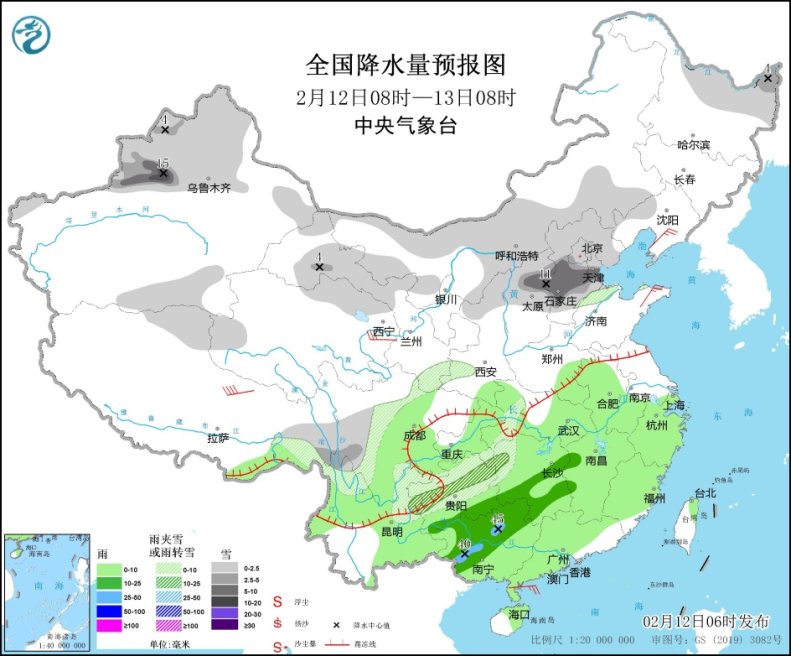
According to the forecast of the meteorological department, there will be a large-scale rain and snow weather process from west to east in China from February 11th to 13th. There will be small to medium snow or sleet in northern Xinjiang, central and eastern Qinghai-Tibet Plateau, central and eastern Northwest China, central and eastern Inner Mongolia, most of North China and most of Northeast China, among which there will be heavy snow and local snowstorm in Beijing, Tianjin, north-central Hebei, northwestern Shanxi, south-central Inner Mongolia and Yili Valley in Xinjiang. From 14th to 15th, there was light snow in central and eastern Inner Mongolia, most of North China, northern Heilongjiang, eastern Jilin, and most of Liaoning, with local snow.
On February 12th, The Paper learned from the Emergency Management Department that on the morning of the same day, the Emergency Management Department organized a special video consultation and scheduling meeting to discuss and judge with the China Meteorological Bureau, and connected the emergency management departments and bureaus, fire rescue corps and forest fire brigade of 11 provinces including Beijing, Tianjin, Hebei and Guizhou, and deployed all localities to do a good job in the prevention and response of this round of low-temperature rain, snow and freezing weather.
The meeting pointed out that the current rain and snow process has a wide range of influences, a large amount of snowfall and a large cooling rate, especially at the peak of the return trip of the Winter Olympics and Spring Festival travel rush, and it is of great significance to do a good job in disaster prevention and response.
The meeting stressed that it is necessary to further strengthen ideological understanding and responsibility implementation. Strengthen risk awareness and bottom line thinking, start emergency response in time according to emergency plan, strengthen arrangement, deployment, supervision and inspection, and compact work responsibilities layer by layer. It is necessary to further strengthen consultation, judgment and information release. Pay close attention to weather changes, hold rolling consultations with meteorological, transportation, energy and other relevant departments in time, strengthen information sharing, and accurately judge disaster risks and development trends. Actively coordinate relevant departments through various channels, widely publish disaster prevention and avoidance tips, and do a good job in safety management such as mass travel safety, coal, electricity and gas consumption, and the Winter Olympics. It is necessary to further strengthen emergency preparedness and rescue. Supervise the transportation, energy, industry and information technology, heating and other relevant departments and enterprises to do a good job in the implementation of rescue teams, preparation of deicing and snow removal equipment and facilities, material supply and communication guarantee, water supply, power supply, gas supply and heating, and expert support. Focus on the key areas where freezing rain and snow disasters have adversely affected people’s production and life, accurately preset emergency rescue forces and materials and equipment, and quickly and effectively deal with sudden dangers and disasters. Strengthen disaster relief for the affected people, allocate relief materials in time, and ensure warm and safe winter. It is necessary to further strengthen emergency duty and information reporting. Strictly implement the 24-hour duty and leadership shift system, report major dangers and disasters as soon as possible, and deal with sudden disasters in a timely manner.
On the 11th, the Emergency Management Department issued a notice to relevant regions, requesting to strengthen measures such as consultation and judgment, information release, emergency preparedness and rescue, and earnestly do a good job in preventing and responding to low-temperature rain, snow and freezing disasters.