The sound of the river rises from the back of the house.
1. The sound of the river is mighty
"The sound of the river is mighty, rising from the back of the house."
Many people who have read Fu’s translation of "John Christophe" can recite this sentence. For many years, I am just one of thousands of people who advance wave after wave. When I became a writer, it also became an important fulcrum in my own vocabulary, which was as necessary as a beam.
As a teenager, I read Fu’s translation of Balzac. In my youth, I read Fu’s translation of Philosophy of Art.. Slowly, I realized that this is all the grace left by Fu Lei.
Speaking of it, I am a lover of European novels. As soon as I read novels, I forget my writer training for most of my life and return to the true nature of novel readers immersed in stories. I always remember the details best, the story best, the author better, and the translator last. But once you remember it, you will never forget it.
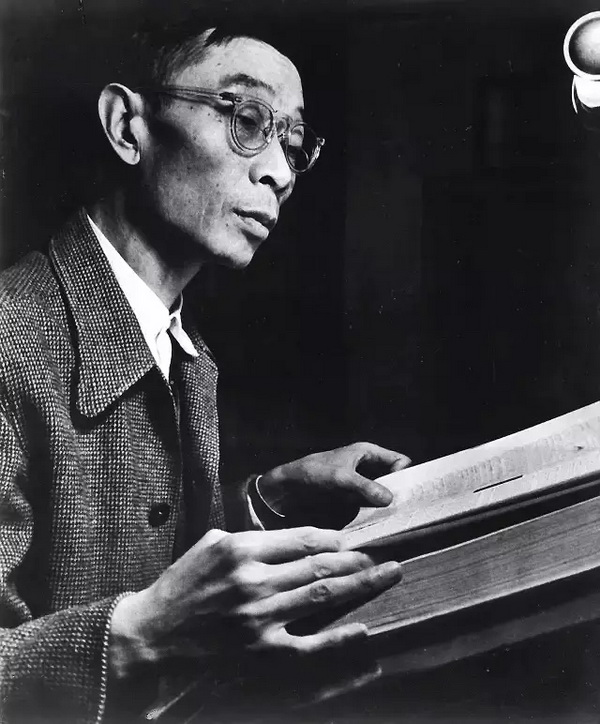
Fu lei
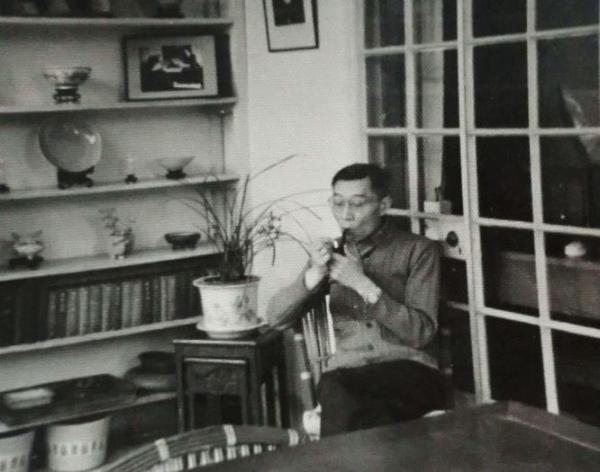
When I knew Fu Lei, I knew that he was hanged from the beam of his balcony window. When the police broke into the house in the morning, due to through flow when the door was opened, the rope around his neck broke and the body fell straight on the cane chair next to him, sitting upright. And in a personal photo of him, he was sitting on that cane chair, smoking a cigar. That’s when he translated Philosophy of Art..
Fifty years after his death, in 2016, I took a chapter from Philosophy of Art and made a strong trip to Italy. According to the instructions in the book, I walked all the way to urbino’s palace. Fifty years later, he still guides my geographical direction.
"The sound of the river is mighty, rising from the back of the house." Only after I got to know Professor Jin Shenghua, president of the Hong Kong Translators Association, did I know that this sentence represents the supreme pursuit of Chinese translators. That is romain rolland’s brushwork, the spirit of Christophe’s story, and Fu Lei’s quaint and sonorous Chinese message that "every word can stand", which is the criterion of Fu Lei’s translation. For me, this sentence is the beginning of a novel.
I remember the way Professor Jin raised her oval face and recited this sentence gently. In her hands, she holds a book compiled by the Hong Kong Translators’ Association, "Memories of Fu Lei in the Sound of the River", which is unusually thick, especially in Hong Kong. She is going to give it to me, especially because I am from Shanghai.
That evening, we chatted in the Shanghai General Association in Central. There is a still picture of Xiao Fangfang in the corridor. Before she left Shanghai, her family also borrowed Song Qi’s house to live in, and she was a neighbor of Fu Lei’s Andingfang.
In 1966, Mr. and Mrs. Fu Lei died of anger and hardship. Thirty years later, Professor Jin established the Translator Award in Hong Kong, which was named Fu Lei Translation Award. As far as I know, this is the only translation award in the world to commemorate Fu Lei.
The sound of the river is so mighty that we may not hear what it growls, but it just shakes our hearts.
It’s unforgettable.
II. Fu’s Translation of Philosophy of Art
In May of 2016, I got an invitation to go to Italy for a strong trip.
The Italian brigade began in the sixteenth century. It spread among French writers, formed a wave among English poets, and reached its climax in the era when Goethe, Browning and Byron went there one after another. With the participation of young aristocrats, this cultural pilgrimage route became famous. Goethe in Germany, Dickens and Shakespeare in Britain, and Nikolai Gogol in Russia, the greatest minds in Europe, even got the most important inspiration in their life creation in Italy.
Goethe’s Faust was born after this trip, Nikolai Gogol’s Dead Soul was written during his sojourn, Shakespeare’s thirteen important plays used local stories, and Dickens’ A Tale of Two Cities’ arched structure came from Italian architecture itself.
This Italian tour, which once resounded through the hearts of European intellectuals, declined in 1855 after the establishment of a travel agency in Thomas Cook, England, and stopped after the outbreak of the First World War. A hundred years later, I was able to regain my strong journey, follow the footsteps of writers in layers for 400 years, and then go to Tuscany, the cradle of the Renaissance.
My idea is to travel according to the route of European writers with Chinese translations. In my strong journey, there were not only the Italian Renaissance, but also writers who went to Italy in an endless stream and hoped to die in Italy. Not only did I look back and reread my own reading history, but also translators who translated those great works into Chinese. For a writer who grew up in China in the 20th century, traveling like this is a complete and vigorous tour.
Usually I only take a few books with me when I travel, but this time I took a whole box. They are all European classics that I read when I was young. The people who created them are all writers who have experienced a strong journey in Italy, and their translations are all left after a long struggle.
On the way from arezzo to the Rupi Castle, I slowly reread the chapter of Italian painting in the Renaissance in the Philosophy of Art. Dana advocated the Italian Renaissance, which originated from Tuscany’s magnificent landscapes and unique light and shadow. Geography is the reason for bringing up Renaissance masters. Outside the house where Michelangelo was born in May, reading Philosophy of Art in the golden and sweet light like honey had to obey Dana.
I live in the monastery of Varna. The monastery closes the gate at 8: 35, and there is no internet, so there is a long silent reading night until six o’clock in the morning, when the bell rings early.
Single bed, narrow desk The monastery was built on a high cliff, and when you look around, it is the sweetest hill in Italy. In May, there are patches of white lilacs in the Woods. Michelangelo was born on another hill not far away. Further on, it is the birthplace of Leonardo da Vinci, then Giotto’s birthplace, Peterak’s birthplace, and then the place where Boccaccio died. The hometown of Renaissance giants is so dreamily surrounded by my monastery guest room.
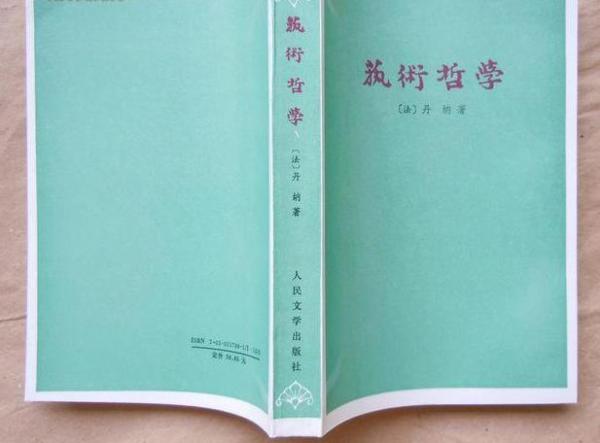
Fu Lei’s Translation of Philosophy of Art
One night, it suddenly occurred to me that Fu Lei, the translator of Philosophy of Art, had never been to the place where Dana wrote books in his life.
I remember when I left, the Italian consul said to me, you are so lucky, even for an Italian, this is a rare good luck.
At that time, I said, the world is beautiful, and Chen Danyan’s dream has come true.
However, as long as I think of Fu Lei in the silent night reading, a kind of pain that cannot be ignored emerges in my good luck.
The year I was born, his bad luck just began. It’s like stepping on a swamp and sinking slowly until it’s bottomless. In the year when I began to learn to read, he died. And I gradually became a professional writer according to my childhood ideal, and I was a travel literature writer, traveling to Europe again and again. Until a recent long trip, I was still benefiting from his work.
According to Dana’s geographical determinism, I am here to write the third part of the trilogy of geographical reading, about the reading of Italian strong travel and youth. On the surface, the foundation invited me to go. In fact, Dana and Fu Lei guided me to go. Without Philosophy of Art, there probably wouldn’t be such a grand tour.
Fu Lei has been floating like a dark cloud, and sometimes he is penetrated by bright sunshine, but not fade away has seen it.
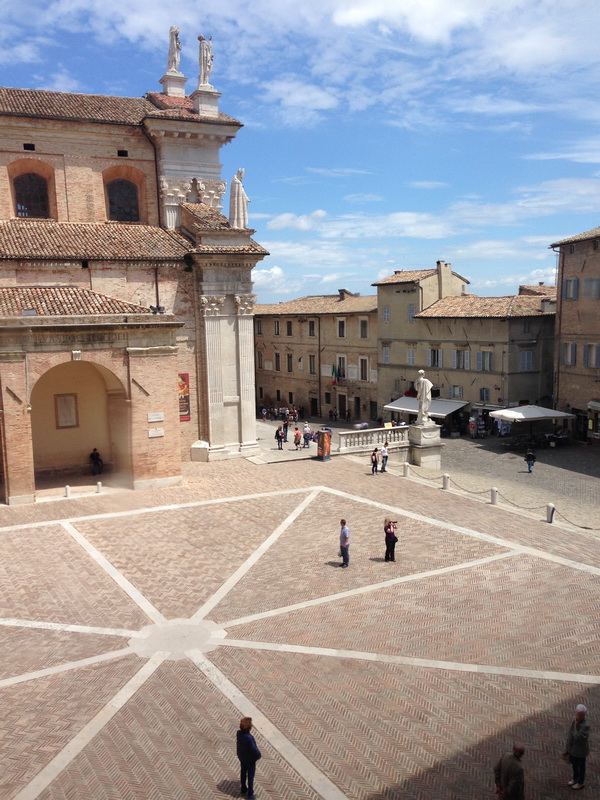
Urbino Palace photo by Chen Danyan
3. Andingfang
In June 2016, I completed my first strong trip to Italy. After returning to Shanghai, put Philosophy of Art back on the shelf.
In August 2016, I went to Andingfang with my photographer in the hot afternoon, where Fu Lei and his wife committed suicide. I went for my trip to Tuscany. After seeing those brilliant light and shadow, I want to see his translation where the sky is as dark as a deep well. For me, this is a complete trip. In this way, I can really return from the Renaissance.
The afternoon in Andingfang is very quiet. I vaguely remember that August in my childhood. The street is full of loud cicadas’ cries and the green sunshine scattered on the road through the fat phoenix tree leaves, as well as the fire burning books on the street and the sonorous singing from the big electric loudspeaker in summer.
When I was a child, there were some officials’ families in the neighborhood. When the lights were brightly lit at night, they must be robbing the house. My father was the earliest participant in Yan ‘an Social Department, and my family was also copied. All the lights in the house are turned on and the doors and windows are wide open. All the books and records at home were burned, and all the furniture rented by the government at home was taken back overnight. Our whole family slept on the floor.
I remember, that summer, when I woke up, I could see the marks left by the sofa on the floor. The floor under the sofa was deeper than the bare floor, perhaps because the wax tray didn’t spread the wax. Children are not sensible, and suddenly the whole family sleeps together. When they wake up at night, they can see their father’s cigarettes in the dark. They still feel fresh in their hearts, but they can’t see their parents’ faces being trampled.
That year, my husband was still a child, and in the last year he was the captain of the Young Pioneers in Jiangwu Primary School. From his back alley to Jiangsu Road, there is Andingfang. He remembered that from Hongye Garden, where his family lived, to Andingfang, almost every small house was in the process of property acquisition. There were three families living in his house, a small capitalist, an obstetrician who graduated from Huangpu Military Academy, and his family. His father was a middle school principal from the Shanghai underground party, and all three of them were copied.
There are many cultural families in Shanghai around Qishan Village, about 500. The policeman in charge of public security in that area said that there were always more than 200 families whose homes were stolen that summer.
Every day, people are shown and insulted in their own alleys. That summer, my husband’s father was shown to the public, and so was my own father. My husband and I were hiding in our own homes and couldn’t bear to watch it. I can’t bear to see my father who came home after being humiliated. I remember it was a strange feeling of filth.
Fifty years ago, at the end of August, my later university teacher Shi Zhecun strolled silently from Qishan Village to Andingfang in the afterheat of dusk. He came to see his old friend Fu Lei. I saw that the exterior wall of his house was covered with posters, and it was already covered with scars. In the heat, the doors and windows were closed and silent.
Fifty years later, the black iron gate of Fu Lei’s former residence was closed and still silent. Looking through the crack of the door, we can see that the narrow window near Fu Lei’s study was closed, and the window on the left hand side of his writing desk was also closed. Fu Min once painted a floor plan of Ye Yonglie’s home. In the 1960s, Fu Lei translated Philosophy of Art and Disillusionment in despair of publishing and healthy collapse. The desk where these two works have been translated is placed between the two windows. That table is far away from the balcony door, where the couple hanged themselves.
The steel window behind him is where Fu Lei and his wife committed suicide.
Through the small lattice steel window, it is his garden. When they put their heads into the rope, they can see the summer yard. Fifty different kinds of roses cultivated by their couple have been destroyed by the Red Guards of the Conservatory of Music.
It was a messy yard with petals scattered all over the place. When I saw this yard, there was only one plain lawn and fifty kinds of roses were gone.
In 1966, it seemed that many people in Shanghai who had gardens liked to grow their own roses. I remember when I was a child, I saw a garden full of flowers on the road. I looked through the sparse diamond-shaped bamboo fence, and the old man who was busy planting flowers in it wore a white shirt and smiled.
My mother told me to call someone.
"Old uncle."
I remember the old uncle in the garden who cut me a thin and fragrant red flower.
My family has a sapphire lacquer vase, and my mother keeps that flower in it. I am proud, because that flower is for me.
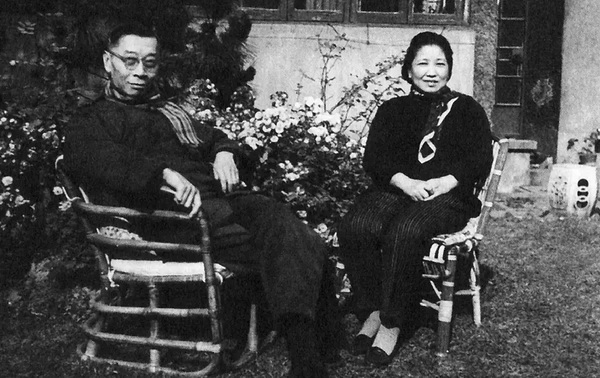
In the photos left by Fu Lei’s family, I vaguely saw those roses alive. And the faces of Mr. and Mrs. Fu Lei, which are as quiet as moles.
There was sunshine when we walked into the alley that day, and in a blink of an eye, the sunshine became yellow and vague.
4. The rumors of Andingfang
My photographer is familiar with this alley. More than ten years ago, her Guangdong friend Mr. Chen bought the ground floor of another garden house in Andingfang. She always suspected that the Fulei family lived in this house instead of No.5.. Because something strange happened there.
In the rainy evening or evening, her friends, more than one person, claimed to have seen an old man, sometimes an old couple, sitting in a chair in front of the floor-to-ceiling steel window of the sitting room on the ground floor. As soon as the light is turned on, they are gone.
Finally, even the drivers hired from Wuxi saw it.
Her friends are talking privately, and this is where the Fu Lei couple committed suicide. Their ghosts are still there.
"Have you seen it?" I asked her. She said, this is not. It seems a little regrettable.
But all the friends I met turned pale. Southern businessmen have always believed in different levels of space and causal reincarnation. After Mr. Chen moved here, everything was unfavorable for business and private affairs. Even the temperament has changed. Later, I simply disappeared into the sea of people and lost contact twice.
Under the lintel on the 5th, Changning District Government nailed a coffee sign and wrote an introduction of Fu Lei’s former residence in Chinese and English. I think this is good.
"Strange." My photographer muttered something. She was born with a stutter, and I believe her, because it is not easy for such a person to say the whole sentence, so he is unwilling to bother himself and make up stories so hard.
"Do they look like Mr. and Mrs. Fu Lei?" I asked.
"Little Wuxi where seen their photos. He doesn’t read books. " My photographer said, "The people they met all said that the couple were thin and sitting on rattan chairs." As she spoke, she made a gesture of putting her hands on her stomach. It’s really like people’s sitting posture in the past, with a quaint gentleness and decency. Mei Fu is such a posture in the photo, and Yang Jiang is also such a posture in the photo.
"Hey." She shook her head.
My photographer looked around and only said that he had become unfamiliar.
Can anyone here recite "the sound of the river rises from the back of the house" There are people here who have seen the ghosts of an old couple emerge in the gloomy sky, and they are reluctant to go. Fifty years later, does anyone here remember the faces of Mr. and Mrs. Fu Lei? Their friends have all passed away, including Qian Zhongshu, Zhou Xuliang, Ke Ling and Shi Zhecun. The last one is Yang Jiang, who died in June this year and lived over 100 years old. They all became legends gradually.
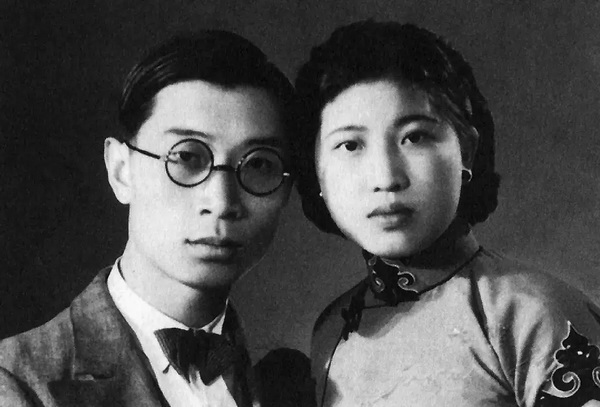
Fu lei and his wife
V. "Song Family Living Room"
We walked slowly along the courtyard wall of No.5, just to have a look at the place where Fu Lei translated Philosophy of Art.
In the yard of No.3 next door, I climbed to the wooden outer packaging shelf under the courtyard wall with a crooked neck tree. Standing on a rickety but just-high wooden bar, I saw the yard. It was the screw shell that Fu Lei and his wife managed to survive in the stormy sixties. I heard that they are here to entertain friends and enjoy roses. At that time, Mei Fu was still the beautiful salon lady described by Yang Jiang. Until the wind against intellectuals in the society became tighter and tighter, their friends stopped walking. Their garden also responded to the sad old China saying: When disaster strikes, they fly separately.
In "Philosophy of Art", Fu Lei translated the conversation in the Italian urbino Palace like this: "Gentlemen are familiar with Greek literature, history, philosophy, and even know the philosophy of various schools. This is why women come out to intervene and ask for more talk about secular things with a little complaining tone; They don’t like to hear people mention Aristotle, Plato and the pedants who explain them. So the men immediately returned to the relaxed and happy theme and said some beautiful words to remedy the learned and mysterious discussion just now. And no matter how difficult the subject matter is and how heated the debate is, the conversation always maintains an elegant and beautiful style. They pay most attention to the appropriateness of wording and the purity of language. "
These are some joyful sentences. I wonder if Fu Lei was very yearning for them when he copied them alone.
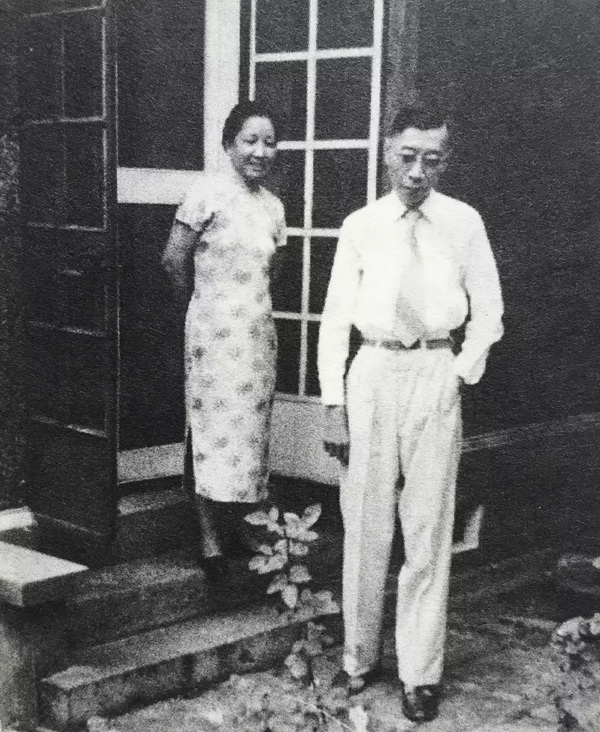
I think of Fu Lei’s face with round glasses, unwilling lips and sad smiling cheeks in the last few photos. Does anyone believe that this is a thin face due to malnutrition? In Mei Fu’s letter to Fu Cong, we can feel the hardship of the Fu family who lost their financial resources. She asked her son for a piece of butter.
That’s the face of the person who shaped my spiritual home. I like its fragility and rigidity, and I am amazed at its malnutrition. This person who was worried about food and clothing because he refused to change his name and publish his translation, a unique person who broke away from any system in the 1960 s and finally gave his life for freedom, translated for me the endless and cheerful conversation in the most elegant palace in Italy in the 16th century, and imitated the beautiful ending of Italian in the translation. I guess it’s hard for Fu Cong to understand the difficulties his parents encountered in food and clothing.
This is indeed the same person.
What kind of world this is.
On August 30, 1966, their friends came to visit. Mei Fu came to answer the door, but just looked at it silently at the door and closed the door.
6. urbino Palace in Andingfang
Leave the Garden No.3, where the Fu Lei family once lived at first. Along the fence, I found an open space with no entrance and exit. There are several large vents in the subway station on the open space. The legendary black bamboo fence of Fu Lei’s house has been replaced by a thin brick wall. There is a barracks-style building opposite the clearing. In those days, Ye Yonglie was not allowed to enter his garden, so he climbed to the stairwell of the house and barely took photos.
Now the trees in the garden have grown a lot taller, and the garden is densely covered.
I stood on the well edge of the subway vent, which was relatively high. But I still can’t see the front of Fu Lei’s balcony clearly. Leaves are too dense, leaves and shrubs are dense, tall and lush, as if full of strange and exuberant vitality. Vaguely, I saw a corner of Fu Lei’s study completely shrouded in dark and sad light. Dimly, it seems that the couple looked at me from there, emerged from the deep well into the white light of the water waves, and it was an old couple who put their hands on their chests.
Alone.
What comes to my mind are Fu Min’s father’s study and the manuscript of Philosophy of Art described by Lang Hao in lower case.
"The magnificent Juefu was built by Guido’s father, and’ according to many people’ is the most beautiful one in Italy.
Urbino Palace is the most elegant one in Italy. It often holds celebrations, dances, contests, competitions and chats. Castiglione said,’ meaningful conversation and noble entertainment make this house a place of real pleasure.’
They opened the window facing the peak of Cathary, but they saw a rosy glow in the east, and the dawn was beginning to open. All the stars have disappeared, only Venus, the gentle messenger, still stays on the boundary between day and night. It’s as if a breath of fresh air is blowing from her, and it’s freezing cold.
One of the people who took part in the conversation, Benbo, is the purest and most authentic Cicero school in Italy and the most syllable-oriented essayist. The rest of the conversation, the tone is similar.
All kinds of manners, mutual respect and extreme diligence: this is the most important way to live and the most lovely place in the upper class. But politeness does not exclude interest. "
In the heavy shadows in front of me, I think of the old palace of urbino Art Museum. The bright sunshine in central Italy in summer is the light of young Raphael painting the Virgin of Youth. Dana, who read Fu’s translation in the antique window of urbino Palace, seems to be top-heavy like a dream.
In urbino Palace, I sat down and read in front of the Renaissance cast iron glass window, just like the women painted by Raphael and vasari. I sometimes look at the sunny square under the window and the blue mountains in the distance, and most of the time I am reading the anecdote of urbino Palace recorded in the Philosophy of Art-an out-and-out geographical reading.
But Fu Lei didn’t even wait for the publication of Philosophy of Art..
For me who doesn’t know French, without Fu Lei, there would be no Dana, and without my spiritual vitamins, there would be no writer like me who can travel in Italy today.
For me, Fu’s translation is not only the transmission of Dana’s thoughts, but also a beautiful and quaint Chinese model. Of course, Dana is good, but it is the sonorous and enthusiastic translation of Chinese style by Fu that makes it a good material to create my spiritual home. For my generation of China writers, our spiritual vitamins are not only Tang poetry, Song poetry and Yuan Qu, but also novels of Ming and Qing Dynasties. It is also a beautiful and subtle tradition of European romantic poetry, realistic novels and prose. Fu’s translation is a part of the essence of the beautiful and vast China culture. It has the beauty of the world’s great harmony. Since I was a teenager, with its French spirit and China’s quintessential culture, it has attracted a child who has read banned books since childhood and refuses to be fooled. Before I became a writer, it was a beam in my vocabulary.
Reading Fu Yi’s translation in Italy, I would like to take my body sitting in front of the urbino Palace as his, not my own. I wish my hands touching the palace were his, not mine. Just like when I go to a beautiful place, I always think of my father who loves to travel. I regret that he will never see the beauty of the world again. At that moment, I had this regret for Fu Lei from afar. Without his Philosophy of Art, I wouldn’t have such empirical knowledge about Tuscany.
Translator is also my father in literature.
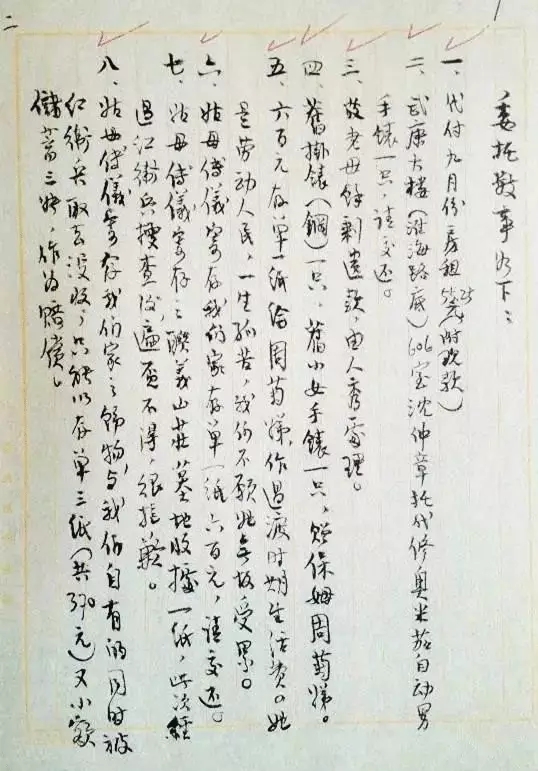
Fu Lei’s suicide note
At this time, I felt a soft foot, the slate I was standing on suddenly cracked and my body began to shake. At that time, I could hardly move my brain, but slowly and quietly realized that if I fell back, I would fall on my back on the vent, and there was a five-story vent below. I didn’t want to fall, so I jumped forward. I saw the old fallen leaves in the corner suddenly become very close, and my body stumbled in the fallen leaves and stood still.
Standing there, I saw the new wall of Fu Lei’s yard. Someone sprayed a word on the wall with a black jar: SCHOOL. This word emerges from other chaotic patterns and portraits. I still haven’t seen the study described by Yang Jiang and translated by Fu Min.
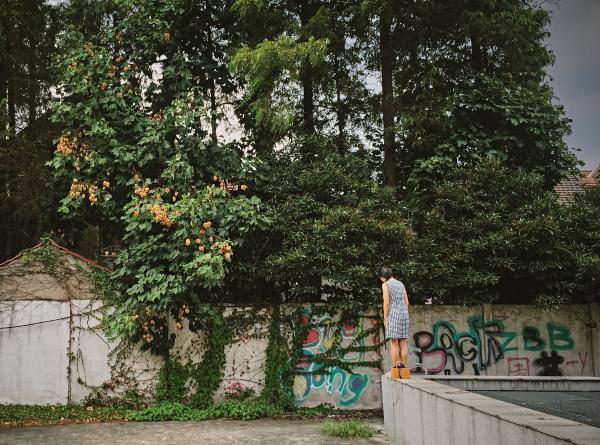
Photo by Ding Xiaowen outside Fu Lei’s former residence
I couldn’t see clearly, only to find that my glasses were gone.
My photographer and I are looking for glasses in the fallen leaves. She showed me the photo she just took, and I saw myself standing on the edge of the well and hanging my head to the yard, as if mourning.
"It seems that we are attending a funeral." My photographer suddenly said this. She looked around and a strange smile appeared on her face. The atmosphere here has really become strange.
My head is dizzy.
I don’t want my glasses, I just want to go away.
She was still looking at the tall building in the distance, dragging her stutterer’s usual long voice and saying, you know, when building that building, the big crane on the roof came loose and killed a person.
Suddenly, we both saw at the same time that my glasses were placed squarely on the rocks in the grass, just like the way they were placed on the table. There was nothing on the stone just now.
I know in my heart that they got my glasses back, Fu Lei and Mei Fu. It’s been fifty years, and they haven’t gone away.
The photographer won’t let me take my glasses. I comforted her and said, "They like us, so they didn’t let me fall to death and helped me find my glasses. They are good to us. " Then I picked up my glasses and I will cherish them from now on.
We went back to the iron gate of No.5, and the iron gate opened a crack. Their ghosts really didn’t disperse.
The door from which their barefoot bodies were carried out is still open.
Seeing the narrow window behind the house, Philosophy of Art was translated in the skylight in the window. The last night, the Fu Lei couple and their nanny also spent the last night in the window here. Then, in the middle of the night, they spread a quilt on the ground and hanged themselves.
A few years ago, Fu Lei had no contribution income, only the advance contribution fee, and the advance contribution fee had stopped after the Cultural Revolution began. They will soon face economic difficulties. After the property raid, their clothes were sealed. In the heat of August, they, a decent couple, didn’t even have a change of underwear. The Red Guards won’t let them go, like their old friend Shi Zhecun. So, they want to escape to death anyway.
September 1st is the day when I entered primary school as a freshman. I remember that on the fiery playground, the teacher stood on the platform of the instructor and said, "Students, the Great Proletarian Cultural Revolution has begun."
The first-grade children listened in ignorance and thought to themselves: Oh.
When I was seven years old, I didn’t know that on the second day of school, Fu Lei died.
When I was in Italy in June, I planned to go back to Shanghai and visit Fu Lei’s former residence later. That’s for my trip to Italy to find the roots in books. I didn’t know then that I would meet their ghosts here in August.
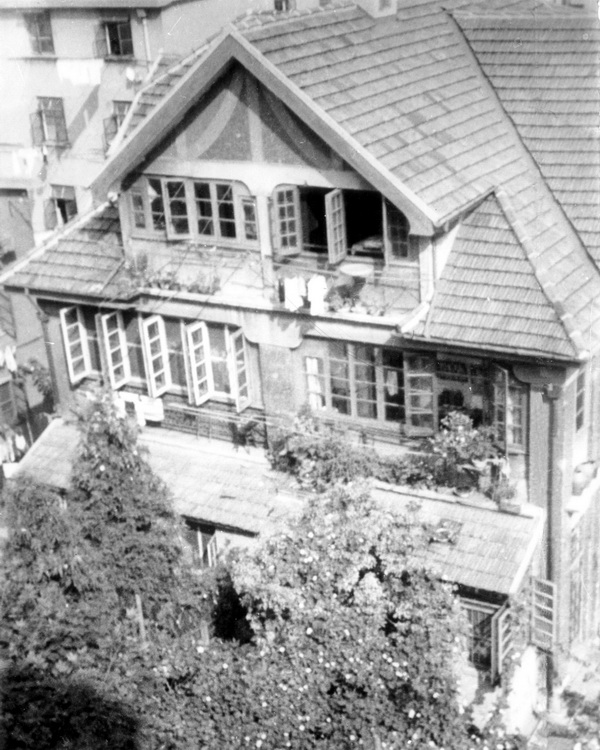
Fu Lei’s former residence is provided by Ye Yonglie.
The outer wall of Fu Lei’s former residence. Photo by Ding Xiaowen
When I left Andingfang, my photographer suddenly asked, Who are the other old couples?
I think it’s another old couple They are not as famous as Mr. and Mrs. Fu Lei, so now we don’t know who they are and why they both committed suicide. However, their ghosts have not dispersed.
Compared with Fu Lei and his wife, this unknown old couple is more sad, as vast and muddy as the Great River East.
What a world it was fifty years ago in the summer.
VII. Conclusion
On August 31st, 2016, 50 years ago, the Fu family finally ushered in a crazy property-buying day, and I finally entered the former residence of Fu Lei with the help of the doctor’s son. Although autumn is bright outside, the room is gloomy. I saw that within the two steel windows behind the house, the place where Fu Lei translated Philosophy of Art has now been transformed into a dining room. On the round table, covered with a layer of shallow floating glass, like a silent puddle in the forest, it reflects the treetops outside the window and the high blue sky on the treetops.
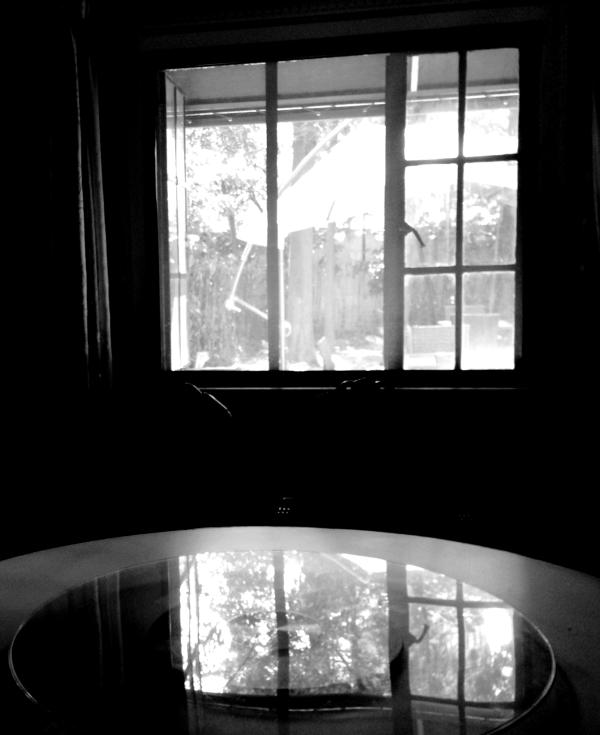
Interior of Fulei’s former residence
Of course, the complete dictionary corner has disappeared. The doctor’s son leisurely remembered that the Fu family guest he had seen in those years was buried in Fu Lei’s dictionary, and that person turned out to be Shi Zhecun.
I stood between two windows, and he translated the Philosophy of Art in the skylight in the window. Now I stand and read the words that have become type, which can be said to be Fu Lei’s last effort. At the end of this chapter, I wrote about vasari, an architect, who was the first person to write art history in the world. The last time I read vasari, it was in the hanging garden of vasari’s former residence in arezzo. On the ancient streets, the sunset in June is generally gilded on the path of vasari Garden and the bodhi tree with budding flowers, and the sweet smell is gently shrouded in the shade above my head.
"We have noticed that two conditions must be met in order to produce great works: first, spontaneous and unique emotions must be very strong and can be expressed without scruple, without fear of criticism or guidance; Second, there should be sympathy around you, and similar ideas should always help you in the outside world, so that some vague ideas in your heart can be nourished, encouraged, hatched, matured and propagated. "
This is Renaissance Italy and China.
The doctor’s son looked around me, which was a decent family in his childhood. Because of this, he, a student of biology, began to read Balzac and Roman Roland. As his family is next door to the pianist Gu Shengying’s, he also likes the piano. He walked around the room, gesturing to the position of the dictionary in the study and the position of the twenty-four histories, and walked to the window beside me. Suddenly, he learned the way Fu Lei greeted him and said in a rough voice, "Are the children coming?"
This is the first time I have heard someone speak like Fu Lei.
It was noon when I left Fu Lei’s house this time. On the Jiangsu Road, the trees were swaying, and the opposite of Fu Lei’s house was still the No.3 Girls’ Middle School in the city. Not far away, there were Jiangwu Primary School and Yuyuan Road Primary School, and school would start tomorrow. On the way, I saw a child with a new schoolbag, shining beside his father. Is this my shadow? School will start tomorrow. Will the young Chinese teacher tell the children that a master named Fu Lei once lived in this alley?