Lecture on Su Rongyu: Region and Style
Source: Cross-cultural Art History
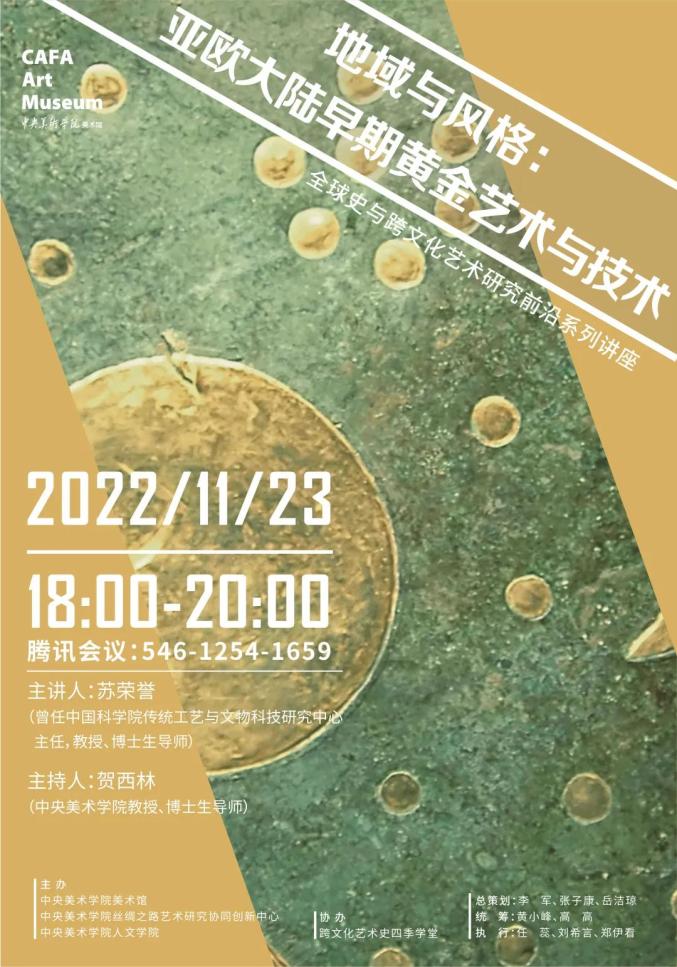
Lecture information
Region and style
-Early gold art and technology in Eurasia.
A series of lectures on the frontier of global history and cross-cultural art research
Four Seasons School Autumn Lecture
November 23rd, 2022 (Wednesday) from 18: 00 to 20: 00.
Video number of "Cross-cultural Art History" & Tencent Conference
Speaker:
Su Rongyu used to be the director, professor and doctoral supervisor of the Research Center for Traditional Crafts and Cultural Relics of China Academy of Sciences.
Moderator:
He Xilin, professor and doctoral supervisor of Central Academy of Fine Arts.
Lecture introduction
Eurasia is the birthplace of human civilization and the space for the development, evolution, even decline and interruption of major civilizations. The three major religions in history: Catholicism, Islam and Buddhism-Taoism are located in the west, middle and east of the mainland respectively. The theory of human going out of Africa holds that modern people are of the same origin, but they have evolved in different environments and communicated with each other. This paper takes gold as the object and art and technology as the starting point to discuss the early attitude, performance and expression of Eurasia towards gold. The obvious fact is that, as the birthplace of human civilization, the worship of gold in the Near East was established as early as the 6th millennium BC, followed by Central Asia and North Africa, belonging to the same system. Therefore, forging, hollowing, hollowing out, foil gold and welding techniques are basically used to process gold wares and use them for decoration. But East Asia is different. Gold appeared late in Shang and Zhou Dynasties, and its quantity was relatively small, and it was cast and shaped until Qin and Han Dynasties. The true worship of gold may have originated in the Eastern Han Dynasty and formed in the Tang Dynasty after the Wei and Jin Dynasties. In addition, in the early history of East-West communication, the role of East Asia was always receptive and rarely exported, as was the gold art and technology.
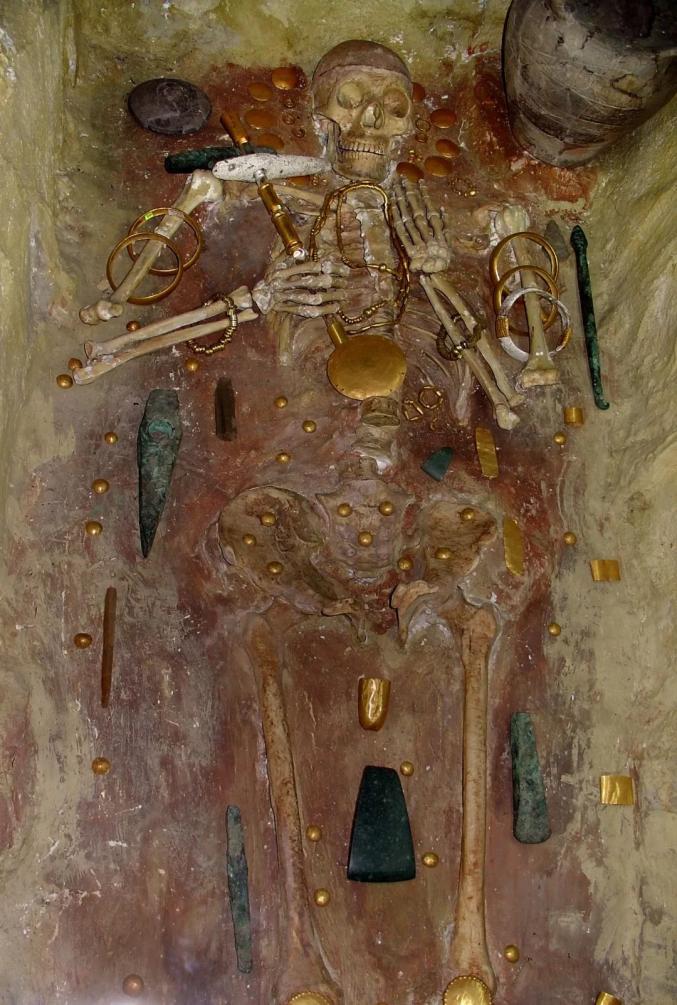
M43 of Varna Cemetery in Bulgaria, about 6000 years ago.
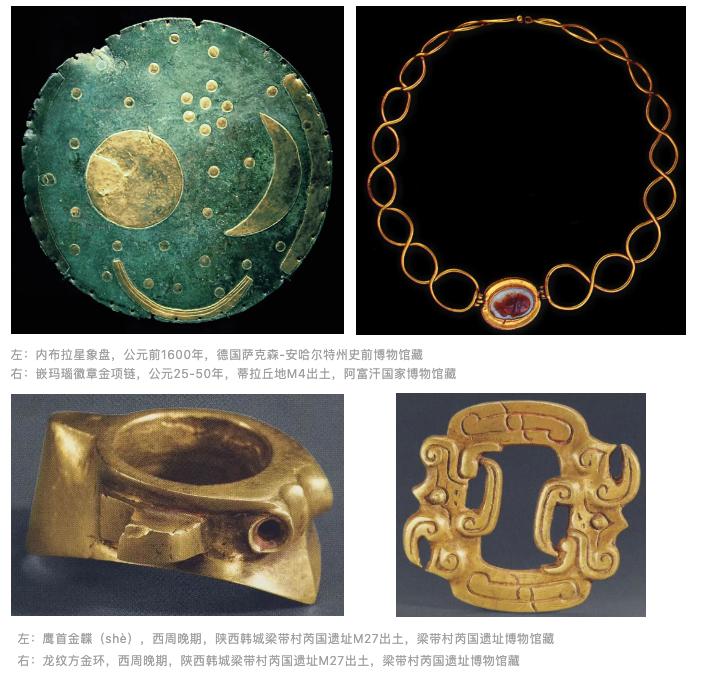
Introduction to the lecture
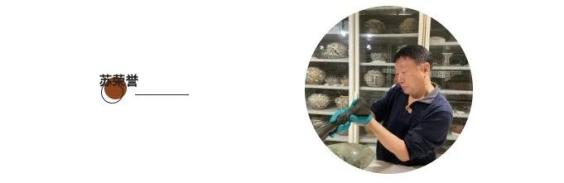
Su Rongyu joined the Institute of Natural Science History of Chinese Academy of Sciences in 1986. In 1997-1998, he was a senior visiting scholar in the Philosophy Department of TU-Berlin, and studied the history of technology. From 2000 to 2001, he was a Forbes Fellow at the Smithsonian Institution in Washington, D.C., and conducted bronze art and technology research at The Freer Gallery of Art and The Arthur M. Sackler Gallery of Art. In 2001, he was promoted to researcher and doctoral supervisor, served as the executive director and secretary-general of the China Society of History of Science and Technology, and concurrently served as an academic member of the Archaeological Center in China, Peking University. In 2004, he founded the Cultural Relics Technology and Traditional Craft Research Center of China Academy of Sciences and served as the first director. From 2003 to 2012, he conducted academic research or gave lectures as a visiting professor and visiting professor at Uni-Tübingen University, Technical University of Berlin and Uni-Frankfurt am Main. In 2017, as a visiting professor, he conducted cooperative research at the British Museum. The research direction is ancient metal technology and art, and the subjects involved include technical history and art history (art archaeology)., archaeology, science and technology archaeology, cultural relics protection, etc. He has published more than 100 monographs and articles.
Introduction to the host
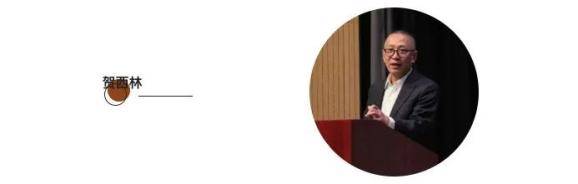
He Xilin, professor and doctoral supervisor of the School of Humanities, Central Academy of Fine Arts, and director of the Archaeological Society of China. National high-level talent "Ten Thousand Talents Program" is a leading talent in philosophy and social sciences, and a visiting scholar in the Department of Art History and Architectural History of Harvard University. He has been engaged in the teaching and research of China art history, art archaeology, China ancient visual culture and material culture for a long time. Completed 4 national and provincial research projects, published 8 monographs, published more than 30 papers, and edited 10 textbooks. His representative works include Reading Pictures and Viewing History: Archaeological Discovery and the Study of Visual Culture in Han and Tang Dynasties, The Dimension of Eternal Life: the History of Murals in China Tomb (co-authored) and A Brief Compilation of China Art History (third edition) (co-authored, won the first National Excellent Textbook Award).
Brief introduction of series lectures
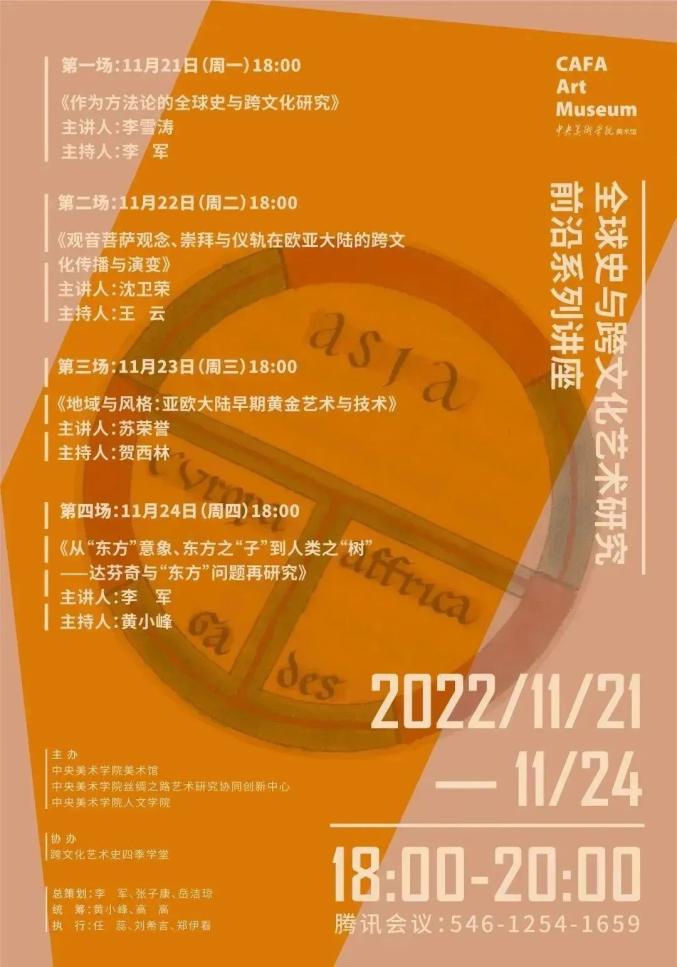
Sponsors: Art Museum of Central Academy of Fine Arts, Silk Road Art Research Collaborative Innovation Center of Central Academy of Fine Arts, and School of Humanities of Central Academy of Fine Arts.
Co-organizer: Four Seasons School of Intercultural Art History
Chief planner: Li Jun, Zhang Zikang and Yue Jieqiong.
Coordination: Huang Xiaofeng, Gao Gao
Execution: Ren Rui, Liu Xiyan, Zheng Yi.
Season school
Four Seasons School is established in the order of spring, summer, autumn and winter. Invite famous scholars or people in the cultural and artistic circles to host the "Four Seasons Lecture Hall"; Focus on launching the "Four Seasons Forum" to train and discover young scholars; Organize art investigation activities related to "Walking Art History" to share the beautiful and pure aesthetic experience with the public.
Editor-in-Chief Wu Qiong
Editor He Yifan
Original title: "Lecture on Su Rongyu: Region and Style-Early Gold Art and Technology in Eurasia"