Notice on printing and distributing the measures for the assessment of propaganda work of radio and television stations (stations) in counties (districts) of the whole province

Municipal Wenguang New Bureau, Suizhong Wenguang New Bureau and Changtu Radio and Television Bureau:

  The "measures for the assessment of propaganda work of radio and television stations (stations) in counties (districts) of the province" are hereby printed and distributed to you, please earnestly implement them.

  Please forward this document to the county (district) radio and television station (station) within the jurisdiction of each city.

  Liaoning province press and publication bureau of radio, film and television??????
  December 9, 2014??????

The whole province county (district) broadcasting and TV station (station)
Measures for the assessment of propaganda work

  In order to thoroughly implement the spirit of the series of important speeches by the Supreme Leader General Secretary and the spirit of the 18th National Congress of the Communist Party of China, the Third and Fourth Plenary Sessions of the 18th Central Committee, give full play to the role of radio and television in guiding society, educating people and promoting development, and continuously improve the public opinion guidance level and program quality of radio and television in our province and counties (districts), these measures are formulated.
  First, the assessment object
  Radio and television stations (stations) in counties (districts) in the province formally approved by the national and provincial radio and television administrative departments.
  Second, the assessment principle
  In line with the principle of "fairness, justice and openness", we should focus on quantification to ensure scientificity, standardization and authority.
  Third, the assessment time
  At the beginning of each year, the annual work of the previous year was assessed.
  Fourth, the assessment content
  Mainly based on the results of county (district) radio and television publicity and reporting, the specific contents are as follows:
  (a) radio and television propaganda work firmly grasp the correct direction of public opinion, and the publicity work has achieved obvious results throughout the year:
  1, can better complete the important deployment and requirements of the superior related propaganda work. (5 points)
  2. Be able to work closely around the local party committee and government center. (5 points)
  3. There were no problems that caused adverse effects in the publicity work. (10 points)
  4. The contents of publicity reports strictly comply with the relevant requirements of the State Administration of Press, Publication, Radio, Film and Television "Radio and Television Publicity Management Manual". (10 points)
  (two) radio and television works have won honors or awards at or above the municipal level:
  1. Municipal honors or awards: Radio and television works won the first prize or above in various appraisals and awards held by the Municipal Bureau of Culture and Broadcasting and the Municipal Radio and Television Association, among which:
  (1) 1 point for each winning work.
  (2) Award-winning columns, each with 3 points.
  2. Provincial honors or awards: radio and television works won the second prize or above in various competitions organized by the Provincial Press, Publication, Radio, Film and Television Bureau and the Provincial Radio and Television Association, among which:
  (1) For the works that won the first prize, 10 points will be added for each; For the works that won the second prize, 5 points will be added for each.
  (2) For the column that won the first prize, 20 points will be added for each column; Get the second prize column, each with 10 points.
  (3) TV dramas, cartoons, documentaries and other works won the first prize, each with 20 points; Won the second prize, each with 10 points.
  3. National honors or awards: Radio and television works have won awards in various competitions or awards organized by the State Administration of Press, Publication, Radio, Film and Television, China Radio and Television Association and China Journalists Association, among which:
  (1) Get the first prize, each with 50 points.
  (2) Get the second prize, each with 40 points.
  (3) Won the third prize (including nomination prize, encouragement prize, etc.), each with 30 points.
  (three) radio and television works are broadcast by the media at or above the municipal level:
  1, radio and television works are broadcast by the local municipal station main frequency channel, each work plus 1 point.
  2, radio and television works are broadcast by Liaoning Radio and Television Comprehensive Broadcasting or satellite channels, each work plus 10 points; If it is broadcast on other frequency channels, add 5 points.
  3, radio and television works by china national radio, CCTV broadcast, each work plus 30 points.
  (four) radio and television propaganda business papers published or published in authoritative newspapers and periodicals at or above the provincial level:
  1, radio and television papers published or published in provincial authoritative newspapers and periodicals, each with 5 points.
  2, radio and television papers published or published in national authoritative newspapers and periodicals, each with 20 points.
  (five) radio and television propaganda work has made outstanding contributions or been affirmed and praised by leaders at or above the municipal level:
  1, radio and television propaganda work by the local municipal party committee and municipal government leaders instructions affirmation and praise, each instruction plus 5 points.
  2, radio and television propaganda work by the provincial party committee and government leaders instructions affirmed and praised, plus 30 points; Be affirmed and praised by the leaders of the provincial press, publication, radio, film and television bureau, plus 20 points; Be praised by other provincial units and departments, plus 15 points.
  3, radio and television propaganda work by the State Administration of press, publication, radio, film and television instructions affirmed and praised, plus 50 points.
  (six) there are obvious innovations in the ways and means of radio and television propaganda work, and the practice has proved that the effect is good:
  1, in line with the conditions, plus 20 points.
  2, in the province with reference and promotion significance, plus 30 points.
  V. Assessment methods
  (1) declaration
  The county (district) radio and television stations (stations) in the province shall, in accordance with the above assessment methods, report the relevant materials of the previous year to the Municipal Bureau of Media and Broadcasting at the beginning of each year, and report them to the Provincial Bureau of Press, Publication, Radio and Television after being examined and confirmed by the Municipal Bureau of Media and Broadcasting.
  (2) Examination and approval
  The Provincial Bureau of Press, Publication, Radio, Film and Television composed an evaluation team, and carefully reviewed and evaluated the situation of the county (district) radio and television stations recommended by the Municipal Bureau of Media, Broadcasting and Television, and scored them according to the scores. The comprehensive top five and single first place were advanced.
  (3) Examination discipline
  Counties (districts) radio and television stations (stations) should truthfully fill in the participating materials, and the Municipal Bureau of Media, Broadcasting and Television should conscientiously perform the responsibility of preliminary examination. If fraud is found, the provincial press, publication, radio, film and television bureau will revoke its qualification for participating and report to informed criticism.
  (4) Honor
  Advanced units are honored as provincial-level industries and enjoy corresponding treatment, and the provincial press, publication, radio and television bureau informs the county (district) committee where the press, publication, radio and television industry and honorary units are located in the province in the form of official documents.
  This assessment method shall come into force as of the date of promulgation, and the Provincial Press, Publication, Radio, Film and Television Bureau shall be responsible for the final interpretation.

Notice of Beijing Municipal Bureau of Civil Affairs on Printing and Distributing the Measures for the Examination and Confirmation of Beijing’s Minimum Living Security and Low-income Family Assistance

Jing Min She Jiu Fa [2022] No.321

District Civil Affairs Bureau, Social Affairs Bureau of Beijing Economic and Technological Development Zone:

  The "Beijing minimum living security and low-income family assistance audit confirmation measures" issued to you, please seriously implement the actual.

Beijing Municipal Civil Affairs Bureau    

November 17, 2022  


Measures of Beijing Municipality on the Examination and Confirmation of Minimum Living Security and Assistance for Low-income Families

Chapter I General Provisions

  Article 1 (Purpose and Basis) In order to standardize the examination and confirmation of the minimum living security (hereinafter referred to as the minimum living security) and the assistance for low-income families, and ensure that the assistance system for the minimum living security and low-income families is implemented openly, fairly and justly, According to the Notice of the Ministry of Civil Affairs on Printing and Distributing the Measures for the Examination and Confirmation of the Minimum Living Security, the Notice of the Office of the Central Rural Work Leading Group of the Ministry of Civil Affairs and the National Rural Revitalization Bureau of the Ministry of Finance on Further Improving the Work of Social Assistance such as the Minimum Living Security, the Measures for the Implementation of Social Assistance in Beijing, the Notice of the General Office of the Beijing Municipal Committee of the Communist Party of China and the General Office of the Beijing Municipal People’s Government on Printing and Distributing Several Measures for Reforming and Perfecting the Social Assistance System, and the spirit of relevant documents, these measures are formulated in combination with the actual situation of this Municipality.

  Article 2 (Scope of Application) These Measures shall apply to the acceptance, investigation and verification, examination and confirmation, fund distribution, management and supervision of applications for assistance to low-income families in this Municipality.

  Article 3 (Division of Responsibilities) The Civil Affairs Bureau is the competent department in charge of the relief work for low-income families in this Municipality, and is responsible for the overall arrangement, guidance and supervision. The District Civil Affairs Bureau is responsible for the comprehensive management of low-income families’ assistance in this area, and provides operational guidance and supervision on the street (township) to carry out low-income families’ assistance. Street (township) is responsible for the acceptance, investigation and verification, examination and confirmation, dynamic management and other work of the application for low-income and low-income families in this area. Community (village) to assist in the rescue object discovery report, application review, dynamic management, policy publicity and other related work.

Chapter II Qualifications

  Article 4 (Qualifications for Minimum Living Allowance) Families composed of registered residents in this Municipality whose monthly per capita income of family members living together is lower than the minimum living allowance standard of this Municipality in the current year, and meet the provisions on the property status of the minimum living allowance families in this Municipality, shall be included in the minimum living allowance scope.

  Families composed of non-local registered residents and local registered residents, among which non-local registered residents must hold residence permits in this city and meet the requirements of monthly per capita income and property status of family members mentioned in the preceding paragraph, can also be included in the scope of this Municipality’s minimum living allowance.

  Article 5 (Direct Inclusion) Persons registered in this Municipality who meet one of the following conditions shall be directly included in the minimum living allowance:

  (1) Persons with disabilities in vision, hearing, speech, and limbs in low-income families with disabilities of Grade I or II and persons with intellectual and mental disabilities with disabilities of Grade I, II or III (hereinafter referred to as severely disabled persons);

  (two) in line with the provisions of the city’s minimum family property status, relying on brothers and sisters or the elderly aged 60 and above to support or raise adult unemployed severely disabled people.

  Article 6 (Special Objects) In the early 1960s, the retired old workers, the educated youth who returned to the city because of work (illness), the former Kuomintang rebels who surrendered and released Amnesty, the "old returned overseas Chinese" with difficulties and other special relief objects who enjoyed regular quantitative relief from the government according to the relevant policies of the state were given protection according to the minimum living standard of this Municipality.

  The identification of the special relief object mentioned in the preceding paragraph shall be implemented in accordance with the relevant documents of the state and this Municipality.

  Article 7 (Conditions for Determining Low-income Families) Families composed of registered residents in this Municipality who are not included in the minimum living allowance, whose monthly per capita income of family members living together is lower than the minimum wage standard, and the total amount of per capita monetary property for emergency use does not exceed 1.5 times of the per capita consumption expenditure of urban residents in this Municipality last year, and the physical property meets the conditions for determining the minimum living allowance, can be included in the assistance for low-income families.

  Families composed of non-registered residents and registered residents in this city, in which non-registered residents must hold residence permits in this city and their income and property meet the provisions of the preceding paragraph, can also be included in the assistance of low-income families.

  Article 8 (Restriction on Repeated Assistance) If family members who are not registered in this Municipality have obtained assistance from low-income or low-income families in their registered residence or other areas, they will no longer enjoy assistance from low-income or low-income families in this Municipality.

  Article 9 (Restrictions) The following circumstances are not included in the scope of assistance for low-income families in this Municipality:

  (1) Students who are not registered in Beijing have moved into the collective accounts of schools in Beijing because of their schooling;

  (two) to evade laws and regulations to conceal economic sources;

  (three) other circumstances identified by the civil affairs department.

  Article 10 (Family Members) Family members living together as mentioned in these Measures include:

  (1) spouse;

  (2) Minor children;

  (3) Children who have grown up but cannot live independently, including those who receive full-time undergraduate education at school or below;

  (4) Other persons who have the legal obligation to support, support and support and live together for a long time.

  Article 11 (Excluding Family Members) The following persons are not included in the family members who live together:

  (a) conscripts in active service;

  (two) for more than three consecutive years (including three years) from the family to live independently;

  (3) Persons declared missing by the people’s court;

  (four) serving a sentence in prison and compulsory isolation of drug addicts in drug rehabilitation centers;

  (five) other personnel identified by the civil affairs department in accordance with the relevant procedures.

  Article 12 (Identification of Family Economic Status) The identification of family economic status includes the income and property of the applicant and his family members, and the specific identification conditions shall be implemented in accordance with the relevant provisions of this Municipality.

Chapter III Application and Acceptance

  Article 13 (How to Apply) To apply for assistance to low-income and subsistence families, the applicant family shall determine a family member who lives together as the applicant, and apply in writing or online to the street (township) where the household registration is located, or submit the application materials to the street (township) where the household registration is located. The street (township) shall promptly refer all the materials to the street (township) where the household registration is located through the social assistance information management system. If it is difficult to fulfill the application procedures, you can entrust the community (village) or others to apply for it, and go through the corresponding entrustment procedures.

  Article 14 (Application for Separate Families) If the household registration of family members living together is inconsistent with their place of residence, they shall apply according to the following principles:

  (a) family members in the same domicile and domicile and residence are different, apply to the domicile street (township);

  (two) family members in multiple domicile and domicile and residence are not the same, to the majority of family members domicile street (township) application; Family members with the same household registration number may apply to any street (township) where they are registered;

  (three) family members in more than one household registration and some family members have the same household registration and residence, and apply to the street (township) where they live.

  Article 15 (Application for Removable Public Household Registration) Families or individuals who belong to the removable "collective household registration" and "community public household registration" shall apply to the street (township) where the household registration is located according to the principle of territorial management, and the community (village) where the household registration is located shall assist in the relevant work.

  Article 16 (Separate Application) An applicant may file a separate application under any of the following circumstances:

  (1) Religious personnel who have been separated from their families and lived in religious places for more than three years (including three years) and have difficulties in life;

  (two) divorced or widowed people who live with their parents for a long time.

  Article 17 (Application Materials) To apply for assistance from low-income families with minimum living allowance, the applicant shall fill in the Commitment and Power of Attorney for Social Assistance Application (Annex 1) and submit the following materials:

  (a) I and my family members living together, as well as the legal dependents, dependents, and the original ID cards and household registration books of the dependents;

  (two) other materials that cannot be obtained through the sharing of government data.

  Article 18 (Obligation to Apply for Family Members) Relevant persons applying for subsistence allowances and low-income family assistance shall perform the following obligations:

  (1) Submit relevant materials as required;

  (two) a written statement of the basic information of family members, family income and family property status and signature confirmation;

  (three) to perform the relevant procedures authorized to check the information of their family members and their family economic status, and to cooperate with the investigation;

  (four) to promise that the information provided is true and complete, and there is no deception or concealment;

  (five) family members, family income, family property status changes, must promptly take the initiative to declare;

  (6) Unemployed persons who have the ability to work within the legal working age should actively seek employment and voluntarily accept employment training and job introduction provided by streets (towns); Among them, registered unemployed persons shall perform relevant obligations in accordance with the provisions of this Municipality on the administration of employment and unemployment.

  Article 19 (Withdrawal of Application) The applicant may revoke the application for assistance to low-income families with minimum living allowance in written form at the street (township) to confirm the previous time. Streets (townships) shall terminate the examination and confirmation procedures in time after receiving the written application.

  Article 20 (Examination of Materials) Streets (towns and villages) shall examine the application materials, and those with complete materials shall be accepted; If the materials are not complete, it shall fill in the Notice of Correction of Social Assistance Application Materials (Annex 2) and inform all relevant materials at one time.

  Article 21 (Filing of Close Relatives) Street (township) managers and community (village) staff who participate in the acceptance, examination and confirmation of social assistance, and their close relatives shall truthfully declare when applying for low-income and low-income family assistance; If the conditions for acceptance are met, it shall be registered separately.

  The scope of close relatives shall be determined with reference to the Measures of Beijing Municipality for Social Assistance Handling Personnel and Village (Neighborhood) Committee Staff and Their Close Relatives to Enjoy Social Assistance Filing (Trial).

Chapter IV Investigation and Verification

  Article 22 (Time Limit for Verification) Streets (townships) shall, within 10 working days from the date of accepting the application for assistance from low-income and low-income families, conduct a survey on the basic family information and economic situation.

  Article 23 (Verification Method) The following methods are mainly adopted to investigate the applicant’s family basic information, economic status and actual living conditions:

  (1) Information check. After accepting the application, the street (township) should check the information according to the authorization of the family members who apply for assistance and their related maintenance, support and maintenance obligors, and the check results provide a basis for the audit and confirmation.

  (2) Household surveys. Streets (townships) can carry out investigation and verification on the applicant’s basic family information, economic status and actual living conditions with the assistance of communities (villages). There shall be no less than 2 investigators in each group. Investigators went to the applicant’s family to learn about their actual living conditions such as food, clothing, housing and use, and the physical health of family members; According to the applicant’s family income and family property status, verify its authenticity and integrity, fill out the Social Assistance Application (Regular Verification) Household Survey Form (Annex 3), and sign it with the family members living together present.

  Depending on the situation, you can also take neighborhood visits, letters and other investigation methods.

  When necessary, household surveys, neighborhood visits, etc. can be conducted by telephone, video and other non-contact methods.

  Article 24 (Handling of Failure to Declare Family Members’ Information Truthfully) In the investigation and verification of streets (towns), if it is found that the applicant has failed to truthfully declare the basic information of family members and the basic information of legal maintenance, support and maintenance obligors and family members, it shall issue a Notice of Correction of Social Assistance Application Materials and inform the applicant in writing to complete all relevant materials. If the materials are not corrected in time without justifiable reasons, it shall be deemed that the applicant has given up this application.

  Article 25 (Notification of Verification Results) If the verification results of the family economic status of the applicant and related maintenance, upbringing and maintenance obligors do not meet the conditions for the identification of low-income or low-income family assistance, the street (township) shall issue a Notice of Investigation Results of Families Applying for Social Assistance (Annex 4). The family can provide relevant supporting materials within 4 working days from the date of receiving the Notice of Investigation Results of Families Applying for Social Assistance. If no explanation is given within the time limit without justifiable reasons, the street (township) shall make a decision on examination and confirmation according to the results of investigation and verification.

Chapter V Examination and Confirmation

  Article 26 (Preliminary Examination and Publicity) After the family investigation and verification is completed, the street (township) puts forward the preliminary examination opinions according to the basic information of the family and the investigation of the economic situation, fills in the Confirmation Form of the Minimum Living Security Audit (Annex 5) or the Confirmation Form of the Low-income Family Assistance Audit (Annex 6), and promptly publicizes the Public Notice of the Preliminary Examination of Social Assistance (Annex 7) in the community (village) affairs public column.

  There are objections to publicity or complaints, reports and other controversial families, streets (towns) should re-organize investigation and verification or democratic appraisal, and re-submit preliminary opinions according to the investigation or democratic appraisal.

  Article 27 (Democratic Appraisal) If it is necessary to conduct democratic appraisal, the street (township) shall, with the assistance of the community (village) within 4 working days, conduct democratic appraisal on the objectivity and authenticity of the survey results of the applicant’s family economic situation with the community (village) as the unit.

  (a) democratic appraisal by the street (township) staff, community (village) party organizations and autonomous organizations concerned members, familiar with the community (village) on behalf of party member, community (village) residents.

  (2) Democratic appraisal shall follow the following procedures:

  1. preach the policy. Street (township) staff introduced the participants in the appraisal, appraisal agenda, preached the policies and regulations on the qualifications, supervision and management of subsistence allowances and low-income families, and announced the appraisal rules and meeting discipline.

  2. Introduce the situation. The applicant states the basic situation of the family; Household investigators introduce the basic information, economic status and actual living conditions of the applicant family.

  3. On-site evaluation. Participants in the democratic appraisal evaluate the objectivity and authenticity of the applicant’s basic family information, economic situation and actual living conditions.

  4. Form a conclusion. Street (township) staff according to the on-site evaluation, to apply for family survey results to make a conclusion.

  5. Sign for confirmation. Democratic appraisal shall be recorded in detail item by item in accordance with the Minute of Democratic Appraisal Meeting (Annex 8), and all participants shall sign for confirmation.

  (three) democratic appraisal should be carried out in accordance with the prescribed procedures, and the applicant and family members should avoid it during the appraisal period. As one of the important elements of the files for low-income families, the Record Form of Democratic Appraisal Meeting is properly managed together with other files.

  Article 28 (Examination and Confirmation) After the publicity, the street (township) shall put forward examination opinions and make a confirmation decision within 5 working days. In line with the conditions, issue the Notice of Confirmation of Giving Minimum Living Security (Annex 9) or the Notice of Confirmation of Giving Assistance to Low-income Families (Annex 10); Do not meet the conditions, the issuance of "not to confirm the minimum living guarantee notice" (Annex 11) or "not to confirm the low-income family assistance notice" (Annex 12). Inform the applicant in writing within 3 working days after making the above confirmation decision, and obtain the service receipt.

  Article 29 (Prohibited Acts) Without investigation and verification, no family or individual may be directly included in the scope of assistance for low-income and low-income families.

Chapter VI Distribution of Funds

  Article 30 (Calculation of Minimum Allowance) The minimum allowance shall be calculated according to the actual difference between the monthly per capita income of the applicant family determined by examination and the minimum allowance standard of this Municipality, and at the same time, the assistance level shall be improved for people with special difficulties such as the elderly, minors, patients with major diseases and severely disabled people according to the classified assistance policy of this Municipality.

  Thirty-first (Full Payment of Minimum Allowance Personnel) The following personnel shall determine the amount of protection according to the full amount of the minimum allowance standard of this year:

  (1) Persons listed in Article 6 of these Measures;

  (two) to enjoy the national regular pension subsidies, meet the conditions of subsistence allowances and other special care recipients;

  (three) severely disabled persons included in the scope of assistance;

  (4) Other persons with special difficulties in life.

  Article 32 (Persons Paying Living Allowances) Seriously ill patients in low-income families shall be paid a living allowance at the rate of 35% of the current minimum living standard every month; Minors under the age of 16 in low-income families and students over the age of 16 who receive full-time undergraduate and below education will be paid a monthly living allowance according to 25% of the minimum living standard of the city in that year.

  Article 33 (Requirements for Payment) In accordance with the relevant provisions of the financial management system, the funds needed for the assistance of low-income and low-income families shall be included in the special account management and paid on time. Living allowance for low-income and low-income family members shall be paid from the month of approval, and socialized payment shall be implemented in principle, and the last month’s aid shall be paid to individual accounts before the 10th day of each month. If it is really impossible for socialized distribution due to special circumstances, the applicant shall submit a written application to the street (township), and the designated staff of the street (township) shall find the gold on his behalf.

  Street (township), community (village) staff on behalf of the custody of the bank passbook or bank card for receiving the minimum living guarantee or living allowance shall sign a written agreement with the family members of the minimum living guarantee and report to the district civil affairs department for the record.

  Article 34 (Limitation of Relief Projects) The persons listed in the second paragraph of Article 5 of these Measures are not applicable to special relief for families.

Chapter VII Management and Supervision

  Article 35 (Termination of Examination and Confirmation Procedure) If the family members living together refuse to cooperate with the examination and confirmation of low-income and subsistence allowances without justifiable reasons, the street (township) may terminate the examination and confirmation procedure.

  Article 36 (Timely Report) If the population status, income status and property status of low-income families have changed, they should take the initiative to report to the streets (towns) within one month.

  Article 37 (Regular Verification by Classification) Streets (towns and villages) shall regularly check the basic information and economic conditions of low-income families with minimum living allowance, and carry out classified management according to the actual situation of families.

  (a) for families whose economic status and basic situation of family members are relatively stable, they can be checked once a year;

  (two) for the income source is not fixed or easy to determine, and have the ability to work and working conditions of the family, should strengthen the verification, generally at least once every six months, if necessary, according to the information check early warning, complaints and reports at any time to check;

  (3) The persons listed in Article 6 of these Measures only need to know their physical health status in a timely manner, and do not need to check their economic status;

  (four) during the verification period, the economic situation of the low-income families has not changed significantly, and the amount of low-income insurance will not be adjusted.

  Article 38 (Active Employment) Unemployed persons who have received assistance from low-income families and have the ability to work within the legal working age should actively apply for employment and report their employment situation in time. Among them, if the unemployed registered in low-income families are deregistered due to one of the following circumstances, and there is no job-seeking behavior in other human resources service institutions, the streets (towns) shall stop issuing their own low-income allowances.

  (a) I terminate the employment requirements;

  (2) Refusing to receive public employment services for three consecutive times without justifiable reasons;

  (three) for 6 consecutive months without contact with the registered street (township) social security office.

  The situation of stopping hair mentioned in this article does not apply to registered unemployed persons such as pregnant, breastfeeding, long-term care for family members who are disabled, demented or severely disabled, and single parent raising preschool children.

  Article 39 (Disposal of Abnormal Situations) During the periodic verification, members of low-income and low-income families should actively cooperate and provide relevant materials as required within 15 days from the date of issuing the Notice of Submission of Verification Materials for Social Assistance (Annex 13). Those who fail to do so within the time limit will make a confirmation decision according to the information verification. If there is an increase in family members, the newly added members and their maintenance, support and maintenance obligors shall perform the procedures entrusted to check their economic situation.

  Without special circumstances, low-income and low-income families who refuse to provide relevant materials and information may suspend the payment of low-income allowances or living allowances.

  Fortieth (Termination or Change) Streets (towns and villages) shall, according to the changes of subsistence allowances, low-income family members and economic conditions, handle the procedures of stopping, reducing or issuing subsistence allowances in time; For those who no longer meet the conditions of subsistence allowances and low-income family assistance, they should go through the termination procedures in time, and fill in the Confirmation Form for Termination or Change of Minimum Living Security (Annex 14) or the Confirmation Form for Termination or Change of Low-income Family Assistance (Annex 15), and file them together with the original files.

  Article 41 (Termination or Change of Delivery) For those whose subsistence allowances and low-income families have been terminated, the street (township) shall promptly deliver the Notice of Stopping the Minimum Living Allowance (Annex 16) or the Notice of Stopping the Assistance to Low-income Families (Annex 17), and obtain a service receipt. For those whose family income or personnel status has obviously changed and meets the conditions of assistance, the street (township) shall promptly deliver the Notice of Change of Minimum Living Guarantee (Annex 18) or the Notice of Change of Assistance to Low-income Families (Annex 19), and obtain a service receipt.

  Forty-second (Relief Gradually Retreat) The subsistence allowances should take the initiative to report after employment. Take the initiative to report, after deducting employment incentives, if the family’s monthly per capita income is higher than the minimum living standard, but the family property meets the minimum living standard, it can be given a 12-month retirement period, and the minimum living allowance will still be received monthly during the retirement period. The specific criteria are: 100% of the original subsistence allowance paid by the family in the first 6 months, and 50% of the original subsistence allowance paid by the family in the last 6 months. According to the following procedures:

  (a) the minimum employment personnel to the streets (towns) to apply for relief in writing.

  (two) street (township) after acceptance, start the information check, the implementation of subsistence review procedures. For those who meet the conditions for the gradual withdrawal of assistance, they shall issue the Confirmation Form for Termination or Change of Minimum Living Security (Annex 14) and the Notice for Confirming the Gradual Withdrawal of Minimum Living Security Assistance (Annex 20), inform the applicant in writing and obtain a service receipt.

  (three) during the period of gradual withdrawal of assistance, the eligibility for subsistence allowances for families with gradual withdrawal of assistance will be retained, and no other changes will be made except for the applicant’s written request to stop the gradual withdrawal of assistance or the change of the family population of the applicant.

  Article 43 (Rescue and Migration) When the household registration of low-income and low-income families changes, the procedures for the migration of recipients’ qualifications shall be handled in time.

  If the migration scope is in this area, the street (township) shall go through the migration procedures.

  When the city moves across regions, the District Civil Affairs Bureau will assist in the transfer procedures. The transfer formalities shall be completed within 15 days. Move out of the street (township) shall pay the monthly subsistence allowance or living allowance; The street (township) where you move in should go through the immigration formalities in time, and the subsistence allowance or living allowance will be issued from next month.

  Move out of the city, the streets (towns) should handle the cancellation procedures in time.

  Article 44 (Archives Management) District Civil Affairs Bureau and streets (townships) shall standardize the management of the archives of low-income families with minimum living allowance, and electronic archives have the same effect as paper archives.

  Article 45 (Supervision and Inspection) The municipal and district civil affairs departments shall improve the supervision and management system, strengthen the supervision and inspection of the relief work for low-income and low-income families, randomly select a certain number of relief families every year, check whether the procedures are standardized, whether the identification is accurate and whether the files are complete, and correct the problems in time when found.

  The district civil affairs department should also focus on the supervision and inspection of the audit and confirmation of new and withdrawn relief objects, the issuance of funds, the filing of close relatives and the issuance of audit and confirmation documents every month.

  Article 46 (Information Disclosure) At the beginning of each month, the streets (towns) shall publish the assistance of low-income and low-income families in their administrative areas on the information disclosure website or the community (village) affairs public column where the rescued person lives for a long time, and accept the supervision of the public.

  The information disclosure scope of subsistence allowances and low-income families includes the name of the applicant of the rescued family, the number of people to be protected, the amount of monthly family security or living allowance, and the name of the street (township) where it is located. The period of publicity is from the date of approval of the assistance to the date of termination of the assistance.

  Article 47 (Confidentiality of Information) All kinds of staff involved in social assistance shall keep confidential the personal privacy involved in the rescue work, except the information publicized and published in accordance with the regulations.

  Article 48 (Social Supervision) Streets (towns and villages) shall, in accordance with the relevant provisions of the Measures of Beijing Municipality for the Verification of Letters and Visits and Complaints about Social Assistance Work, make public consultation and supervision by telephone, and improve the verification system of complaints and reports. If there are complaints and reports, they shall be investigated one by one.

  If a family or individual who has applied for or obtained assistance refuses to accept a specific administrative act made by a street (township), it may apply for administrative reconsideration or bring an administrative lawsuit according to law.

  Article 49 (Punishment for Violation of Rules) Whoever defrauds social assistance funds by means of false reporting, concealment, forgery, etc., shall stop the assistance, and shall be ordered to return the illegally obtained assistance funds according to the relevant provisions of the Measures for the Implementation of Social Assistance in Beijing, and may be fined between 1 and 3 times the illegally obtained assistance amount.

  Threaten, insult, beat and scold the staff who perform the duties of social assistance, disturb the work order, and constitute a violation of public security management, and be given administrative penalties for public security according to law.

Chapter VIII Supplementary Provisions

  Fiftieth District Civil Affairs Bureau may, in accordance with these measures, formulate detailed rules for implementation in combination with the actual situation in this district.

  Fifty-first living allowance application, examination and confirmation procedures with reference to the relevant provisions of the minimum living allowance. Severely disabled people who receive monthly subsidies for living difficulties will no longer receive subsidies for living difficulties if their families meet the conditions for the identification of low-income families and give them subsistence allowances.

  Fifty-second approach by the Municipal Civil Affairs Bureau is responsible for the interpretation of.

  Article 53 These Measures shall come into force as of the date of issuance. The Notice of Beijing Municipal Civil Affairs Bureau on Printing and Distributing the Work Plan for the Reform of the Examination and Approval System of Social Assistance in Beijing (No.73 [2020] of Jingmin Society) shall be abolished at the same time. Where the relevant provisions in other documents are inconsistent with these Measures, these Measures shall prevail.

Mao Weiming emphasized the "acceleration" of major projects to create a "strong engine" for high-quality development during the investigation in Yueyang.

  Hunan Daily, December 5th (all-media reporter Sun Minjian) On the 5th, Mao Weiming, deputy secretary of the provincial party committee and governor, came to Yueyang for investigation. He stressed that it is necessary to keep in mind the earnest entrustment of the Supreme Leader General Secretary to "protect a river and clear water", keep the two bottom lines of development and ecology, run out of the "acceleration" of major projects, and turn the "advantage" of Tongjiang Dahai into the "victory" of high-quality development, and demonstrate the responsibility of provincial sub-central cities in accelerating integration into the Yangtze River Economic Belt.

  Vice Governor Qin Guowen and Secretary General of the provincial government Qu Hai attended.

  Yueyang is the core base for Hunan to build a trillion-dollar modern petrochemical industry. In recent years, the caprolactam relocation, transformation and upgrading project with a total investment of 20.8 billion yuan and the ethylene refining and chemical integration project with a total investment of 35.6 billion yuan have been listed in the annual "Top Ten Key Industry Projects" respectively. Mao Weiming and his party walked into the central control room and the construction site, and learned that the caprolactam project has been put into production smoothly, and the ethylene refining and chemical integration project has completed its preliminary preparations and will soon start construction. Mao Wei said that it is necessary to accelerate the project’s putting into production, achieve effective results, accelerate the introduction of a number of upstream and downstream enterprises around the key areas and key links of the "map" of the modern petrochemical industry chain, continuously expand the industrial cluster of "oil head incarnating material tail", and build a national first-class and internationally leading modern petrochemical industrial base.

  Hunan Panda New Materials Co., Ltd. relies on Yueyang’s unique location advantage to realize the "big purchase, big production, big sales and big logistics" of the river-sea combined transport of thin steel. Yueyang Huichuan Technology Co., Ltd. is a return enterprise of Hunan businessmen. After it settled in Yueyang, it filled the product vacancy in the field of intelligent manufacturing core components in our province. Mao Weiming encourages enterprises to speed up high-end, intelligent and green transformation, promote technological innovation, management innovation and service innovation, extend to the back end of industrial chains such as robots and CNC machine tools, and strive to move towards the middle and high end of the value chain.

  As the only port in Hunan that connects the river with the sea, Chenglingji Port has an annual handling capacity of 2 million TEUs and is one of the eight natural ports in the Yangtze River. Mao Weiming and his party came to the dock operation site to learn about the development of the port. He said that Yueyang was born with Hong Kong and prospered with it. It is necessary to do a good job in the articles on flow direction, flow volume and flow efficiency, improve the construction of port system, polish the golden business card of Chenglingji Port, and let the golden waterway release more "golden benefits".

  In the survey, Mao Weiming emphasized that we should focus on the primary task of high-quality development, continue to deepen the activity of "looking for ideas to promote", and promote the theme education to be deeper and more practical. We will do our best to win the "six battles of development", keep a close eye on the objectives and tasks at the beginning of the year, do a good job in key enterprises, key industries and key parks, make efforts to do a good job in policy docking and major project layout, and consolidate the momentum of "steady progress, progress and quality improvement" in the economy. Accelerate the construction of a "4×4" modern industrial system, based on resource endowments, industrial base and comparative advantages, promote the short-board industry to supplement the chain, the advantageous industry to extend the chain, the traditional industry to upgrade the chain, and the emerging industry to build the chain, so as to realize "the chain has Hunan and the chain has investment" and enhance the new kinetic energy of high-quality development. Make good use of the "key trick" of reform and opening up, continue to amplify the effect of high-energy open platforms such as Yueyang District and Chenglingji Comprehensive Insurance Zone in Hunan Pilot Free Trade Zone, accelerate the construction of open channels, accelerate the agglomeration of resource elements, and actively integrate into the development of the "Belt and Road" and the Yangtze River Economic Belt. Build a new pattern of connecting the river with the sea, speed up the construction of a multimodal transport system of "public iron, water and air", strengthen and expand the unified brand of the port of Chenglingji Port in the province, and cultivate and expand the port industry.

Jerry Li Yucheng video blogger "mentor" Wong Cho Lam Li Yanan helped the anchor home "reunion"

Dragon TV’s first documentary variety "Dear, Come to Eat" of urban observation food in China came to Hangzhou, a pilot city of national informatization and e-commerce. Under the epidemic situation, the program will be parachuted into Binjiang with concern about the living conditions of employees in the new economic industry. In this programme, guests Jerry, Li Sheng and Wong Cho Lam Li Yanan went into the families of video bloggers and e-commerce anchors respectively to record the warmth of their busy lives.

Video blogger "Meet Parents" and Jerry Li Shengcheng "Mentor"

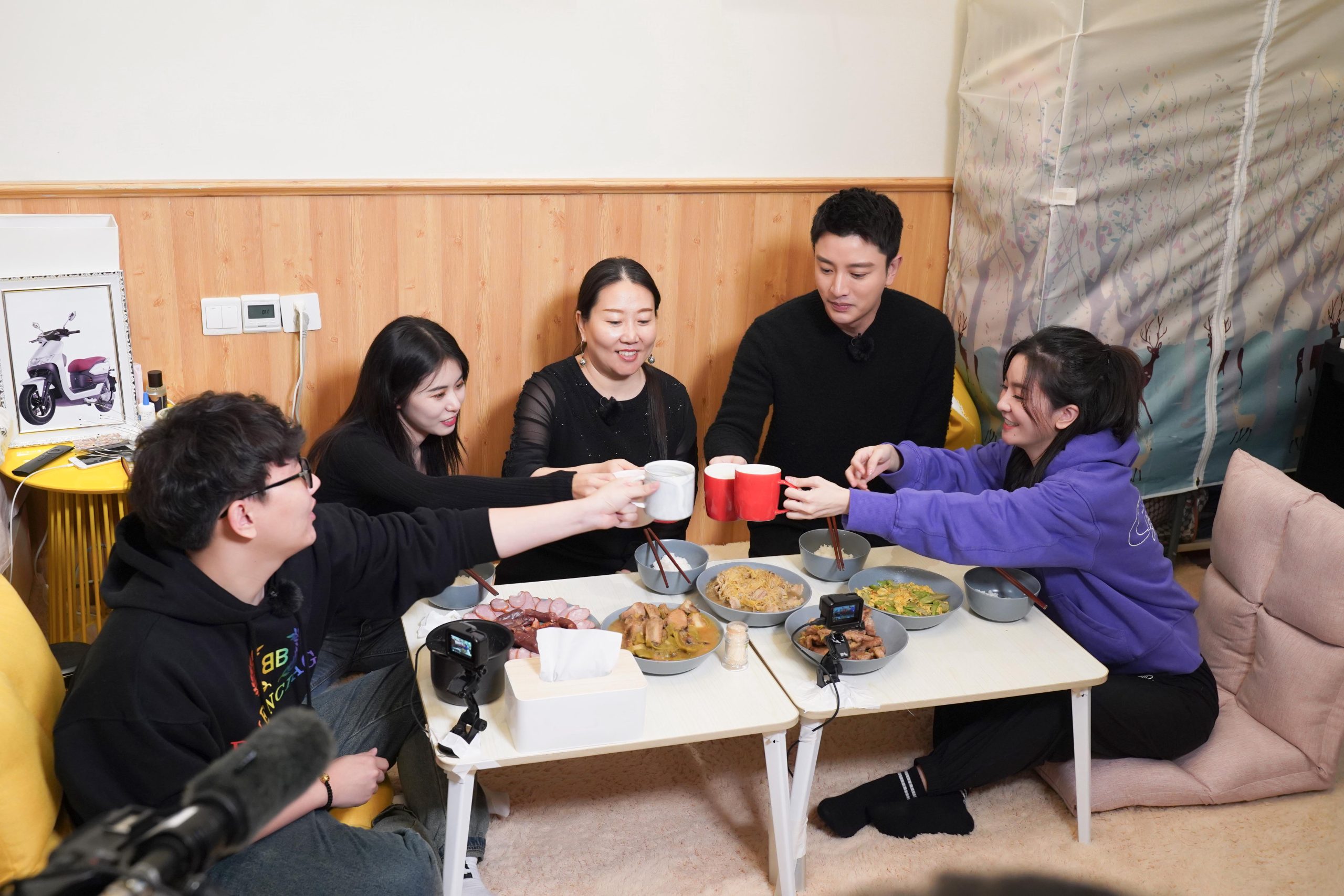
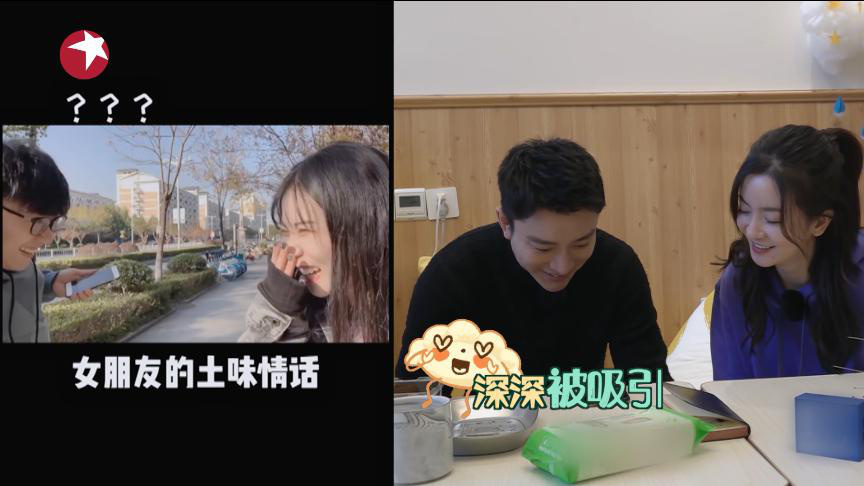
In the program, guests Jerry and Li Sheng walked into the homes of video bloggers Yang Yadong and Chen Huimin. Although the small rental house was a little messy, they also decorated it with warmth and love, and the sweetness of their lives could be seen everywhere. Two people from Harbin and Qingdao stayed in Hangzhou to start a business after graduating from college. The post-95 couple edited their daily lives into short videos and posted them on a social platform, which attracted the attention and love of a large number of fans with a relaxed and humorous style. The good viewing volume and click volume of the video have brought economic benefits that can balance daily expenses.

But in my mother’s eyes, making videos can’t be a career that can support my family. After seeing her son’s life suddenly, she was worried that she would work too hard outside, hoping that he could return to his hometown Harbin to find a stable job and buy a house to settle down. The couple were obviously unprepared for their mother’s expectations, and Jerry and Li Sheng became their "mentors" and acted as "lubricants" between generations. How will they resolve the conflict of ideas between the two generations in one meal?

Entering the "anchor house", Wong Cho Lam Li Yanan helped "reunion"

On the other hand, Wong Cho Lam and Li Yanan met the "anchor family", and all four members of the family were engaged in the live broadcast of e-commerce. Because of the long time span of the live broadcast, it was difficult for the mother and twin daughters who broadcast live in different time periods to get together. In order to know more about the anchor’s daily life, Wong Cho Lam and Li Yanan decided to have this special dinner in the studio where they work.

During the live broadcast, Wong Cho Lam and Li Yanan met their twin sister Chufei Churan who was preparing for the live broadcast. They feel that the fast pace of work makes it rare for the family to sit together and have a meal. Even their birthdays can’t be celebrated with their parents. The unexpected arrival of Wong Cho Lam and Li Yanan has given the family a long-lost meal.

At the dinner table, my father frankly revealed the hardships of the sisters’ work: many times, they had no time to eat, so they could only eat two bites between live broadcasts; Always in a tense working environment, even dreaming will worry about insufficient inventory … … Words are full of concern and love for her daughter’s life. As a practitioner in the same industry, my mother pays more attention to the status of the two sisters at work, and often gives some professional suggestions and opinions.

In the program, the anchor dad also disclosed the criteria for choosing a husband. What is the perfect son-in-law in his heart? What interesting story happened at the dinner table? For more touching stories and warm-hearted moments, please look forward to the Dragon TV "Dear, Come to dinner" which will be launched at 22 o’clock this Saturday night.

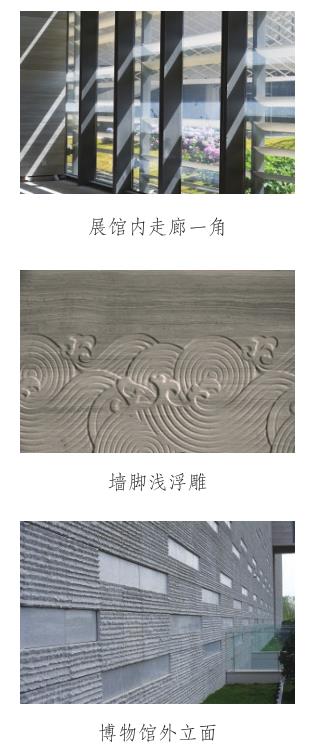
How much do you know about the new tang style architectural style of China Grand Canal Museum?

  The Grand Canal in China is a living cultural heritage and a flowing Millennium context. It has been continuously excavated and updated for thousands of years, and it still plays a huge role in transportation, water conservancy, ecology and culture. The Grand Canal gave birth to Yangzhou, which is the intersection city of the Grand Canal and the leading city for applying for the World Heritage, and is also one of the cities with the largest number of heritage sites of the Grand Canal.

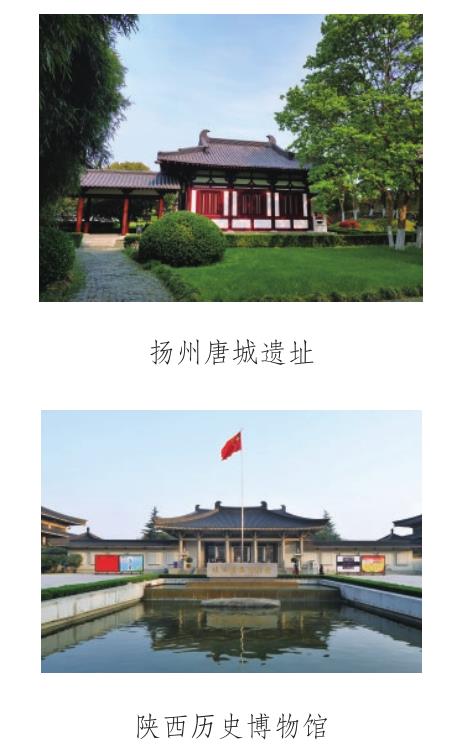
  China Grand Canal Museum truly reflects the structure and function of the building in the form of tang style architecture, with clear structural logic and unified color, which is highly unified with modernist architecture. The architecture of the Tang Dynasty is magnificent, simple, magnificent, handsome and elegant, which is the concentrated expression of the prosperous culture of the Tang Dynasty with self-confidence, openness, pluralism and tolerance, and also the perfect embodiment of the spirit of the times in which the Chinese nation revives and creates history today.

  New tang style architecture is not a retro architecture, but a modern architecture that retains the spatial artistic characteristics of traditional architecture after abstracting and summarizing the traditional architectural style of Tang Dynasty.

  The New tang style Architecture is a creative design idea put forward by Academician Zhang Jinqiu when he designed Shaanxi History Museum in 1980s. )

  First, the contemporary inheritance of traditional context

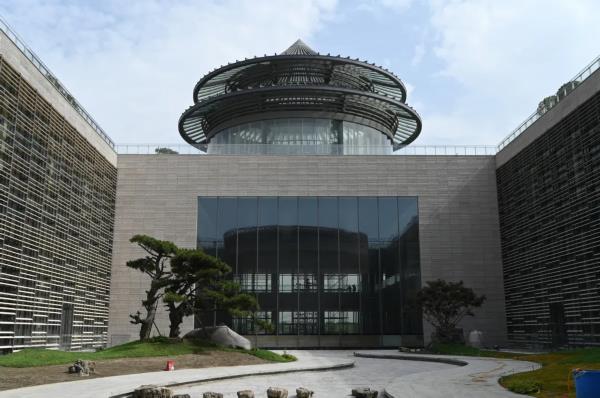
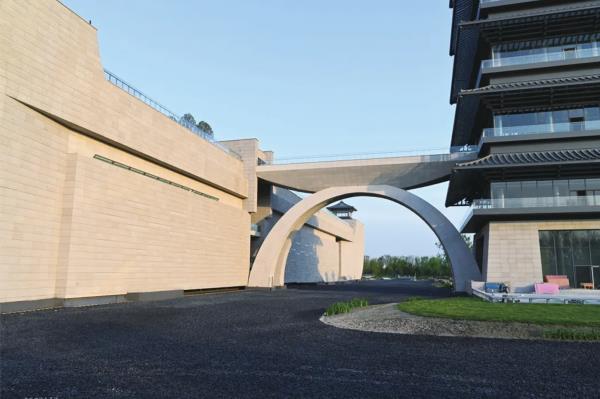
  China Grand Canal Museum has a building area of 79,373 square meters, which consists of five parts: exhibition hall, inner courtyard, square in front of the museum, Universiade Tower and Jinyue Bridge.

  The main part of the museum is a vigorous horizontal sculpture, and the internal organs have the main functions of a large modern museum with complex functions. The concise and modern appearance of the main body provides the greatest freedom and flexibility for indoor space and exhibition design.

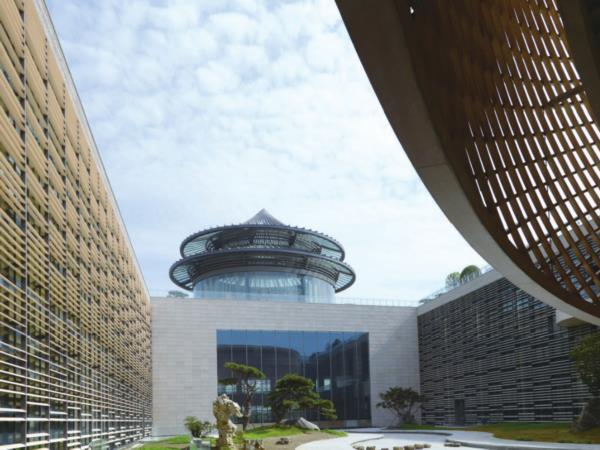
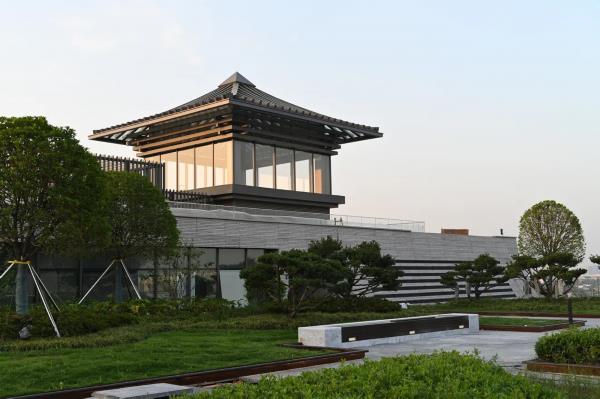
  The Yuejiang Hall and the Four Corners Pavilion make the appearance of the museum buildings give people multiple associations, such as the Wuting Bridge in Yangzhou, Wenchang Pavilion and the original boats on the lake. )

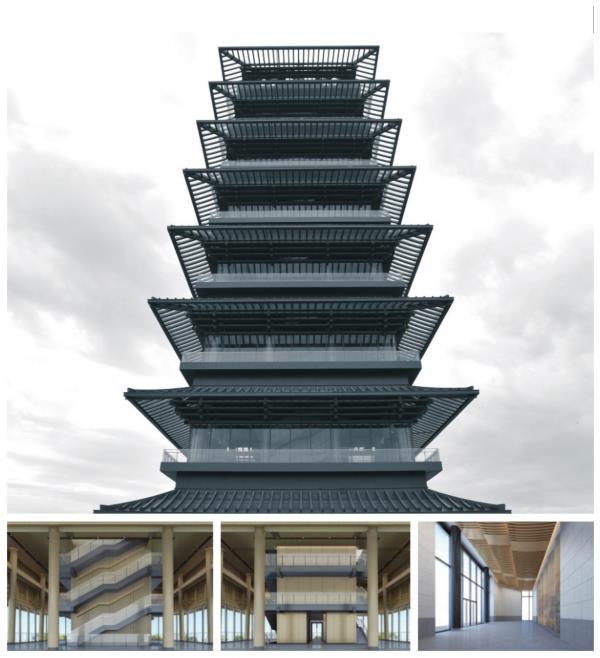
  (The Universiade Tower adopts a steel frame supporting structure, which is divided layer by layer, slim and graceful, and has the characteristics of Yangzhou Towers. )

  (Today, the middle of the plane of the Moon Bridge narrows, and it looks like a guqin. The facade looks like a full moon, and its name is taken from Li Bai’s poem "Today’s people don’t see the ancient moon, but this month once shone on the ancients". At the same time, he wrote Xu Ning’s poem "There is a moonlit night in the world, and the rogue is Yangzhou in the second place", and he tasted the time and space interest of crossing the bright moon in Tang Dynasty. )

  Second, the external conception of integration with landscape environment

  The main body of the building is parallel to the ancient canal flowing from north to south, and the symbiotic relationship between the architectural trend and the channel of the Grand Canal has been handled well. The museum and the Universiade Tower are connected by the Jinyue Bridge. The museum, the tower and the bridge complement each other, which is natural and beautiful, surrounded by scenery, and historical culture and modern civilization complement each other.

  Academician Zhang Jinqiu, with the concept of "three towers reflecting three bays", built a Universiade Tower next to the museum, providing visitors with an excellent scenic spot where they can overlook the hydraulic wisdom of the ancient canal — — The historical landscape of "three bays reach one dam"; At the same time, the Universiade Tower and the North

  The Wenfeng Pagoda in the front and the Tianzhong Pagoda in the Gaomin Temple in the south borrow from each other in space. The three pagodas are like three pearls, which constitute the skyline landscape of "three pagodas connected with one line" and "three pagodas reflecting three bays".

  Sanwan Ecological Culture Park has been formed, with beautiful scenery, various cultural and sports spaces and ecological corridors. Combined with the water conservancy scenery of Sanwan Canal, China Grand Canal Museum is surrounded by parks. Relying on the beautiful wetland scenery and rich cultural landscape, the architecture and canal water conservancy project are integrated, reflecting the interest of having a museum in the garden and seeing the garden in the museum.

  Third, the internal space compatible with the exhibition

  The public space with rich forms, which is in line with the museum exhibition, is a highlight of the Grand Canal Museum in China. The overall utilization of the space in the museum attaches great importance to the combination with public activities; The visitors’ visiting flow lines are smooth, the exhibition halls are arranged in a zigzag pattern, connected by public corridors, and the visiting routes do not overlap. Modern sculpture works distributed in the space inside and outside the museum effectively enhance the artistic atmosphere of the museum, create the aesthetic attributes of the museum, embody the aesthetic level of the museum, and show the design orientation of the Grand Canal Museum in China.

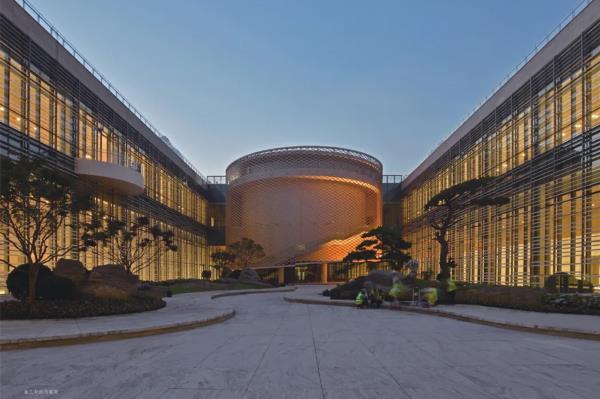
Inner courtyard

Courtyard facade grille

Inner courtyard under construction

Night view of inner courtyard

Glass curtain wall renderings

Top: Roof steel structure of Universiade Tower

Bottom: Decoration renderings of Universiade Tower.

Jinyue Bridge under Construction

Roof landscape

  Finally, I wish you all.

  Wish you peace and health on Dragon Boat Festival

  (Source: Editor of China Grand Canal Museum/Shen Yuan)


Guangzhou Municipal Commission of Housing and Urban-Rural Development: All construction sites must resolutely implement the "six 100%"

Guangzhou held the "Safe Production Month" observation meeting of construction in 2018 and the on-site meeting of dust control at construction sites.

Keep the bottom line of safe production and win the "blue sky defense war" 

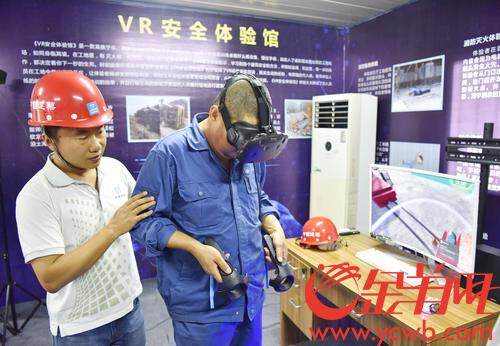
The picture shows the participants of relevant departments in various districts of Guangzhou experiencing the VR mode of safe production and observing civilized construction in a building in Pazhou. Reporter Zhou Yushe

Reporter Zhao Yanhua, correspondent Sui Jian, Wu Yangpei and Sun Lizhi reported that since the beginning of this year, the construction, construction and supervision units of 50 projects have been deducted from the comprehensive evaluation of the integrity of Guangzhou construction enterprises because of their poor dust prevention. Today (June 7), at the 2018 Guangzhou Construction Safety Month Observation Meeting and the site meeting of dust control on construction sites, the Municipal Housing Construction Committee stressed that all construction sites must resolutely implement the "six 100%" dust control measures. After the special action, the Municipal Housing Construction Committee will continue to intensify its work and organize rectification and "looking back" to prevent the dust problem from rebounding and consolidate the prevention and control effect.

Six hundred "supervision" to observe safety production and dust prevention in the rain

June 2018 is the 17th "Safe Production Month" in China. According to the national, provincial and municipal arrangements for launching the "Safe Production Month" in 2018, this afternoon, the "Safe Production Month" observation meeting of Guangzhou construction and the on-site meeting on dust control of construction sites, which was hosted by the Municipal Commission of Housing and Urban-Rural Development, co-organized by Haizhu District Housing and Construction Water Affairs Bureau and the Municipal Construction Industry Federation, and undertaken by China Construction Third Bureau and a company, was held as scheduled in Vipshop Global Headquarters Building, Zone A, Pazhou Internet Innovation Cluster, Haizhu District. The reporter saw at the scene that despite the heavy rain, nearly 600 people came to the venue where 500 people were originally scheduled to attend. They were all responsible persons of the Housing and Construction Bureaus of various districts in Guangzhou, construction engineering supervision stations and responsible units of all parties involved in the construction.

The picture shows the participants of relevant departments in various districts of Guangzhou experiencing the VR mode of safe production and observing civilized construction in a building in Pazhou. Reporter Zhou Yushe

With the theme of "life first, safe development and green construction", the conference mobilized the "Safety Production Month", organized and watched accident warning education films, and emphasized resolutely curbing major and above-mentioned safety accidents in combination with the requirements of Guangzhou’s special action year to promote the full implementation of the main responsibility of enterprise safety production.

At the meeting, all the participants watched the accident warning education film; A company of China Construction Third Bureau introduced the experience of safety production management and dust control of Vipshop Global Headquarters Building Project.

"Labor workers have one card per person, and only by swiping the card can they pass, which is not only convenient for paying wages and unified management, but also can avoid labor disputes; As long as there is a car passing by, the automatic car washing machine will wash the vehicle clean, and it will not leave the construction site until it is’ washed in vain’ … "The reporter swiped his card at the project gate and entered the construction site, where he saw the uniform standardized fence and spotless steel plate pavement.

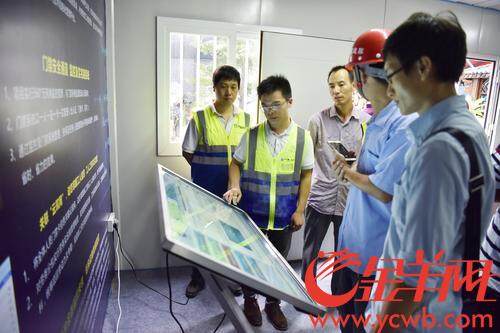
Participants successively observed the project access control system, safety education and experience area, green construction, smart construction site, standardized safety protection and other exhibition areas, and praised the innovative measures of the project.

"In the process of engineering construction, we have always adhered to the six major safety production management measures, strictly implemented the’ six 100%’ of dust control, and at the same time explored new methods and measures for safety production management and environmental protection management." Yu Xiang, the project manager, told the reporter that the daily safety management of the project is mainly carried out by taking measures such as real-name system management, safety education, behavior standardization management, facility standardization management, dangerous sub-project management and large-scale equipment management.

There are many dust problems in 50 projects.

At the scene, the Municipal Housing Construction Committee also reported the problems existing in the work of safety production and dust control in Guangzhou.

Since the beginning of this year, the Municipal Commission of Housing and Urban-Rural Development has refined the "six 100%" dust control measures, clarified the respective responsibilities of the construction, construction and supervision units in implementing the "six 100%" requirements and the penalties for failing to perform relevant responsibilities, and further clarified the supervision responsibilities of the housing and urban-rural construction departments in various districts and supervision institutions at all levels.

"Six 100%" means to achieve 100% enclosure of the construction site, 100% sand coverage of the construction site, 100% hardening of the road surface of the construction site, 100% watering and dust suppression of the demolition project, 100% washing of the wheel bodies of vehicles leaving the construction site, and 100% greening of the sites that are not yet developed.

At the same time, on the basis of comprehensive carpet inspection, we will immediately launch special actions for dust prevention and control in key areas to ensure that dust prevention and control measures are implemented in important regional projects according to high standards. It also requires all districts to take immediate action to improve work standards, check and rectify and enforce the law. All construction sites must resolutely implement the "six 100%" dust control measures, resolutely respond to the work requirements of the central government, provinces and municipalities on air pollution prevention and control, and resolutely win the "blue sky defense war".

According to the inspection, most of the construction sites have taken dust control measures according to the requirements of "six 100%". In view of the construction, construction and supervision units of 50 projects with poor dust control and many problems, the Municipal Commission of Housing and Urban-Rural Development firmly showed its sword and gave it to informed criticism, and deducted points for the construction and supervision enterprises in accordance with the relevant provisions of Guangzhou’s comprehensive evaluation system for the integrity of construction enterprises.

Rectification "looking back" to prevent dust from rebounding

After the special action, the Municipal Commission of Housing and Urban-Rural Development will continue to intensify its work, organize rectification and "looking back" to prevent the dust problem from rebounding and consolidate the prevention and control effect.

Wang Hongwei, director of the Municipal Commission of Housing and Urban-Rural Development, stressed that the purpose of holding the "Safety Production Month" observation meeting and the on-site meeting on dust control in construction sites is to comprehensively promote the implementation of the main responsibility of enterprises, further strengthen the awareness of safety red line, implement the concepts of life first, safe development and green construction, prevent and reduce safety accidents, thoroughly control dust pollution in construction sites, and win the "Blue Sky Defence War" in Guangzhou. It is necessary to improve the political position and recognize the importance and seriousness of safety production and dust prevention and control at the construction site. Enterprises should earnestly fulfill their main responsibilities and strictly grasp the work of safety production and dust prevention; Regulatory departments at all levels should strictly implement their regulatory responsibilities, resolutely prevent safety accidents caused by group deaths and injuries, and fully implement the "six 100%" measures for dust prevention and control at construction sites.

According to reports, units that did not participate in the on-site observation meeting can be organized by the housing and construction bureaus of various districts to visit the Vipshop Global Headquarters Building project on June 7-8. At the same time, during the "Safe Production Month" activities, the Municipal Commission of Housing and Urban-Rural Development will select projects with bright spots in quality and safety control, civilized construction (especially dust prevention and control) and new technological innovation for on-site observation and exchange.

In addition, during the activity, a series of training on key points of municipal engineering management, safety production and dust prevention inspection will be carried out, so as to implement the main responsibility of enterprises from theory to practice to supervision and improve the safety management level of enterprises.

Decision of the Beijing Municipal People’s Government on Amending the Measures of Beijing Municipality on Construction Permit

Order of Beijing Municipal People’s Government

No.300

  The Decision of the Beijing Municipal People’s Government on Amending the Measures of Beijing Municipality on Construction Permit has been adopted at the 127th executive meeting of the Municipal People’s Government on September 14, 2021, and is hereby promulgated and shall come into force as of the date of promulgation.

Mayor Chen Jining    

October 1, 2021  

Decision of the Beijing Municipal People’s Government on Amending the Measures of Beijing Municipality on Construction Permit

  The Beijing Municipal People’s Government has decided to make the following amendments to the Measures of Beijing Municipality on Construction Permit:

  1. Article 2 is amended as: "Where the following construction projects are carried out within the administrative area of this Municipality, the construction unit shall obtain a construction permit. However, the construction project with an investment of less than 300,000 yuan or a construction area of less than 300 square meters may not apply for a construction permit:

  "(a) the new construction, renovation and expansion project of housing construction and its ancillary facilities and its supporting lines, pipelines and equipment installation;

  "(two) the construction, renovation and expansion of municipal infrastructure;

  "(three) housing decoration project.

  "The municipal administrative department of housing and urban-rural construction may, according to the actual situation of this Municipality, adjust the scope of construction projects that may not apply for construction permits as stipulated in the preceding paragraph of this article, and report to the competent department of housing and urban-rural construction of the State Council for the record.

  "Construction projects that have approved the commencement report in accordance with the authority and procedures stipulated by the State Council will no longer receive construction permits."

  2. One paragraph is added to Article 3 as the third paragraph: "For housing construction projects and municipal engineering projects with a large amount of earthwork, the construction unit has obtained planning approval documents such as project design review opinions, and if the construction site meets the requirements stipulated by the municipal housing and urban construction administrative department, earthwork, slope protection, precipitation and other operations can be carried out in advance, but the building construction permits should be obtained before the main project construction at the latest."

  III. Article 6 is amended as: "To apply for a construction permit, a construction unit shall meet the following conditions:

  "(a) has been approved for the construction project, housing decoration project shall obtain the consent of the owner of the house.

  "(two) the construction project planning permit shall be handled according to law, and the construction project planning permit has been obtained.

  "(three) the construction site has basically met the construction conditions, and it is necessary to levy houses, and its progress meets the construction requirements.

  "(four) the construction enterprise has been identified. If there is no tender for the project that should be invited in accordance with the regulations, there is no public tender for the project that should be invited in public, or the contracted project is dismembered, and the project is contracted to an enterprise that does not have the corresponding qualifications, the determined construction enterprise is invalid.

  "(five) to meet the needs of construction funds, construction drawings and technical information, the construction unit shall provide the construction funds have been implemented in the letter of commitment, construction drawing design documents have been reviewed in accordance with the provisions.

  "(six) there are specific measures to ensure the quality and safety of the project. In the construction organization design compiled by construction enterprises, there are corresponding quality and safety technical measures formulated according to the characteristics of construction projects. Establish project quality and safety responsibility system and implement it to people. The project with strong professionalism has compiled a special quality and safety construction organization design, and handled the project quality and safety supervision procedures in accordance with regulations. "

  4. Article 10 is amended as: "The issuing authority shall timely examine the application for construction permit of the construction unit, and if the documents submitted by the applicant are incomplete, it shall inform all the documents that need to be supplemented at one time.

  "If the documents submitted by the applicant are complete and conform to the provisions of Article 6 of these Measures, the issuing authority shall issue the construction permit within 5 working days from the date of receiving the application; Does not meet the provisions of article sixth of these measures, it shall make a written decision not to issue certificates and explain the reasons.

  "The issuing authority may conduct on-site reconnaissance of the land for construction projects as required."

  5. One paragraph is added to Article 23 as the first paragraph: "For construction projects that do not need to apply for construction permits, the relevant departments shall strengthen management, service and guidance according to law."

  This decision shall come into force as of the date of promulgation. The "Measures" of Beijing Municipality on the Construction Permit of Construction Projects were revised and re-promulgated according to this decision.

attach

Measures of Beijing Municipality on Construction Permit of Construction Projects

  (Promulgated by Decree No.139 of Beijing Municipal People’s Government on November 25, 2003, first revised according to Decree No.277 of Beijing Municipal People’s Government on February 12, 2018, and second revised according to Decree No.300 of Beijing Municipal People’s Government on October 1, 2021)

  Article 1 In order to strengthen the supervision and management of construction activities, maintain the order of the construction market, and ensure the quality and construction safety of construction projects, these Measures are formulated in accordance with the Construction Law of People’s Republic of China (PRC) and the Regulations on the Quality Management of Construction Projects, combined with the actual situation of this Municipality.

  Article 2 Where the following construction projects are carried out within the administrative area of this Municipality, the construction unit shall obtain a construction permit. However, for a construction project with an investment of less than 300,000 yuan or a construction area of less than 300 square meters, it is not necessary to apply for a construction permit:

  (a) new construction, renovation and expansion projects of housing buildings and their ancillary facilities and their supporting lines, pipelines and equipment installation;

  (two) the construction, renovation and expansion of municipal infrastructure;

  (3) House decoration and fitment works.

  The municipal administrative department of housing and urban-rural construction may, according to the actual situation of this Municipality, adjust the scope of construction projects that may not apply for construction permits as stipulated in the preceding paragraph of this article, and report to the competent department of housing and urban-rural construction of the State Council for the record.

  In accordance with the authority and procedures prescribed by the State Council, the construction project that has approved the commencement report will no longer receive a construction permit.

  Article 3 If a construction permit should be obtained according to law, but it has not been obtained, the construction project may not be started.

  The term "commencement" as mentioned in these Measures refers to the commencement of construction work of construction projects, in which the commencement of new projects refers to the commencement of foundation pile construction or earthwork excavation; The commencement of renovation, expansion and renovation of old houses refers to the commencement of demolition and renovation work.

  Housing construction projects and municipal engineering projects with a large amount of earthwork, the construction unit has obtained planning approval documents such as project design review opinions, and if the construction site meets the conditions stipulated by the municipal housing and urban construction administrative department, earthwork, slope protection, precipitation and other operations can be carried out in advance, but at the latest, building construction permits should be obtained before the main project construction.

  Article 4 No unit or individual may break down the project that should apply for a construction permit into projects below a certain limit to avoid applying for a construction permit.

  Fifth city housing and urban construction administrative department is the competent authority of the city’s construction permit. The district housing and urban construction administrative department shall be responsible for the construction permit of construction projects within its administrative area in accordance with the prescribed responsibilities.

  Article 6 To apply for a construction permit, a construction unit shall meet the following conditions:

  (a) has gone through the approval procedures for the construction land, and the house decoration project shall obtain the consent of the owner of the house.

  (two) the construction project planning permit shall be handled according to law, and the construction project planning permit has been obtained.

  (three) the construction site has basically met the construction conditions, and it is necessary to requisition houses, and its progress meets the construction requirements.

  (4) The construction enterprise has been identified. If there is no tender for the project that should be invited in accordance with the regulations, there is no public tender for the project that should be invited in public, or the contracted project is dismembered, and the project is contracted to an enterprise that does not have the corresponding qualifications, the determined construction enterprise is invalid.

  (five) there are capital arrangements, construction drawings and technical data to meet the needs of construction, and the construction unit shall provide a letter of commitment that the construction funds have been implemented, and the construction drawing design documents have passed the examination as required.

  (six) there are specific measures to ensure the quality and safety of the project. In the construction organization design compiled by construction enterprises, there are corresponding quality and safety technical measures formulated according to the characteristics of construction projects. Establish project quality and safety responsibility system and implement it to people. Professional engineering projects have compiled special quality and safety construction organization design, and gone through the supervision procedures of engineering quality and safety in accordance with regulations.

  Article 7 Construction permits shall be obtained on the basis of construction projects. However, housing construction projects can be collected separately for one or several individual projects; Linear municipal infrastructure projects can be collected in sections.

  In accordance with the provisions of the preceding paragraph, the construction projects shall receive construction permits respectively, and the project investment or construction area of each single project and sub-project shall not be less than the limit as stipulated in Article 2 of these Measures; The sum of the construction scale and project investment of each single project and subsection project shall be consistent with the total construction scale and total project investment of the construction project respectively.

  Article 8 The underground pipeline project of newly-built roads shall receive the construction permit along with the newly-built road project; Housing ancillary facilities, lines, pipelines and equipment installation projects supporting the housing should be accompanied by housing construction projects to obtain construction permits; The newly-built housing decoration project can receive the construction permit along with the housing construction project.

  Article 9 The construction unit shall, before the construction project starts, apply to the municipal administrative department of housing and urban-rural construction or the district administrative department of housing and urban-rural construction where the construction project is located (hereinafter referred to as the issuing authority) for obtaining the construction permit, and submit the following documents:

  (a) to fill in a complete application form for a construction permit with the seal of the construction unit, which can be downloaded from the website of the municipal administrative department of housing and urban-rural construction or obtained free of charge from the issuing authority;

  (two) documents that meet the conditions stipulated in Article 6 of these Measures.

  Article 10 The issuing authority shall examine the application for construction permit of the construction unit in a timely manner. If the documents submitted by the applicant are incomplete, it shall inform all the documents that need to be corrected at one time.

  If the documents submitted by the applicant are complete and conform to the provisions of Article 6 of these Measures, the issuing authority shall issue the construction permit within 5 working days from the date of receiving the application; Does not meet the provisions of article sixth of these measures, it shall make a written decision not to issue certificates and explain the reasons.

  The issuing authority may, if necessary, conduct on-site reconnaissance of the land for construction projects.

  Article 11 A construction permit is divided into one original and two copies, both of which have the same legal effect.

  It is forbidden to forge, alter or alter the construction permit.

  Twelfth after the issuance of the construction permit, the construction unit or the construction unit changes, it should re apply for a construction permit.

  If other conditions specified in Article 6 of these Measures are changed, it shall be reported to the relevant administrative departments for changing procedures according to law, and the construction unit shall inform the issuing authority within 10 days after going through the changing procedures; If it is not necessary to report to the relevant administrative department for change procedures according to law, the construction unit shall inform the issuing authority within 10 days after the conditions change.

  Thirteenth construction units shall publicize a copy of the construction permit in a prominent position on the construction site of the construction project.

  Fourteenth construction units shall start construction within 3 months from the date of receiving the construction permit. If it is unable to start work for some reason, it shall apply to the issuing authority for an extension before the expiration; The extension is limited to two times, each time not exceeding 3 months. If the project is neither started nor extended, or the number and time limit of extension are exceeded, the construction permit shall be automatically abolished.

  Article 15 If the construction of a building project under construction is suspended for any reason, the construction unit shall report to the issuing authority in writing within one month from the date of suspension, including the time, reason, construction progress, maintenance management measures, etc. of the suspension, and do a good job in the maintenance management of the building project in accordance with the regulations.

  When a building project resumes construction, it shall report to the issuing authority; Before the project that has been suspended for one year resumes construction, the construction unit shall report to the issuing authority for verification of the construction permit.

  Sixteenth city housing and urban construction administrative departments shall regularly summarize the construction permits issued by the city, to the public and accept public inquiries.

  Seventeenth any unit or individual shall have the right to report and report the acts of construction without obtaining the construction permit or not in accordance with the provisions of the construction permit.

  Eighteenth city housing and urban construction administrative departments shall, in accordance with the provisions of the construction unit, the construction unit and the construction permit related credit information recorded in the Beijing enterprise credit information system.

  Article 19 If the construction unit does not obtain the construction permit, or if the construction unit or the construction unit changes and fails to obtain the construction permit again, the municipal or district housing and urban-rural construction administrative department shall order it to stop the construction, make corrections within a time limit, and impose a fine of more than 1% but less than 2% of the project contract price.

  Twentieth in violation of the provisions of the second paragraph of Article 12 of these measures, the construction unit fails to inform the issuing authority about the changes on time, the municipal or district housing and urban construction administrative department shall give it a warning and impose a fine of 5000 yuan to 30000 yuan.

  Article 21 If the issuing authority and its staff fail to issue construction permits in accordance with regulations, or fail to perform their duties of supervision and management after issuing construction permits, or fail to investigate and deal with illegal acts that should be investigated according to law, the higher authorities shall order them to make corrections, and the responsible personnel shall be given administrative sanctions according to law; If a crime is constituted, criminal responsibility shall be investigated according to law.

  Twenty-second construction units believe that the specific administrative act of the issuing authority in handling the construction permit infringes upon their legitimate rights and interests, and may apply for administrative reconsideration or bring an administrative lawsuit according to law.

  Twenty-third for construction projects that do not need to apply for construction permits, the relevant departments shall strengthen management, service and guidance according to law.

  The repair of memorial buildings and ancient buildings approved as cultural relics protection according to law shall be implemented in accordance with the provisions of relevant laws and regulations on cultural relics protection.

  Measures for the administration of construction permits for military housing construction projects shall be implemented in accordance with the relevant provisions of the State Council and the Central Military Commission (CMC).

  These Measures are not applicable to emergency rescue and disaster relief and other temporary housing construction and the construction of farmers’ self-built houses with two floors or less.

  Twenty-fourth the implementation since January 1, 2004. On November 25, 1989, the Beijing Municipal People’s Government issued Order No.36, and the Interim Measures for the Administration of Construction Projects in Beijing, which was revised according to Order No.12 of the Beijing Municipal People’s Government on December 31, 1997, was abolished at the same time.

China’s foreign trade started smoothly (Rui Finance)

According to the data recently released by the General Administration of Customs, the import and export volume of China in February this year exceeded US$ 411.2 billion, up 1.3% year-on-year. At the press conference held by the State Council Information Office a few days ago, the relevant person in charge of the General Administration of Customs introduced that, according to the trend, the import and export of China’s foreign trade have obviously stabilized since February, and the last week of February has increased by more than 15% compared with the previous week. With the overall improvement of China’s economic situation, the momentum of the smooth start of foreign trade in the first two months is expected to be maintained.

The export situation is better than expected.

The data shows that in February, China’s import volume reached US$ 197.2 billion, up 4.2% year-on-year, ending the trend of declining growth rate for four consecutive months; In February, the export volume decreased by 1.3% year-on-year, but it was significantly narrower than that in the previous three months. "Overall, the start is stable and the trend is improving." Yu Jianhua, director of the General Administration of Customs, introduced the foreign trade development situation in the first two months of this year, saying, "In terms of scale, the total export value in the first two months reached a record high, with an increase of 0.9%, which was better than expected. The total value of imports and exports exceeds 6 trillion yuan, which is the second time in history. "

In terms of composition, China took the lead in resuming work and production during the epidemic period, and the export of epidemic prevention materials and "house economy" products increased substantially, raising the foreign trade base. "We have calculated that if the’ one-off factor’ is excluded, the import and export growth in the first two months of this year will exceed 10%." Yu Jianhua said.

To help foreign trade recover, the Customs has introduced a series of measures. According to Yu Jianhua, in terms of ensuring smooth flow, as of December last year, the overall customs clearance time for imports and exports nationwide was reduced by 67% and 92% respectively compared with 2017; In terms of cost reduction, the customs supports enterprises to enjoy various preferential tax policies, and last year alone, it reduced taxes and refunded taxes for foreign trade enterprises by 285 billion yuan; In terms of excellent service, we carried out the policy of "the Commissioner of Customs delivers the goods to the door", innovated the supervision mode of "putting the goods before inspection" and "green channel" for agricultural and food products, transferred 87 commodity codes out of the legal inspection catalogue, and continuously optimized the port business environment.

Yu Jianhua said that in view of the pain points and difficulties of enterprises, the customs will also study new policy measures in terms of unblocking import and export logistics, optimizing port business environment, reducing enterprise costs, and supporting the development of new formats, such as promoting the construction of smart customs and helping enterprises to make full use of free trade agreements such as RCEP.

"tailor-made" supervision of cross-border e-commerce

As one of the new formats of international trade development, cross-border e-commerce shows great vitality. Nowadays, more and more goods made in China enter the international consumer goods market through cross-border e-commerce.

Different from traditional trade, cross-border e-commerce presents the characteristics of fragmentation, quantification and informationization. The data shows that the number of import lists of cross-border e-commerce is 5-6 times of the number of goods declarations in the same period, and the average value of each order is less than three ten thousandths of the goods declarations. "In the process of supervision, we seized contraband such as controlled psychotropic drugs, articles infringing intellectual property rights, and’ exotic pets’. It should be said that these new situations have challenged the customs supervision work. " Sun Yuning, deputy director of the General Administration of Customs, said.

How to effectively supervise cross-border e-commerce? Sun Yuning said that the General Administration of Customs has introduced a customs clearance management system different from traditional trade, and created a customs supervision model suitable for the characteristics of cross-border e-commerce through classified management and "tailoring".

On the basis of the original "business-to-person (B2C)", the General Administration of Customs put forward the supervision policy of "business-to-business (B2B)" and "business-to-person (B2B2C)". In this process, we strengthened the empowerment of science and technology, developed and applied a unified version of cross-border e-commerce supervision information system, and realized the integrated management of transaction, payment, logistics and other related data. "At the same time, we comprehensively promote the paperless filing of cross-border e-commerce export overseas warehouses, and realize’ one place for filing, universal’. By the end of February, the number of cross-border e-commerce overseas warehouse enterprises registered with the customs had reached 1,713. " Sun Yuning said.

Promote stability, improve quality and have confidence

At present, global inflation is high and the growth of major economies is weak, which has a continuous impact on global trade. The WTO recently predicted that the global trade in goods was weak in the first quarter of this year, and it is expected to increase by only 1% for the whole year. The recent fluctuations in financial markets in some western countries have impacted the global trade environment, which is also an external challenge for China’s foreign trade to promote stability and improve quality.

"The challenges facing China’s foreign trade are short-term, cyclical and global; The opportunities ushered in by foreign trade development are long-term, structural and regional. " Cheng Shi, chief economist of ICBC International, believes that the global total demand is expected to increase with the impetus of economic growth and scientific and technological progress, and the globalization of service trade may become a breakthrough point for China’s foreign trade development.

Yu Jianhua introduced that in the first two months, more enterprises entered the foreign trade field, and the customs newly registered 46,000 foreign trade business entities, indicating that market confidence is accumulating and recovering. "In terms of orders, the proportion of new export orders increased continuously. In terms of new kinetic energy, the total export of electric vehicles, lithium batteries and solar cells increased by 60%. In terms of trade diversification, China’s import and export to countries along the Belt and Road increased by more than 10%, and its total import and export to other RCEP members increased by more than 3%. " Yu Jianhua said.

"On the whole, the foreign trade situation is still severe and complicated, but it also contains many opportunities." Yu Jianhua said, comparatively speaking, China’s competitive advantage is still obvious. With the overall improvement of China’s economic situation, the momentum of the smooth start of foreign trade in the first two months is expected to be maintained. This year, China is confident to achieve the goal of promoting stability and improving quality in foreign trade.

(Editor: Zhao Xinyue, Yue Hongbin)

Pay attention to WeChat official account: People’s Network Finance

Share for more people to see.

Can the "test-tube baby" and other projects enter the medical insurance as scheduled? Guangxi responded

  On October 27th, the Medical Security Bureau of Guangxi Zhuang Autonomous Region issued a notice. From November 1st, Guangxi will include some therapeutic assisted reproductive medical services such as ovum retrieval into the basic medical insurance and industrial injury insurance fund. As soon as the news came out, it caused widespread concern. Previously, Beijing, Liaoning and other places announced that they would suspend the implementation of the policy after determining the landing time of the assisted reproductive medical service project into medical insurance. Liaoning Province has not yet announced the next plan for the assisted reproductive medical service project into medical insurance.

  In this regard, the staff of the Medical Service Management Office of the Medical Insurance Bureau of Guangxi Zhuang Autonomous Region told the Red Star journalist that at present, the medical insurance bureau has decided that the policy will be finalized on November 1, and the relevant policies have not only been filed with the state, but also distributed to hospitals. A press conference will be organized for this purpose.

  The Notice of the Health and Health Committee of the Autonomous Region of the Human Resources and Social Security Department of the Medical Insurance Bureau of Guangxi Zhuang Autonomous Region on Including Some Therapeutic Assisted Reproductive Medical Services in the Payment Scope of Basic Medical Insurance and Industrial Injury Insurance Fund mentioned that some therapeutic assisted reproductive medical services such as "Ovulation" were included in the payment scope of basic medical insurance and industrial injury insurance fund; When the insured enjoys the basic medical insurance benefits, there is no fund qifubiaozhun, and the reimbursement rates of basic medical insurance for employees and basic medical insurance for urban and rural residents are 70% and 50% respectively, which are included in the maximum payment limit of the annual fund of the insured.

  — — ①— —

  "IVF" fee is included in medical insurance

  Beijing once "pressed the pause button"

  It is worth noting that the inclusion of "test-tube baby" medical services in medical insurance in various places is not overnight. Beijing, Liaoning and other places have suspended the implementation after determining the policy landing time.

  In February, 2022, Beijing Medical Insurance Bureau, Beijing Municipal Health and Health Commission and Beijing Municipal Bureau of Human Resources and Social Security issued the Notice on Standardizing and Adjusting the Price of Some Medical Services, which included 16 assisted reproductive technology items such as intrauterine insemination, embryo transfer and sperm optimization in outpatient treatment into the scope of medical insurance category A reimbursement. The original policy was scheduled for sunset on March 26th, 2022, but in April, 2022, some netizens left a message on People’s Daily Online’s "Leadership Message Board", saying, "I went to the hospital and asked if there was no such policy. When will this be included in medical insurance, and will it be included in medical insurance?" Later, on April 13, Beijing Medical Insurance Bureau replied that after verification, according to the relevant provisions of the list of medical insurance benefits and the requirements of the National Medical Insurance Bureau, the inclusion of assisted reproductive technology services in this city in the scope of medical insurance payment was suspended.

  After a year’s suspension, Beijing put the "Beijing Assisted Reproductive Technology Project into Medical Insurance" on the agenda again, and it will be implemented on July 1 this year.

  On May 5, 2023, the Notice on Adjusting the Catalogue of Medical Services for Basic Medical Insurance, Work Injury Insurance and Maternity Insurance in Liaoning Province (Liao Medical Insurance [2023] No.33) was issued. The Notice mentioned that 18 assisted reproductive projects, such as embryo culture and embryo transfer, were included in the catalogue of maternity insurance in Liaoning Province, and it was planned to be implemented in the whole province on July 1, 2023. Later, the Liaoning Provincial Medical Insurance Bureau replied to the "Leadership Message Board" of People’s Daily in August, saying that the 18 reproductive projects originally planned to be implemented in the province on July 1 were forward-looking adjustments, and further research and demonstration of supporting treatment policies were needed.

  At present, Liaoning province has not yet announced the next plan for assisted reproductive projects to enter medical insurance.

  This time, will it be smooth for Guangxi to "include some therapeutic assisted reproductive medical services in the scope of basic medical insurance and industrial injury insurance funds"? The staff of the Medical Service Management Office of the Medical Insurance Bureau of Guangxi Zhuang Autonomous Region said that at present, the medical insurance bureau has determined that the policy will be finalized on November 1, and the relevant policies have not only been filed with the state, but also distributed to hospitals.

  ▲ Screenshot of relevant policy documents in Guangxi

  — — ②— —

  New measures will be implemented in Guangxi from November 1st.

  "IVF" and other medical insurance ushered in a turning point?

  In 2021, data from the National Bureau of Statistics showed that the infertility rate of couples of childbearing age in China had climbed to about 12%-18%.

  In February, 2022, Beijing Municipal Medical Insurance Bureau, Beijing Municipal Health and Health Commission and Beijing Municipal Bureau of Human Resources and Social Security issued the Notice on Standardizing and Adjusting the Price Items of Some Medical Services, which included 16 assisted reproductive technology items such as intrauterine insemination, embryo transfer and sperm optimization treatment, which are common in outpatient treatment, into the scope of medical insurance category A reimbursement.

  On July 25th, 2022, 17 ministries and commissions, including the National Medical Insurance Bureau, issued the Guiding Opinions on Further Perfecting and Implementing Active Fertility Support Measures (Guo Wei Population Fa [2022] No.26), guiding local governments to comprehensively consider the affordability of medical insurance (including maternity insurance) funds and the standardization of related technologies, and gradually bring appropriate labor analgesia and assisted reproductive technology items into the scope of medical insurance payment according to procedures.

  In the same year, Hunan, Hubei, Zhejiang and other places successively released the news that they planned to include assisted reproductive technology projects in medical insurance.

  In 2022, Hunan Medical Insurance Bureau replied on Hunan Minsheng. com that in terms of diagnosis and treatment projects, relevant management measures will be introduced as soon as possible, and on the basis of scientific calculation and full demonstration, the mature, safe, reliable and cost-controllable therapeutic assisted reproductive technology that medical insurance can undertake will be gradually explored into the scope of medical insurance payment according to procedures. In response to netizens’ suggestions, Shandong Province also said that it will conscientiously implement the national medical insurance catalogue management policy according to the requirements of national unified deployment, and based on the positioning of "guaranteeing the basics", on the basis of scientific calculation and full demonstration, gradually bring the technically mature, safe and reliable medical treatment projects that medical insurance can bear into the scope of medical insurance payment according to procedures.

  However, since then, the implementation of relevant policies has been slightly weak, and the pause button has been pressed for medical items such as "test-tube baby".

  In May, 2022, Anhui Medical Insurance Bureau said in response to the consultation of netizens: "Similar policies in other provinces and cities have been suspended. At present, the conditions for incorporating IVF and other assisted reproductive technologies into medical insurance are not yet mature. The Provincial Medical Insurance Bureau will continue to pay attention to this issue and include it in the scope of medical insurance payment in a timely manner in accordance with relevant state regulations. "

  Many senior practitioners said in an interview with the media later that the suspension of similar policies may be related to "money".

  Wang Xuemei, director of reproductive medicine department of South China Hospital affiliated to Shenzhen University, said in an interview with national business daily that besides money, this may have something to do with the fact that consumer medical services such as assisted reproduction do not conform to the principle of "guaranteeing the basics" of national medical insurance. "Considering China’s large population, and the cost of assisted reproduction itself is relatively expensive, it is not a small expenditure. Moreover, people may think that having children is less urgent than other life-threatening diseases. So from this perspective, it may be the reason for the suspension of medical insurance. "

  With the passage of time, assisted reproductive technology projects have ushered in a turning point in medical insurance.

  In May 2023, Shi Zihai, deputy director of the National Health Insurance Bureau, said at the press conference of the State Council Office that the National Health Insurance Bureau had issued a document to guide local governments to gradually include appropriate labor analgesia and assisted reproductive technology projects into the scope of medical insurance fund payment according to regulations.

  In July, 16 therapeutic assisted reproductive technology projects were included in the reimbursement scope of basic medical insurance in Beijing. When the policy was released, there were 16 designated medical institutions with basic medical insurance in Beijing that could provide assisted reproductive technology services.

  In October, Guangxi officially issued the Notice of the Health and Health Committee of the Autonomous Region of the Human Resources and Social Security Department of the Autonomous Region Medical Insurance Bureau on Including Some Therapeutic Assisted Reproductive Medical Services in the Payment Scope of Basic Medical Insurance and Industrial Injury Insurance Fund.

  Red Star journalist Wang Chenyuan

2017 National Science and Technology Award-winning Project Tour: Deciphering the Road to Innovation

  On January 8, 2017, the National Science and Technology Awards Conference was held in Beijing. Two scientists won the highest national science and technology awards, and 35 national natural science awards, 66 national technology invention awards and 170 national science and technology progress awards were selected. A series of award-winning major scientific achievements constantly refresh the creative height of China and show China’s innovation confidence. Most of the founders of these achievements have persisted in the initial research for decades and devoted their efforts to the construction of an innovative country and a world science and technology power. The science and technology vision edition will focus on them and decrypt their road to innovation, so stay tuned.

  — — Editor

  Tang Benzhong, the first prize winner of the National Natural Science Award.

  Love your job is half the battle.

  Our reporter Yu Sinan

  Comments on innovation: new concepts can lead new development trends and open up new research fields. Revolutionary ideas can change our mode of thinking and even our way of life. In order to encourage original discovery, we must encourage the spirit of challenge and cultivate innovative culture. Because the highest realm of scientific pursuit is to subvert "common sense" and open up new fields and create new knowledge through conceptual breakthrough.

  Award-winning Project: Aggregation Induced Luminescence

  "To do scientific research, it is necessary to work hard ‘ Station ’ On the shoulders of giants, we should also dare to challenge authority and put giants ‘ Step on ’ At your feet. " This is what Tang Benzhong, an academician of the Chinese Academy of Sciences and a professor at the Hong Kong University of Science and Technology, often says to students. Seventeen years ago, he and his team challenged the traditional theory and put forward the concept of "aggregation-induced luminescence" for the first time in the world, and opened up a new direction of organic luminescent materials research through hard work. In 2018, Tang Benzhong won the first prize of the National Natural Science Award for his pioneering contribution in the field of "Aggregation Induced Luminescence".

  God doesn’t just call. The discovery of "aggregation-induced luminescence" phenomenon can not be separated from the long-term research and accumulation of the team.

  In short, "aggregation-induced luminescence" refers to the phenomenon that molecules emit more light in the aggregated state than in the monomolecular state. Until Tang Benzhong’s team discovered this phenomenon, scientists always believed in the theory of "aggregation quenching luminescence", that is, the luminous intensity of luminescent molecules weakened or even disappeared completely in the aggregation state.

  Generally, organic luminescent materials are used in aggregate or solid state, so the phenomenon of "aggregation quenching luminescence" greatly limits the application range of luminescent materials. The theory of "aggregation quenching luminescence" is like a curse, which has framed people’s minds. Many scientists have tried to find ways to isolate molecules so that luminescence will not be quenched, but the results are limited.

  In 2001, Tang Benzhong and his students accidentally discovered a phenomenon that was completely opposite to "aggregation quenching luminescence", that is, a class of organic molecules did not emit light in solution, but their luminescence was significantly enhanced after aggregation. Tang Benzhong is keenly aware that it may contain unique significance. After careful study and many experiments, he creatively put forward the concept of "aggregation-induced luminescence".

  "Sometimes, doing research needs to jump out of the existing thinking frame. If you observe a phenomenon different from your existing experience, your first reaction should not be to avoid it, but to trace it to the source with great excitement." Tang Benzhong said.

  "God doesn’t just call." Tang Benzhong said that the discovery of the phenomenon of "aggregation-induced luminescence" seems accidental, but in fact it is inseparable from the long-term research and accumulation of the team.

  In order to solve the mystery that some organic molecules emit light in aggregated state, during that time, Tang Benzhong thought about this problem sleepless nights. Finally, after a lot of experiments and fruitful discussions, his team put forward an explanation model, that is, the phenomenon of "aggregation-induced luminescence" was caused by the limitation of intramolecular motion, which was widely recognized by the scientific community.

  "Aggregation-induced luminescence" is an original concept first put forward by Chinese scientists, which opens up a new field of luminescent materials. At present, scientists from more than 1,500 research units in more than 80 countries and regions have entered this field.

  Love your job! If you do this, you will be half successful.

  "Original scientific research is like digging a well, the more springs you find down. If we just follow without surpassing, our thinking will be exhausted sooner or later, "Tang Benzhong said. At present, Tang Benzhong team has prepared a series of high-performance "aggregation-induced luminescence" materials, and cooperated with researchers in different fields to promote the application of these materials in photoelectric, sensing, biology, medical and other fields.

  Tang Benzhong’s original dream was not to be a chemist. In middle school, he loved literature and wrote plays for the school art troupe. In 1977, at the suggestion of his brother, he applied for a major in science and engineering. He became attached to polymer science because he did well in the organic chemistry exam, and was taken a fancy to by the recruiting teachers of South China Institute of Technology (now South China University of Technology), so he was recruited into the school.

  "After graduation, I was sent to Japan by the state instead of the United States where I wanted to study. My life seems to be ‘ Selected ’ Yes. " Tang Benzhong said. Facing the "chosen" life, Tang Benzhong has his own experience and ideas — — Love what you do.

  During the four years in South China Institute of Technology, in order to squeeze out more time to study, Tang Benzhong didn’t go home once in the summer vacation, and basically spent it in the library. Doing research at the Hong Kong University of Science and Technology, his laboratory is often brightly lit at midnight.

  Someone once asked Tang Benzhong the secret of doing good research, and his answer was: "Love your job! If you do this, you will be half successful. "

  In Tang Benzhong’s view, the learning environment and conditions of young people are much better now than before, and they should concentrate on laying a solid foundation. "Some researchers pursue ‘ Short, flat and fast ’ Hot research, it is difficult to have time to calm down and think about major scientific issues, so it is difficult to really make significant scientific research results. Young people should have the consciousness and courage to do original research, and the whole society should also create a good culture of innovation. " Tang Benzhong said.

  Li Jiayang, the first prize winner of the National Natural Science Award.

  Have the courage to challenge difficult problems.

  Our reporter Wu Yuehui

  Words of innovation: To engage in scientific research, one must have the courage and spirit to challenge scientific problems. Don’t think that you can’t solve them just because others can’t. Dare to challenge and have confidence. The second is to have a very good team, which is very critical. Third, we must have the spirit of perseverance, not wavering in difficult times, and be able to persist all the time. The fourth is to have acumen. Without acumen, you have no idea where the most important key point of a scientific research lies.

  Award-winning Project: Molecular Mechanism of Formation of High Yield and Good Quality Traits in Rice and Variety Design

  The middle and lower reaches of the Yangtze River is one of the main rice producing areas in China, which has always been a region with a very high level of rice breeding and production in history. However, in recent 20 years, the rice yield in this area has entered a slow growth period, and there are some problems such as poor quality, weak disease resistance and serious degradation of main varieties, which also brings a series of problems such as abuse of antibiotics and pesticides. In this case, scientists have been thinking: can we find a "perfect coordination" between rice quality and quantity to achieve the best comprehensive ability?

  After years of efforts, the research team led by Li Jiayang, an academician of China Academy of Sciences, finally found this "perfect coordination point". They used the concept and technology of molecular design breeding, and after careful hybridization "design", they bred new rice varieties with ideal plant type and excellent genes such as super high yield, early maturity and resistance to rice blast.

  A few days ago, this breakthrough achievement was also of great strategic significance for guiding future crop genetic improvement and ensuring national food security, and won the first prize of the 2017 National Natural Science Award.

  "Molecular design" breeding technology can accurately improve the shortcomings of rice.

  In the past half century, rice breeding in China achieved two important breakthroughs and became an important part of the first "green revolution" in the world.

  The first time was the success of dwarf breeding in 1960s, which increased rice yield by 20%— 30%; The second time was the successful research of hybrid rice in the mid-1970s, and the rice yield increased by about 20% on the basis of short-stem improved varieties.

  The two breakthroughs have well solved the problem of food and clothing in developing countries such as China. How to eat well when you are full, so that rice can be both high-yield and high-quality?

  In 1994, after completing his postdoctoral studies in the United States, Li Jiayang immediately returned to China and began to work hard to achieve this goal. Li Jiayang chose "molecular design" breeding technology as the research direction. “‘ Molecular design ’ Breeding technology is the most advanced technology in the field of crop genetic improvement in the world It can realize direct selection and effective aggregation of genes, that is to say, it can accurately improve shortcomings and aggregate multiple advantages, which is expected to not only achieve high yield and high quality of rice, but also greatly improve breeding efficiency, shorten breeding years and realize ‘ Precision breeding ’ 。”

  The research process is extremely difficult and there is no precedent to follow.

  The economic traits of most crops, such as high yield, stable yield, high quality and high efficiency, are regulated by multiple genes and have the characteristics of "modularity".

  "Rice, too. Therefore, in this process, we need to first understand the different characters corresponding to different genes in rice, as well as the possible characters produced by the coupling of different genes, and analyze their expression regulation mechanism and interaction mode. Then these genes are relatively accurately recombined according to needs to get the varieties we need, so that the process of hybridization and seed selection becomes targeted and predictable. " Li Jiayang said, "It’s like building blocks. We choose the building blocks we need in a targeted manner to build the buildings we need faster and better."

  However, the process of "building blocks" is not easy.

  Li Jiayang frankly said that the most difficult period is the initial stage of research. "This is also a huge challenge in the world, and there is no precedent to follow. We can only explore our own research and establish a system of map-based cloning of rice genes. " Li Jiayang said.

  Finally, after 8 years of hard work, Li Jiayang team successfully established a set of map-based cloned rice gene system. "With this system, we can clone all the genes of rice."

  "What makes me most happy is that we successfully found the most critical gene in the subsequent research." Li Jiayang said that the gene called ideal plant type can make the plant type better. "The stems are thicker, the ears are bigger and the grains are bigger, which is the most important trait for high yield."

  In addition to high yield and high quality of rice, "molecular design" breeding technology can also greatly shorten the breeding time. Conventional breeding needs 7-mdash; It takes 8 years to select breeding materials, and the "molecular design" breeding technology can shorten it to 4-mdash; Six years or even shorter, the breeding cycle is shortened to 1/2 to 1/3 of the original.

  Li Jiayang said: "In conventional breeding, scientists can’t use the naked eye ‘ Audition ’ Produce plants with desired traits. However, in molecular module design breeding, even if it is still a seedling, as long as you do a genetic test, you can ‘ Lock ’ The one you want. "

  Jia Zhenyuan, the first prize winner of the National Technological Invention Award.

  I am a worker.

  Zhao Yongxin and Lu Dongguang

  Innovation: Find the right way to do scientific research. There are many hard-working people, and the key is to find the right direction. The right path may get twice the result with half the effort; If you go wrong, you may not succeed even if you make great efforts and go around in a big circle.

  Award-winning project: high-quality and efficient processing technology and equipment for high-performance carbon fiber composite components

  "I am a worker" — — When meeting and shaking hands, Jia Zhenyuan "reported himself" like this.

  Jia Zhenyuan, 54, is distinguished professor, a Changjiang Scholar of Dalian University of Technology, the chief scientist of the National 973 Program, the winner of the National Ten Thousand Talents Program, and the first finisher of the 2017 National Technological Invention Award.

  Short and gray-haired, he told reporters: "Farmers should plant good land and get more grain, workers should do a good job and produce good products, and we engaged in engineering science should understand the problems and get the technology through, and strive to solve practical problems and meet the major needs of the country."

  Jia Zhenyuan’s work is a worldwide problem — — High-quality and efficient processing of carbon fiber reinforced resin matrix composites (hereinafter referred to as "carbon fiber composites").

  Aiming at the bottleneck problem that restricts the development of the industry

  Jia Zhenyuan has worked in the field of precision machining of mechanical engineering for nearly 30 years since he graduated from doctoral school and stayed in school to teach. "We work scientifically and always hope that what we do can be meaningful, combine our own research with the needs of the country, and aim at the bottleneck problem that universities have advantages and enterprises can’t solve and restrict the development of the industry."

  High-quality and efficient processing of carbon fiber composites is such a "stuck neck" problem.

  The lighter the high-end equipment in aviation, aerospace, transportation and other fields, the faster it runs and the farther it flies, and the greater the payload. Jia Zhenyuan introduced that the weight of these equipment is generally calculated by "grams", and the fuel consumption can be reduced by 3% for every 1% reduction in the structural weight of the aircraft & mdash; 4%; High-speed rail can reduce weight by 1% and energy consumption by 6%— 7%。

  There are two ways to reduce weight: one is clever design, and the other is light material. At present, the lightweight material with rigidity and strength belongs to carbon fiber composite material. Moreover, it is easy to realize the synchronous manufacturing of materials and structures as a whole, and has become the preferred material for high-end equipment to reduce weight and increase efficiency.

  "But it is not enough to have good materials, and the processing technology must keep up." Jia Zhenyuan said that only after a series of mechanical processing such as trimming and drilling can composite components be connected, assembled and used in high-end equipment. It is a headache for enterprises that burr, tear, delamination and other damages are easy to occur in the processing of composite components. These machining damages will affect the bearing capacity, fatigue life and reliability of components.

  In 2003, after discovering this "stuck neck" problem when cooperating with enterprises, the research team made up their minds to overcome this difficulty.

  Jia Zhenyuan told reporters that carbon fiber composite is a typical difficult-to-process material because of its multilayer superposition, multiphase mixing and anisotropy, which is completely different from homogeneous materials such as metals.

  "The problem must be solved from the root." Jia Zhenyuan determined the R&D path for the team: from the applied basic research, the root cause of processing damage of carbon fiber composites was clarified from the composition mechanism, and then the theoretical methods to solve common problems were extracted from engineering practice.

  With the spirit of "ants gnawing at bones", they finally made a number of major breakthroughs: they found out the removal mechanism of carbon fiber composites and the formation mechanism of machining damage, put forward the cutting theory for carbon fiber composites, and established the dynamic simulation model of cutting force and cutting process.

  On this basis, the R&D team used theory to guide practice, put forward the principle of "micro-element removal" and "reverse shearing" to suppress machining damage, and invented three categories and nine series of tools for drilling and milling. The R&D team also developed a series of machining processes with negative pressure reverse cooling and self-air cooling chip removal function, and developed 13 sets of CNC machining process equipment.

  Since 2010, the new tools and technical equipment developed by Jia Zhenyuan’s team have been put into use, and the processing damage of carbon fiber composites has been controlled within 0.1 mm.

  I like people to call me teacher Jia best.

  Since 2005, Jia Zhenyuan has won the National Technological Invention Award for four times. During this period, he was also promoted from the Dean of the School of Mechanical Engineering to the Minister of Mechanical Engineering and Materials Energy, and since 2015, he has served as the vice president of Dalian University of Technology.

  "In fact, I like people to call me ‘ Teacher Jia ’ 。” He said frankly, "I define myself as a teacher. Teaching is my duty and scientific research is my duty. I have been a dean and minister for many years. Administration and scientific research cannot be said to have no conflict. The key is how to allocate time and improve efficiency. "

  How did Jia Zhenyuan do it?

  My colleague’s answer is "three noes". Professor Gao Hang, the backbone of the team, said: "Teacher Jia can’t play mahjong, poker, singing and has almost no hobbies."

  Jia Zhenyuan’s trick is three "moments": arrive early in the morning, take a short break at noon, and work a little more after work.

  "In fact, there are more than three teachers engaged in scientific research ‘ Later ’ 。” Professor Wang Fuji, a team member, said that Jia Zhenyuan has almost no holidays, and his desk is full of books. Whenever he has time, he reads materials and studies problems. "On one Sunday, I went to the office building to deal with something. When I passed Mr. Jia’s office, I saw him lowering his head and carefully pondering the knives in his hand."

  Li Lanjuan, winner of the National Science and Technology Progress Award.

  It is my wish to meet the needs of the people.

  Our reporter Gu Yekai

  Innovation testimony: I have relied on state grants to complete my studies since I was a child. It was the party and the state that trained me to grow up step by step. I have worked as a barefoot doctor and know the needs of the people for medical services. This is also my initial intention to become a doctor, teach and engage in scientific research. This time, we won the first national special prize of medical and health system, and it is an innovation and breakthrough in the prevention and control system of emerging infectious diseases. I will continue to lead the team to contribute to "Healthy China".

  Award-winning projects: major innovations and technological breakthroughs in the prevention and control system of emerging infectious diseases represented by the prevention and control of human infection with H7N9 avian influenza.

  Create and lead the "China technology" to treat patients.

  Recalling the spring of 2013, Li Lanjuan, academician of China Academy of Engineering and director of the State Key Laboratory of Infectious Diseases Diagnosis and Treatment, was most impressed by the tension of racing against time.

  In April 2013, Cao, a male patient, developed fever with a temperature as high as 39.5 degrees Celsius and was admitted to a hospital in Hangzhou. On the 12 th, the condition began to get worse, coughing and expectoration, and there was obvious shortness of breath. After diagnosis, Cao was a patient infected with H7N9 avian influenza, with respiratory distress syndrome, decreased blood pressure and shock. The consultant reported to Li Lanjuan that there was little hope for the patient to be rescued. Should he be transferred to another hospital? Li Lanjuan considered that the patient’s onset was only six days, which was the period when the patient’s lungs were seriously damaged by the peak of cytokine storm. At that time, there was no effective treatment for cytokine storm in the world.

  "The patient is so young, although the hope is slim, as long as there is one percent hope, we must make 100 percent efforts!" After a comprehensive analysis of the progress of patients with severe infection, Li Lanjuan decided to apply the artificial liver support system to treat respiratory failure and block the cytokine storm according to the principle that Lee’s artificial liver technology he created can remove inflammatory factors in patients. She confessed to the consultant, maintained the patient’s blood pressure and adequate oxygen supply, maintained the vital signs, and immediately transferred the patient to the First Affiliated Hospital of Zhejiang University for emergency treatment with artificial liver technology.

  Sure enough, this technical treatment scheme has achieved remarkable results. After 2 hours, the patient’s blood pressure began to stabilize and the inflammatory mediators of cytokines decreased rapidly. After five days and five nights of rescue, Cao miraculously survived the life difficulties of organ failure. In these five days, Li Lanjuan didn’t sleep for a while, and constantly summarized the treatment plan, and formed a treatment strategy of strictly controlling the use of antibiotics and hormones, and adopting anti-virus, anti-hypoxemia and multiple organ failure, anti-shock, anti-secondary infection ("four antibodies") to maintain water-electrolyte balance and microecological balance ("two balances").

  Successful prevention and control of human infection with H7N9 avian influenza virus.

  That spring, there were many sleepless nights like this. After the outbreak of the H7N9 epidemic, the project team confirmed the pathogen of the new H7N9 within five days and announced the whole gene sequence to the world, which won time for the global response to this new infectious disease. Li Lanjuan said that this is something that makes the medical community in China feel proud. "The most painful lesson of SARS is that the pathogen cannot be confirmed for a long time." The project team established a monitoring network for emerging infectious diseases with in-depth sequencing and Qualcomm data analysis as the core, which can complete the analysis of more than 300 pathogens within 72 hours, providing key technologies for early detection of new pathogens and monitoring of pathogen variation.

  Finding the pathogen is only the first step in epidemic prevention and control. Team Li Lanjuan established the technical system of forecasting and early warning of emerging infectious diseases and the prevention and control mode featuring molecular typing and traceability, and expounded the epidemiological characteristics and laws of the epidemic for the first time. The team also confirmed that the live poultry market is the source of human infection with H7N9 avian influenza virus from epidemiology, serology and molecular virology, and proved for the first time that closing the live poultry market can significantly reduce the risk of virus transmission from poultry to people.

  In order to effectively diagnose more emerging infectious diseases, Li Lanjuan team established an efficient and rapid research and development platform for diagnostic reagents for emerging infectious diseases in China. After the discovery of H7N9 pathogen, the detection reagent was successfully developed within 2 days, extended to 31 provinces and cities in China in 3 days, extended to neighboring countries in 5 days, and extended to the whole world by the World Health Organization in 7 days, which indicates that China’s technology in this field has reached and led the international advanced level. The team also successfully developed China’s first influenza vaccine seed strain infected with H7N9 avian influenza virus by reverse genetic technology, which broke the history that China’s influenza vaccine strain had to rely on foreign countries.

  This is the first time in the history of prevention and control of emerging infectious diseases that scientists in China have successfully prevented and controlled the major emerging infectious diseases in China by using the self-created technical system, which not only avoided the recurrence of SARS, but also achieved outstanding results in controlling the import of infectious diseases such as Middle East respiratory syndrome coronavirus MERS and Zika and assisting Africa in fighting Ebola. The World Health Organization once commented: "China’s risk assessment and evidence-based response to human infection with H7N9 avian influenza can be used as a model for emergency response to similar incidents in the future."

  The portraits in this edition are all painted by Cai Huawei.