Disaster Prevention and Mitigation Publicity Week | In response to natural disasters, please remember this 90-second self-help knowledge!

China is one of the countries with the most serious natural disasters in the world, with many kinds of disasters, wide geographical distribution, high frequency and heavy losses. Earthquake, fire, flood, landslide and debris flow, typhoon….. Natural disasters may occur at any time, so it is very important to master the skills of disaster prevention and self-help as soon as possible, and to save themselves and each other in time when encountering disasters.

May 12th, 2022 is the 14th National Disaster Prevention and Mitigation Day. Let’s get practical knowledge about disaster prevention and mitigation!

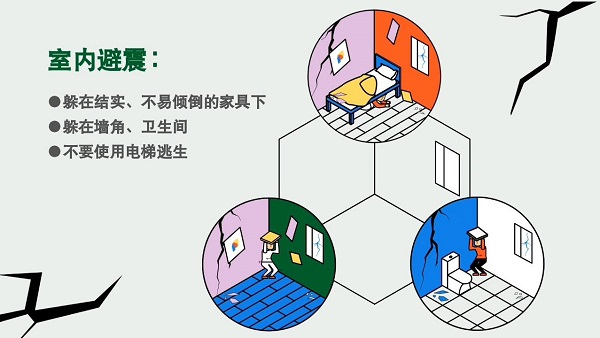
How to escape and save yourself in an earthquake?

At home, hide under sturdy furniture nearby, or hide in a corner or bathroom. Don’t use the elevator to escape.

In public places, stay away from glass windows and shelves, obey the instructions of the staff and don’t crowd.

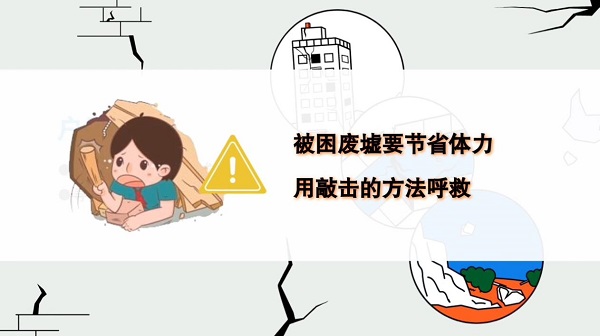
Outdoor, avoid buildings, bridges or hillsides, and look for an empty and safe place. Trapped ruins should save energy and call for help by tapping.

How to save yourself in case of fire?

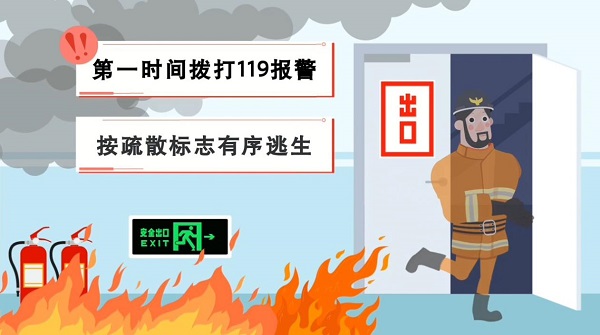
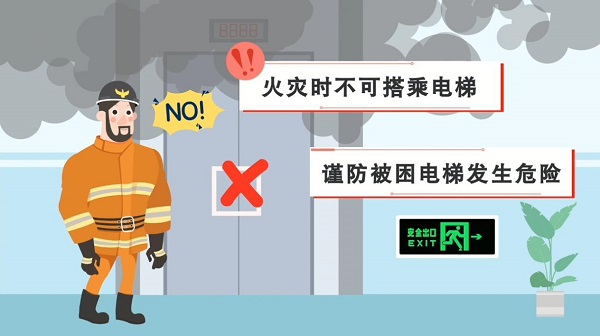
Call at the first timeCall the police and escape in an orderly manner according to the evacuation signs. Don’t take the elevator, lest the trapped elevator be in danger.

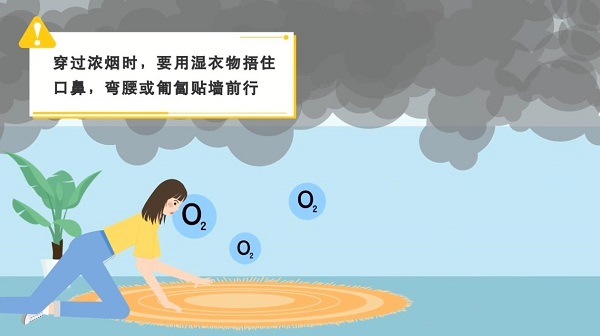
When passing through the thick smoke, cover your nose and mouth with wet clothes, and bend over or crawl against the wall.

If you can’t escape, you can call for help in safe areas such as balconies and roofs.

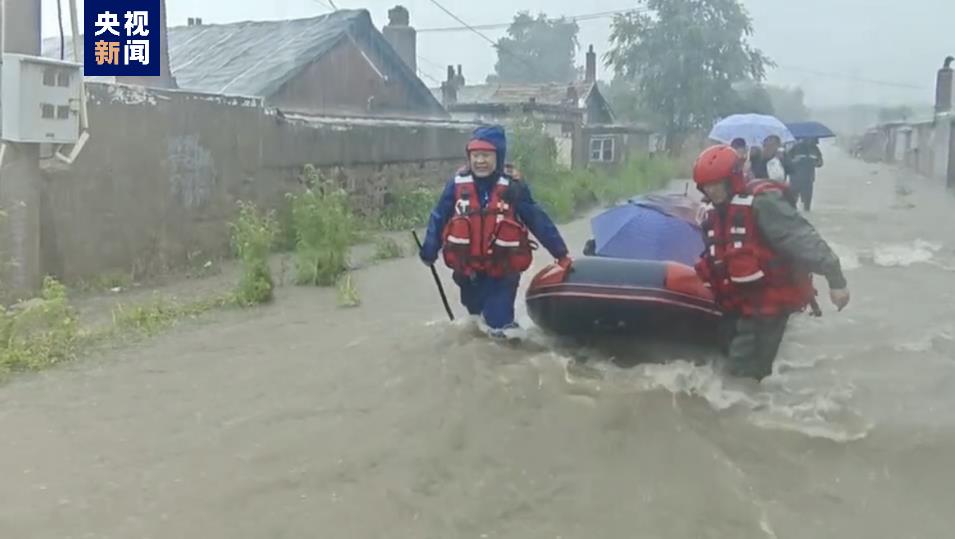
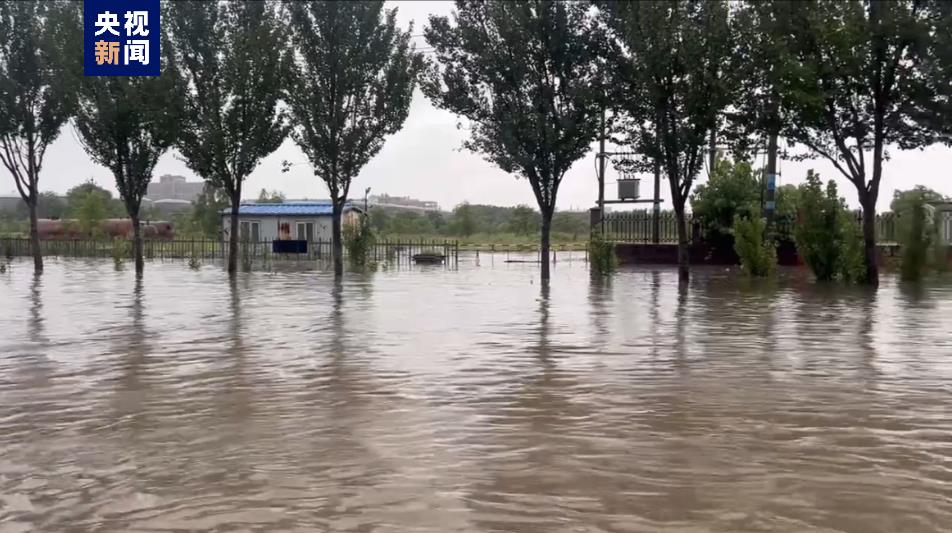
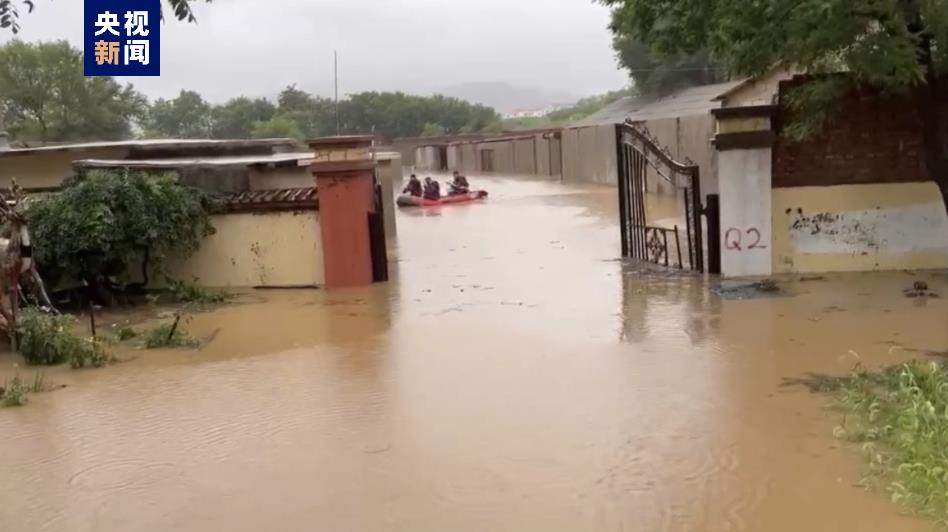
How to deal with floods?

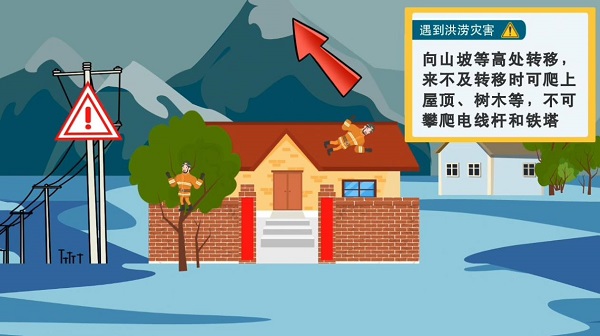
If you want to move to high places such as hillsides, you can climb roofs, trees, etc. when it is too late to move, and you can’t climb telephone poles and iron towers.

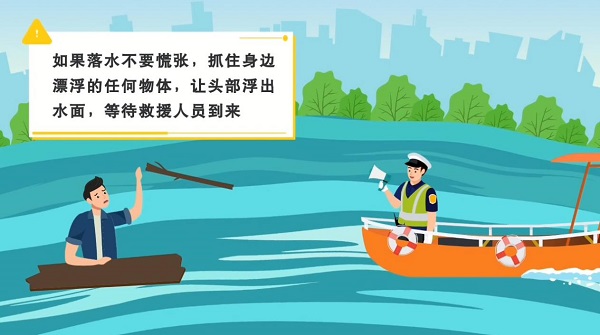
If you fall into the water, don’t panic, grab anything floating around you, let your head surface, and wait for rescuers to arrive.

How to deal with landslides and mudslides?

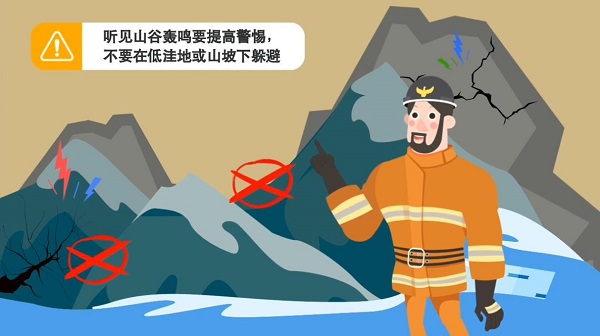
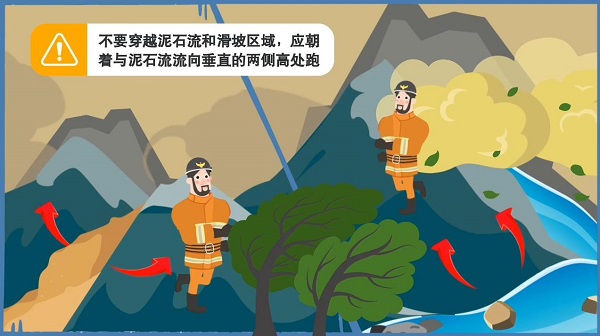
When you hear the roar of the valley, you should be alert, don’t hide in low-lying land or under the hillside, don’t cross the debris flow and landslide area, and run to the heights on both sides perpendicular to the direction of debris flow.

What should I do if a typhoon strikes?

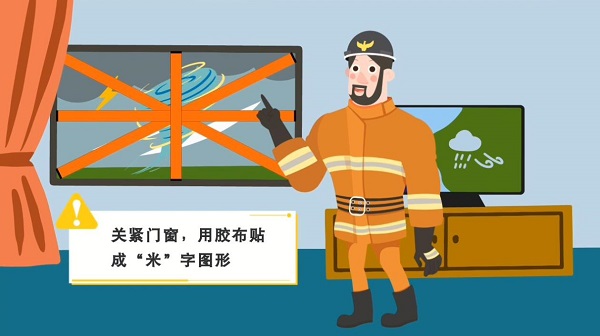
Reduce going out, reinforce structures that are easy to be blown, close doors and windows, and stick them with adhesive tape.The "meter" figure.

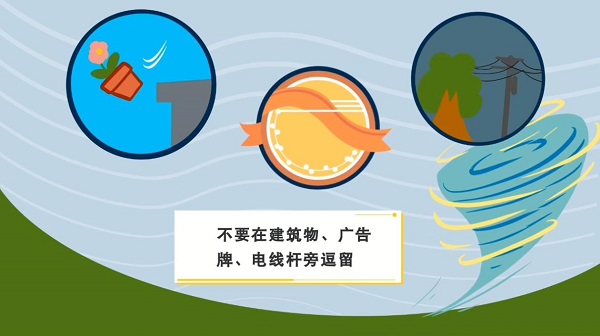
Don’t stay near buildings, billboards and telephone poles, and beware of falling objects.

Pay attention to the safety of food and water after the typhoon.

(jointly produced by Guangming. com and the Press and Publicity Department of the Emergency Management Department)

Craftsmen of Great Powers: Rope-making Technicians after 1980s set four firsts in China rope industry.

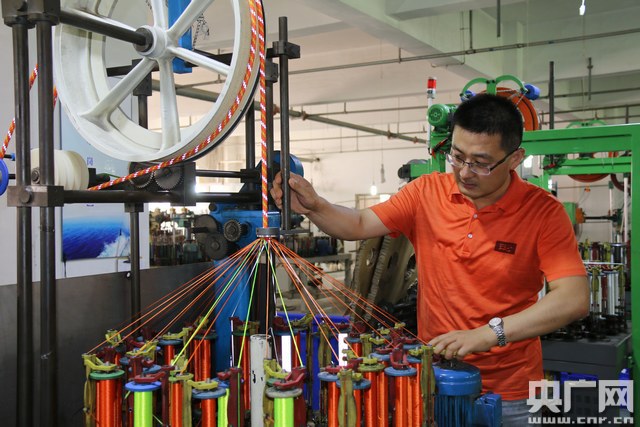
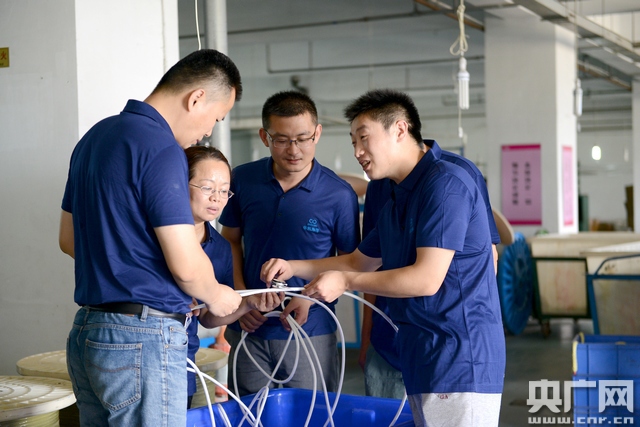
  Qingdao, China Broadcasting Network, July 19 (Reporter Jing Wong) "I stayed in the workshop for two days and one night when I was developing a new type of rope, and sometimes I fell asleep directly holding the rope when I was tired". At noon on July 19th, the weather in Qingdao was unbearable. Xu Lianlong, a post-80s rope-making technician of Hailiya Group, led the reporter straight to the rope-making workshop. The noise in the workshop was as high as 80 decibels, and it was laborious and even harsh to hear what others said, but it was the research and development "position" that Xu Lianlong had been sticking to for the past 8 years.

  If not introduced by others, ordinary people wouldn’t have thought that this gentle and shy guy, even some "silly" post-80s boys, has participated in the research and development of ropes in the field of special ropes, which has set four firsts in the rope and cable industry in China, and the developed marine special ropes have been successfully applied to major national scientific research tasks such as Jiaolong, Science and Snow Dragon.

  Eight years ago, Xu Lianlong, who graduated from the Textile Engineering College of Qingdao University, gave up his position as a civil servant in Qingdao Entry-Exit Inspection and Quarantine Bureau, which was envied by outsiders, and resolutely went to the production line, drilling and developing ropes with old workers as an apprentice, and dealing with all kinds of boring machinery and ropes every day. In Xu Lianlong’s words, it is normal not to go home for half a month, and sometimes he directly eats and lives in the workshop, which is more than eight years.

  Eight years later, with his passion for research, Xu Lianlong, who is only 32 years old, has filled many gaps in the field of rope making in China and participated in the world’s largest submarine cable project — Among the major national scientific research tasks of "Strategic Pilot Science and Technology Project of China Academy of Sciences-Marine Special Instruments and Equipment Project". In addition, the marine special rope developed by it was also recognized as a "specialized, refined, special and new" product in Qingdao, and was listed in the National Science and Technology Innovation Fund project, and won the second prize of China Marine Engineering Science and Technology.

  Although Xu Lianlong has been promoted to deputy director of the Technology Center, he is still engaged in research and development. He hopes that the key technology of special ropes in China will no longer be restricted by foreign countries in the future, and at least let the world know that the ropes in China are no worse than any other country.

  Giving up civil servants to learn a trade has become attached to the rope.

  In 2008, Xu Lianlong, a textile major, graduated from Qingdao University and was admitted to the civil service position of Qingdao Entry-Exit Inspection and Quarantine Bureau with 700 people competing. "At that time, civil servants were a temptation to me, and in the year of college entrance examination, I was transferred to a strange textile major because I wanted to take a normal college entrance examination. At that time, like all graduates, I would have a mentality of seeking stability, but in fact, my position was not very consistent with my major." Xu Lianlong told the reporter of Yangguang.

  One year before graduation, Xu Lianlong worked as an intern with the master rope maker in the workshop of Hailiya Group for a period of time. At first, he just thought it was related to his major. After in-depth practice and "groping" with the master rope maker in the workshop, Xu Lianlong was somewhat "tempted" to study rope.

  "Although I was admitted to the civil service for inspection and quarantine, I didn’t know much about my major, so after repeated consideration, I gave up my stable civil service job and resolutely chose to go to Qingdao Hailiya Group to deal with all kinds of strange ropes in the workshop. At that time, I thought that since I chose, I wouldn’t regret it." Xu Lianlong’s idea at that time was very firm.

  After Xu Lianlong joined Qingdao Hailiya Group, he began to fully contact the rope industry. However, he found that the research and development of rope in China is still a very unpopular field, and there was a serious technical gap between China and advanced countries in rope production. Even ordinary coarse cloth clothing ropes have to rely on imports for a long time. At that time, Xu Lianlong made up his mind to make a modest effort to change the "embarrassing" situation of rope in the world.

  Less than a year after being promoted to the R&D department, the company handed over the research and development task of a new rope to Xu Lianlong to complete independently. The customer demanded that the rope must meet the American standard. If the rope produced cannot enter the American market, the enterprise will face claims, which is a big test and challenge for Xu Lianlong, who has just entered the business.

  However, Xu Lianlong worked overtime day and night to clarify the entry threshold of American cable and enterprise requirements, accurately "translated" American standards into enterprise production standards, and finally shortened the original research and development time from at least three months to one month.

  Since then, Xu Lianlong has become more obsessed with the development of ropes. He often "stayed out all night" at the critical stage of developing new ropes in the workshop, and later simply lived in the staff dormitory. "I am often 3-4 hours late for a date with my wife. Later, we directly agreed that if the meal lasts more than an hour, it will be cancelled automatically." This seemingly cute post-80 s guy also has a little embarrassment for his wife.

  Because 90% of the time is usually spent on the study and development of ropes, and he has less spare time and is not very sociable, Xu Lianlong and his lover met in Qingdao Hailiya Group, and they often worked together and became attached to each other for a long time. "My wife was also interested in my concentration, practicality and obsession with the rope industry." Xu Lianlong is a little shy.

  The "rookie" in the industry has become an "eagle" after studying for 8 years.

  "The floating rescue rope on the water surface used in the flood fighting and rescue period in the south a while ago must have been developed by our workshop. This rope has its own fluorescent effect. When the officers and men of the armed police rescue at night, the rescued person can judge the safe position according to the light of the rope and be rescued." Today, Xu Lianlong has become one of the authoritative experts in the field of ropes in China. When introducing all kinds of ropes developed by himself to reporters, it is like introducing his own "baby".

  In Xu Lianlong’s view, R&D work has never been accomplished overnight, and it needs enough patience and long-term accumulation.

  In 2009, Xu Lianlong, who went deep into the R&D department, received a task to develop a rope for scientific research vessels. The rope studied by Xu Lianlong is called geophysical prospecting cable, which is used to survey Haiyang natural gas and other resources. A vessel needs to tow 6 to 12 geophysical prospecting cables, each of which is at least 6 kilometers long, forming a fan-shaped operation surface on the sea surface. In the deep-sea application process, many exploration equipment needs to be hung. In order to ensure that the signal lines on the exploration equipment are not broken in the complex deep-sea environment, In addition, in order to ensure the stability of ship data transmission, the geophysical cable must be stabilized at the bottom of the sea.

  "Because our detection time is long and the seawater is corrosive, if we use metal materials, it will increase the load of the scientific research ship, and it will corrode from March to May. I can only re-select raw materials from all over the world. At that time, we selected materials from more than 40 raw materials from 200 manufacturers, and each of them had to undergo rigorous experimental testing." Xu Lianlong introduced.

  Three months after developing the marine cable, Xu Lianlong lived directly in the laboratory, tested and checked the performance of more than 40 kinds of raw materials, and finally found a suitable experimental material.  

  Then, Xu Lianlong carried out in-depth research and development from the aspects of weaving technology and treatment technology. After twisting the inner core, braiding the inner core, braiding the sheath, hot drawing and cold drawing, a qualified rope is finished. However, behind the complicated process, there are still countless technical indicators that need to be overcome, such as how many turns each rope core needs to twist, what level of twisting strength, and how much density and diameter the braided rope core needs to reach … … Every process has to be repeated hundreds of times. After more than a year’s hard work day and night, Xu Lianlong and his team finally succeeded in developing an extensible geophysical rope that can replace steel cables, breaking the situation of foreign imports.

  "It was a bit boring at first, but I thought that this type of rope has not yet been successfully developed by a domestic manufacturer, so I can slowly calm down." Xu Lianlong recalled that the research and development stage at that time was quite emotional.

  In 2011, the marine geophysical cable developed by Xu Lianlong went to the Pacific Ocean for scientific investigation with the Jiaolong, but no one would have thought that the research and development of the geophysical cable came from the hands of Qingdao post-80 s boys.

  "Xu Lianlong usually feels very practical, and what is valuable is that he really loves this industry, is practical and focused, and has no shelf." Colleagues who have worked with Xu Lianlong for many years commented on him.

  Not only that, in the process of researching and developing the cables needed in the aerospace field, Xu Lianlong is faced with hundreds of brand-new technical standards, and to reach each standard, numerous repeated experiments are required.

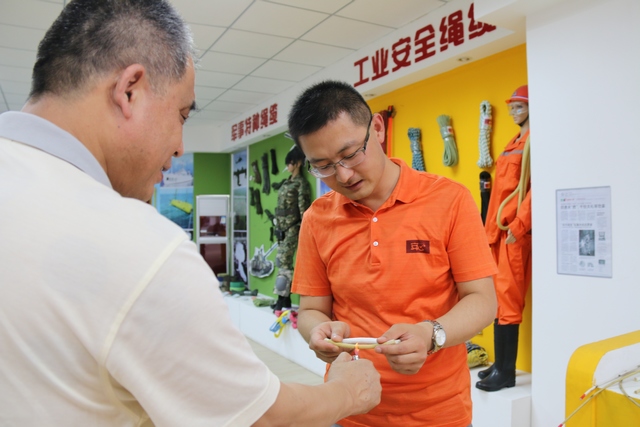
  At present, Xu Lianlong is not only the deputy director of the R&D center of the group, but also the deputy general manager of the subsidiaries of the group, but still insists on doing research. "In addition to ropes, our company is also involved in the emergency field, such as the fire apron that I am doing experimental research and development now." Xu Lianlong believes that once the research and development is successful, it will occupy some market share.

  On January 9, 2015, the self-cooling life-saving descent control device for high-rise buildings led by Xu Lianlong was selected as the national similar product in CCTV10 "Inventing DreamWorks" column. In the process of developing life-saving descent control device for high-rise buildings, Xu Lianlong visited ten construction sites and families, large and small, in order to understand the shortcomings of similar products and the real needs of users.

  In the eight years’ working experience so far, Xu Lianlong, who is only 32 years old, has invented hundreds of new ropes, and obtained seven invention patents and eight utility model patents. The special rope he participated in the research and development has set four firsts in the rope industry in China, namely the China depth, which can be applied to the depth of 8000 meters under the sea; China accuracy, the slip between the cable skin and the inner core is zero; China strength, the strength is 2-5 times that of the same diameter steel cable; China temperature, which does not decompose or melt in the environment of-196℃ to 560℃.

  Talking about craftsman spirit: it is indispensable to be willing to study hard and interested.

  Xu Lianlong, who is only 32 years old, won the company’s innovation award almost every year. On the 2015 commendation wall of Hailiya Group, Xu Lianlong wrote such a passage: Young people, it is more important to see tomorrow, seize today, forge ahead in peace, and you will create a miracle before the sunrise tomorrow.

  "At present, the young people I come into contact with are a little impetuous and complain a lot about their work, but if we want to know that the post-80s and post-90s will soon become the main force of national development, we should realize the gap between China and foreign countries in terms of ropes and cables, and we must be able to bear hardships, be willing to study and be interested in both." When it comes to this, Xu Lianlong is a little worried.

  According to data, the average life span of small and medium-sized enterprises in China is only 3.7 years, of which more than 80% are family businesses. But the average life expectancy of European and Japanese enterprises is 12.5 years. Xu Lianlong believes that the source of an enterprise’s success lies in product quality, and quality comes from our craftsman spirit, which needs to be able to endure hardships, be willing to study and keep loving.

  Xu Lianlong introduced that a manufacturer who visited a toilet in Japan a while ago made R&D products that were popular all over the world. However, the factory building is not a factory with modern facilities in common sense, even a little shabby, but Japanese craftsmen will treat R&D products as their own children and enterprises as their own careers. At present, Hailiya Group has less than 500 employees, so there are few private enterprises in China, but there are more than hundreds or even thousands in Japan, which is worthy of our consideration.

  For Xu Lianlong, the "artisan spirit" not only embodies the careful construction of rope and other products, but also constantly absorbs and learns the most advanced foreign technology, keeps learning, creates its own core technology, keeps pace with the times, builds a national brand, and at least lets the world know that China’s rope and rope are not bad. "

  Hailiya Group is a century-old enterprise. In recent ten years, it has suddenly transformed from an enterprise selling tie ropes into a leader in the high-end rope industry, and Xu Lianlong is one of the fastest growing people in the development of Hailiya Group. In Xu Lianlong’s view, enterprises are very important for the cultivation of young people, hoping that enterprises can give young people more opportunities, and he is one of the beneficiaries. During the conversation, Xu Lianlong kept repeating a sentence: Be grateful, the cultivation of an excellent craftsman must be related to the cultivation of enterprises and the policy support of the state.

  For Xu Lianlong, who will become a father in a few months, he hopes that his children will be responsible people in the future.

Chinese Dream Yellow River Love | This once loess plateau was covered with "green clothes"

  As soon as the sky was white in the east, Gu Yuzhong, a ranger in Chedaoling, anding district, Dingxi City, Gansu Province, got on a motorcycle and entered the forest farm.

  "The bitterness in the middle of Gansu is the best in the world." Dingxi has fragile ecology, serious soil erosion and high evaporation. Locals often say that in Dingxi, it is easier to plant a living tree than to raise a child.

  This is the 30th year of Gu Yuzhong’s forest protection. "I am responsible for fire prevention, theft prevention and pest prevention of 1,300 mu of forest. Although it is hard, it is very meaningful, and there is a good income." Gu Yuzhong said.

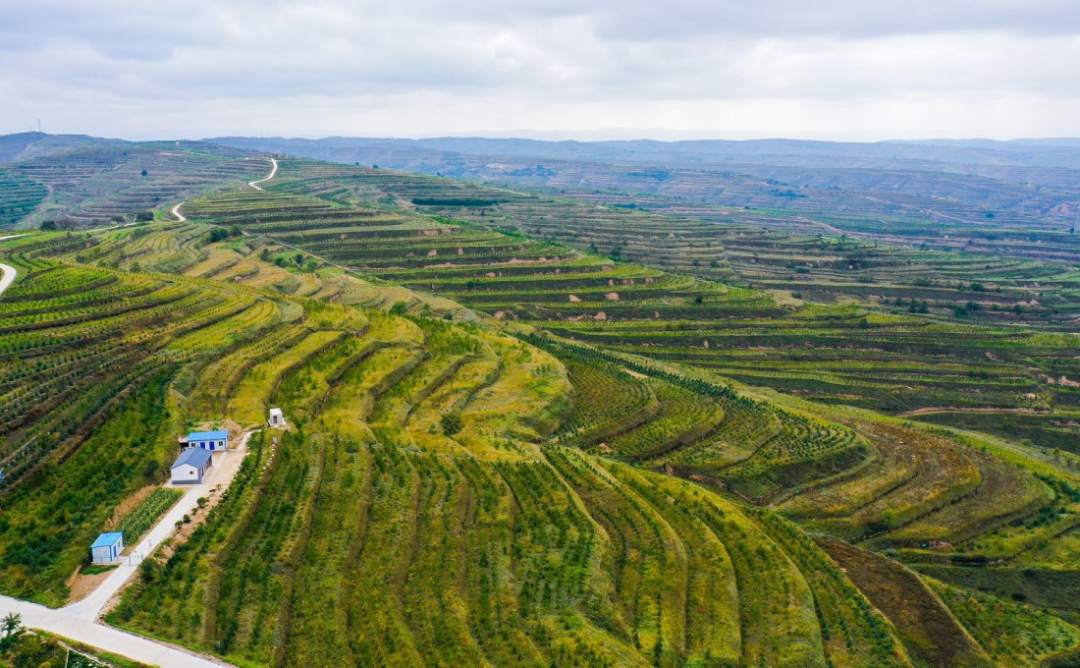
  Chedaoling Forest Farm has 8 mountain ridges and more than 50 gullies and bays, and more than 13,000 mu of land is now covered with "green clothes", with a forest coverage rate of 92.75%. There are 208 mu of nursery land and 800,000 seedlings in the nursery of forest farm, mainly including spruce, Platycladus orientalis, Pinus tabulaeformis, Robinia pseudoacacia, five-pointed maple, Populus hopeiensis and Sophora japonica.

  The persistence of green supports people here to plant trees without stopping. After more than 60 years of unremitting efforts, a green barrier has finally been built on the driveway ridge across Yu’ an county.

  Walking into Nanshan, anding district, Dingxi City, green spread. And three years ago, it was still a barren hill.

  In 2017, the poverty alleviation cooperation between the east and the west helped Fuzhou, Fujian Province in Dingxi, and started with ecological poverty alleviation, funded the construction of ecological forests. Three years later, the afforestation area has reached 11,100 mu, with an investment of 45.99 million yuan.

  "Under the extremely dry climate conditions in Dingxi, the key to afforestation is to solve the problem of water shortage." Chen Zhengbin, a member of the Party Committee of anding district Forestry and Grassland Bureau in Dingxi City, said that with the help of Fuzhou, they chose drought-tolerant tree species, added water-retaining agents during afforestation, and built water conservancy facilities at the same time, which led to this green field under their feet.

  By September, 2020, anding district’s forestry land area accounts for 38% of the total land area, with 1,177,500 mu of natural grassland and a forest coverage rate of 17.98%. Satellite images show that in the past 20 years, Dingxi’s green has been expanding from point to line and from line to surface.

  The mountain is called "tableland" here, with steep surroundings and flat top. The crack between the two mountains is called a "ditch", and a new road is paved at the bottom of the ditch, drifting away. Standing on a high place overlooking, Haloxylon ammodendron is a forest with dense vegetation. The once endless dry plateau is now covered with "green clothes" … …

Central Asian countries’ cognition and expectation of the idea of "Silk Road Economic Belt"

On September 7, 2013, the Supreme Leader of China president delivered a speech entitled "Promoting People’s Friendship and Creating a Better Future" at Nazarbayev University in Astana, the capital of Kazakhstan. In the speech, the Supreme Leader advocated that Eurasian countries should gradually form regional cooperation through policy communication, road connectivity, smooth trade, currency circulation and people’s hearts, and finally revive the ancient Silk Road. How countries along the Silk Road, especially those in Central Asia, view and actively participate in the construction of this concept will greatly affect the prospect of this concept.

Central Asian countries"Silk Road Economic Belt"Overall evaluation of

"Silk Road" is a trade channel between ancient China and Europe, and it is also a cultural channel. It was an important carrier of economic, cultural and scientific exchanges between the East and the West in ancient times, and played an important role in cultural exchanges between China and Central Asia, West Asia and Europe. The idea of "Silk Road Economic Belt" was put forward under the background of "closer economic ties, deeper mutual cooperation and broader development space among countries in Europe and Asia", aiming at promoting various exchange activities between East and West, so as to realize the common development and prosperity of countries in Europe and Asia. This is of great domestic and international significance to China. On the one hand, it will give new impetus to the strategy of developing the western region of China and help to narrow the development gap between the eastern and western regions of China; On the other hand, it provides new ideas for China to carry out its peripheral diplomacy more effectively, especially its diplomacy in Central Asia, and gives new connotation to the further development of its relations with Central Asian countries.

Central Asia is adjacent to the western part of China, which is the connecting zone between China and Europe. Its important geographical position has established the position of Central Asian countries as the core areas in the process of building the Silk Road Economic Belt. How the five Central Asian countries evaluate the "Silk Road Economic Belt" and whether they will participate in the construction of the economic belt will be an important factor that China needs to consider when formulating relevant policies. Without the active cognition and enthusiastic participation of Central Asian countries, the idea of "Silk Road Economic Belt" can only be empty talk.

On the whole, the idea of "Silk Road Economic Belt" has been positively evaluated by the mainstream media in Central Asian countries. On September 19th, 2013, the Central Asia Times published in Bishkek pointed out that "the Supreme Leader’s visit to four Central Asian countries has opened a new chapter for China to develop relations with these countries, and his plan of’ Silk Road Economic Belt’ has been welcomed by relevant countries". On the same day, the newspaper also reported the views of the media and professionals in four Central Asian countries (except Tajikistan), Russia and France on the "Silk Road Economic Belt", which were all positive. On November 8, 2013, Central Asia Times published an article entitled "New Silk Road Economy Brought Wealth Opportunities to China, Central Asia and Europe" again, specifically reporting on "Silk Road Economic Belt". Compared with the report in September, this article has a more in-depth analysis. It not only points out the competition among major cities in China to attract favorable national policies, but also analyzes the possible benefits, measures taken and uncertainties still existing in the "Silk Road Economic Belt" extending from the eastern coast of China to Europe via Central Asia, and ignores the criticism that China hopes to seize the resources of Central Asian countries. However, it should also be pointed out that the mainstream media in Central Asian countries have not paid much attention to the idea of "Silk Road Economic Belt". In addition to the Central Asia Times, the attention of Central Asian countries to the Silk Road Economic Belt mainly appears on the online media, and the print media rarely discuss this idea enthusiastically.This may be mainly because China has not put forward specific policy measures on how to build the Silk Road Economic Belt, so all countries are still in the wait-and-see stage.

Central Asian countries generally expectThe prosperity of the Silk Road

The Supreme Leader of president, China, pointed out in the elaboration of the idea of "Silk Road Economic Belt" that the economic belt will attract Eurasian countries and countries along the ancient Silk Road to participate. If this concept defines the participating countries as "Eurasian countries" and "countries along the ancient Silk Road", then whether Central Asian countries consider themselves as "Eurasian countries" and "countries along the ancient Silk Road" and whether they expect to reproduce the prosperity of the Silk Road will become an important criterion to measure whether countries are willing to actively and long-term participate in the construction of the Silk Road Economic Belt. Generally speaking, all countries in Central Asia believe that they are along the ancient Silk Road, which not only emphasizes that the ancient Silk Road has brought prosperity and stability to their countries, but also looks forward to reviving this ancient trade route. However, in view of the different roles played by countries on the ancient Silk Road and the different interests of the five Central Asian countries, the specific attitudes of countries to the construction of the Silk Road Economic Belt are also different.

Kazakhstan is at the crossroads of Europe and Asia and even the center of Eurasia, and plays an important role in reviving the ancient intercontinental trade channel. In 1997, Nazarbayev said that Kazakhstan "is at the crossroads of Europe and Asia? ? Today, with the help of the world community, we are committed to restoring the Silk Road through cooperation with other countries in the region. In 2005, when talking about Kazakhstan’s national development strategy in 2030, Nazarbayev said: "Kazakhstan will become an important link and transcontinental economic bridge between Europe, Asia-Pacific and South Asia." It can be seen that Nazarbayev has been looking forward to rebuilding the Silk Road and benefiting Kazakhstan from it.

Kyrgyzstan expects that the revival of the Silk Road will help it improve its relations with neighboring countries and realize the development of Kyrgyzstan’s national construction, so it also supports the revival of the Silk Road. Osh, a city in southern Kyrgyzstan, was once the silk industrial center on the ancient Silk Road, second only to Suzhou, China. Kyrgyzstan played an important role on the ancient Silk Road before, which made it yearn to reproduce the scene of smooth communication and unity between countries on the ancient Silk Road.

Uzbek President Karimov also emphasized Uzbekistan’s contribution to the ancient Silk Road, and believed that Uzbekistan in Timur era was the hub of the ancient Silk Road, and its capital Samarkand even constituted the capital center of interaction between East Asia and Europe. Moreover, Ukraine widely publicized its role in the ancient Silk Road as an international brand to highlight its rich cultural heritage and glorious history. In view of this, Ukraine hopes that the Silk Road will flourish in the contemporary era, and at the same time, it will realize the economic development and national prosperity of Ukraine and play an active role in political, economic and cultural exchanges between the East and the West.

Turkmenistan also looks forward to the revival of the Silk Road. As reported in Neutral Turkmenistan News, the visit of the Supreme Leader Chairman to Turkmenistan has consolidated the achievements of cooperation between the two sides and raised the relations between the two countries to a new height. Turkmenistan is proud of its friendly relations with China, and regards this relationship as a key factor to ensure the stability and development of the Eurasian region. The newspaper also said that Turkey will support the construction of the Silk Road Economic Belt.

Tajikistan is also the area where the ancient Silk Road passed, and Kuzhan, the second largest city in its north, was once an important town on the Silk Road. The people of Tajikistan also have a sense of historical and cultural closeness to the Silk Road. Especially after the civil war, the Tajik people are more eager for social stability and economic development, and hope that the Silk Road will regain its vitality and provide more opportunities for the development of Tajikistan.

Constructing "Silk Road Economic Belt"Feasibility of

First of all, the rapid development of relations between China and Central Asian countries has laid a good foundation for building the Silk Road Economic Belt. Take the trade volume between China and the five countries as an example. In 2000, the trade volume between China and the five Central Asian countries was only $1.8 billion, while in 2012, the two sides reached $45.9 billion. In more than ten years, the trade volume between China and five Central Asian countries has increased by more than twenty times. In 2012, China has become the largest trading partner of Kazakhstan and Turkmenistan, and the second largest trading partner of Uzbekistan, Kyrgyzstan and Tajikistan. This shows that the relationship between China and Central Asian countries has experienced rapid and steady development, and the deepening economic cooperation between the two sides has provided a solid foundation for all countries to actively participate in the construction of the Silk Road Economic Belt.

Secondly, the close and smooth political relationship between the two sides is a strong support for Central Asian countries to participate in the construction of the "Silk Road Economic Belt". In May 2013, the heads of state of China and Tajikistan announced the promotion of China-Tajikistan relations to a strategic partnership. In September 2013, during President Supreme Leader’s visit to four Central Asian countries, China’s bilateral relations with other Central Asian countries were comprehensively upgraded: for example, China-Turkey and China-Kyrgyzstan relations were upgraded to strategic partnerships respectively; China-Kazakhstan relations have been further deepened into a comprehensive strategic partnership; China and Ukraine have further developed and deepened their strategic partnership and signed a treaty of friendship and cooperation. So far, China has established a comprehensive strategic partnership with five Central Asian countries. The close political ties between the two sides provide a basis for close and frank consultations on how to build the Silk Road Economic Belt.

Thirdly, deepening economic and trade cooperation provides a realistic basis for Central Asian countries to look forward to reviving the Silk Road. During the Supreme Leader’s visit to Kazakhstan, China and Kazakhstan signed a contract worth up to 30 billion US dollars. During their visit to Uzbekistan, the two sides signed 31 documents with a contract value of US$ 15 billion. During President Xi’s visit to Central Asian countries alone, the total investment and cooperation agreements signed by China and the four countries of Kazakhstan exceeded 48 billion US dollars.

Finally, the rich benefits that the construction of the "Silk Road Economic Belt" may bring are the main reasons for the general positive attitude of Central Asian countries. Central Asian countries have made great achievements in political, economic, social and other fields over the past 20 years, but they still face many difficulties. The planned road connectivity, smooth trade and currency circulation of the Silk Road Economic Belt can provide important benefits for Central Asian countries to promote national construction and strengthen foreign relations, and it is the most reliable guarantee to attract Central Asian countries to participate in the implementation of this concept. Generally speaking, the benefits that Central Asian countries can obtain include: countries are supported in improving the construction of infrastructure such as roads, oil and gas pipelines and power grids; Diversified energy export routes; Promote the enrichment of domestic commodity market and expand foreign trade volume; Access to the sea can be more effectively integrated into the global economy; Form the motivation to improve the domestic investment environment in order to increase foreign investment; Further close ties with the outside world, especially with China and European countries, and so on.

Constructing "Silk Road Economic Belt"Challenges faced

First of all, starting from their own reality, Central Asian countries may affect their participation in the Silk Road Economic Belt. This challenge began to appear when Kyrgyzstan withdrew from the construction of the China-Kyrgyzstan-Ukraine railway. On the one hand, Kyrgyzstan announced that it would actively participate in the construction of the "Silk Road Economic Belt", on the other hand, it announced its withdrawal from the construction of the China-Kyrgyzstan-Ukraine railway in December 2013. On December 16, 2013, Kyrgyz President atambayev even said: "In fact, the China-Kyrgyzstan-Ukraine Railway cannot solve any problems in our country." Although Kyrgyzstan announced its withdrawal from the construction of the China-Kyrgyzstan-Ukraine railway, it does not mean that Kyrgyzstan will refuse to participate in the construction of the "Silk Road Economic Belt". The degree of participation depends on the extent to which this idea can meet the interests of all countries.

Secondly, the different development levels of the five Central Asian countries directly increase the difficulty of coordination in the process of building the Silk Road Economic Belt. After the independence of Central Asian countries for more than 20 years, the differences among countries in the development process have become more and more obvious, and this difference is also reflected in the differences in the interests of countries. For example, in the construction of transportation facilities, Kyrgyzstan hopes to build a railway connecting its south and north, Uzbekistan expects China to start the construction of the China-Kyrgyzstan-Uzbekistan railway, and Tajikistan continues to seek China’s help to improve its infrastructure. Moreover, there are still some contradictions among Central Asian countries, such as disputes among the five countries on the allocation of water resources, incomplete demarcation of national boundaries, inconsistent foreign policy orientations (including relations with China), and so on. All these problems will further increase the difficulty of policy coordination between China and other countries in the process of building the Silk Road Economic Belt.

Thirdly, people in some Central Asian countries have doubts about the formation of a closer relationship with China. Based on China’s economic advantages, some elites and ordinary people in Central Asian countries believe that economic cooperation with China is more beneficial to China than Central Asian countries, and some people in Central Asian countries are worried that with China’s investment, a large number of China immigrants and cheap goods will flood in. They think that China enterprises are more willing to hire relevant talents from China, which will lead to the reduction of local employment opportunities. Based on this knowledge, they have doubts about whether the construction of the "Silk Road Economic Belt" is a means for China to expand its influence in the region. Although China has done a lot to promote people-to-people exchanges with Central Asian countries, the differences in interests, language, culture and development level still hinder Central Asian people’s in-depth understanding of China.

Finally, Russia’s attitude towards the idea of "Silk Road Economic Belt" cannot be ignored. As we all know, Russia’s rule in Central Asia has lasted for more than 100 years, which has led to many close ties between Central Asia and Russia, which determines that Russia has influence in this region that other big countries do not have. Not only that, Russia still regards the region as its traditional sphere of influence. In order to consolidate Russia’s influence in the region, Russia has put forward an initiative to integrate Central Asia in recent years, that is, the idea of "Eurasian Union". Although the original intention of China’s idea of "Silk Road Economic Belt" is not to weaken Russia’s influence and compete with "Eurasian Union", Russia’s attitude towards the idea of "Silk Road Economic Belt" is bound to affect the willingness of Central Asian countries to participate under the background that Russia regards Central Asia as its traditional sphere of influence.

Conclusion

All in all, Central Asian countries have expectations for the construction of the "Silk Road Economic Belt", hoping to further develop their relations with China and realize their own development. However, due to the differences in the interests of Central Asian countries, the doubts of countries about China’s strong economic strength and the traditional influence of Russia in this region, the construction of the "Silk Road Economic Belt" still faces many challenges. In this context, China needs to strengthen the following work to ensure the smooth implementation of the Silk Road Economic Belt initiative.

First, the interests of Central Asian countries should be fully considered. In addition to developing relations with other countries by increasing loans and investments, we should respect the sovereignty, local customs, laws and regulations of all countries, and gradually stimulate the long-term and sincere participation of Central Asian countries in the construction of the Silk Road Economic Belt, so that elites and people of all countries can realize that this idea is an effective way to achieve mutual benefit, win-win and equal development of all parties involved. Second, strengthen communication with governments of other countries, and at the same time refine the specific content and measures of this idea, strengthen humanities cooperation and mutual understanding with other countries, conduct in-depth research on the psychology of the people in Central Asian countries, and take appropriate measures to improve the people’s cognition of China in Central Asia after understanding their attitudes towards China’s expanding influence. This is also a problem that China needs to pay special attention to and focus on when implementing the idea of "Silk Road Economic Belt". Third, strengthen communication and coordination with Russia, and eliminate Russia’s misunderstanding and concerns about China’s desire to expand its influence in Central Asia. In this process, China can first promote Russia’s participation in the idea of building the Silk Road Economic Belt, and then communicate with Russia in time when relevant measures are introduced and implemented, so as to prevent Central Asian countries from weakening their enthusiasm for participating in the construction of the Silk Road Economic Belt because of their consideration of Russia.

(The author is an associate professor of Central Asia Institute and School of Management, Lanzhou University)

(Editor: Wei Dandan)

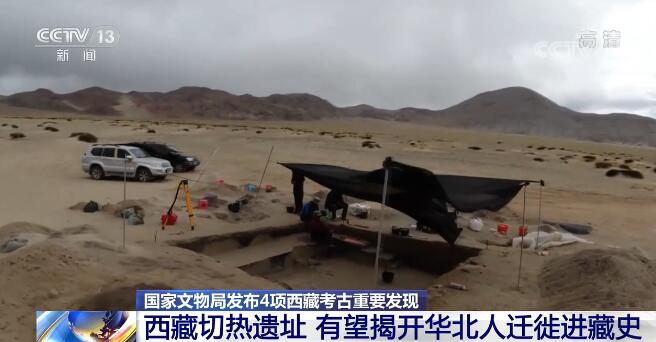
Archaeological research achievements in Xizang | Qiege site is expected to uncover the history of North China people’s migration into Tibet

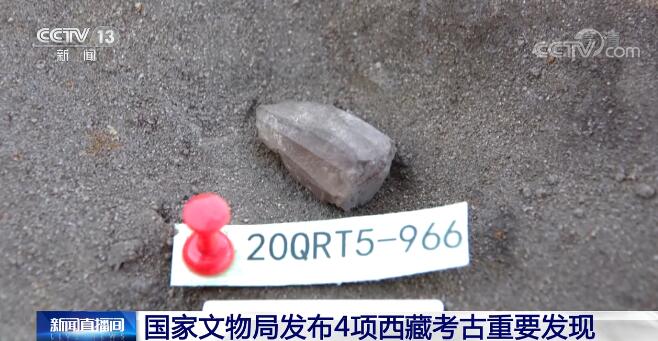
CCTV News:Today (January 13th) morning, National Cultural Heritage Administration held a report meeting on archaeological discoveries in Xizang, and reported four major archaeological discoveries in Xizang, including Qiege site, Mabulu site, Gebuseru site and Dangxiong cemetery. Among them, Qiege site is a rare site of early prehistoric human activities with clear stratigraphic accumulation in the hinterland of Qinghai-Tibet Plateau, which fills the gap between the hinterland of Qinghai-Tibet Plateau and 8,000 years ago. The blank of prehistoric archaeological culture in 10000 years, and more importantly, a dense distribution area of stone products was found in the site, which is expected to gradually uncover the long history of North China people migrating into Tibet about 10 thousand years ago.

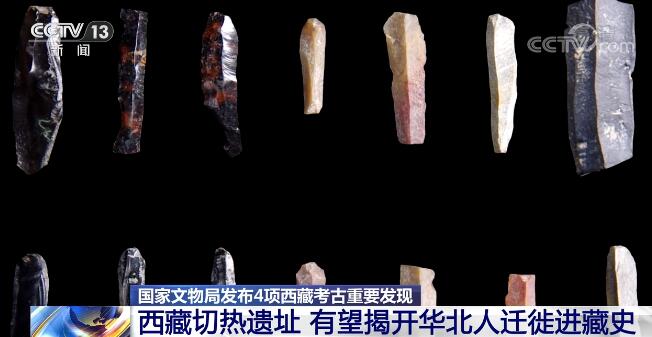
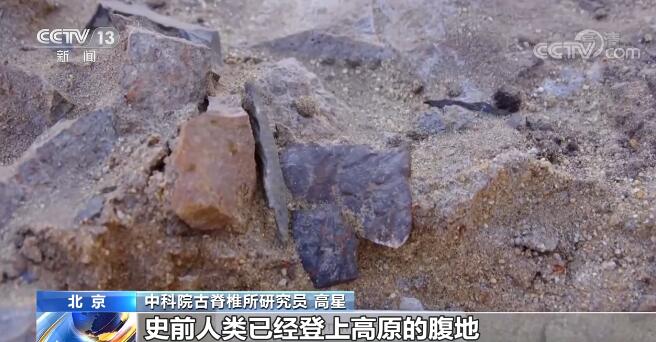
This is a fine stone core, less than two centimeters, with angular surface and "cut marks", which is the effect of pressing and "cutting" with a special tool. This is the small part that has been "cut". It is called a fine stone leaf by archaeologists. Its edge is as sharp as a blade, and its size is only a few millimeters to a few centimeters. It was used by people who cut heat on the Qinghai-Tibet Plateau about 10,000 years ago. It is extremely difficult to "cut" a stone knife. Small fine stone cores and leaves condense the great wisdom of ancient humans on the Qinghai-Tibet Plateau in the Paleolithic Age.

These stone tools, which surprised archaeologists repeatedly, were unearthed at the Qiege site in Ali, Xizang. According to reports, Paleolithic remains such as fine stone leaves and fine stone cores are often found on the surface of the Qinghai-Tibet Plateau. However, the remains collected on the surface can’t determine the primary strata and dating, and when human activities appeared on the Qinghai-Tibet Plateau has been an important issue for half a century. In 2011, an archaeological team led by Zhang Xiaoling, an associate researcher at the Institute of Vertebrate Paleontology, Chinese Academy of Sciences, began to investigate in Xizang. In 2012, several potential sites were found on the banks of Shiquan River in Gaer County, Ali region. After further investigation and trial excavation, it was determined that Qiege site was of great research value. August & mdash; 2020; In September, the site was officially excavated, and more than 5,000 cultural relics were unearthed in an area of nearly 70 square meters. A long-lost human history on the Qinghai-Tibet Plateau in the Paleolithic Age slowly emerged.

Archaeologists said that nearly 30,000 years ago, the remains of fine stone leaves first appeared in North China, and reached a prosperous period about 15,000 years ago. However, the fine stone leaves and other cultural relics found in Qiege site in Xizang are highly similar to the remains in North China, and the time is relatively late. In which region did ancient humans migrate to the Qinghai-Tibet Plateau? The answer has also become clear.

According to reports, in the whole Paleolithic period, that is, 99% of human history, human beings often migrated and moved because of changes in food and resources. Previously, the archaeological team of Zhang Xiaoling, Institute of Vertebrate Paleontology, Chinese Academy of Sciences, discovered the track of human activities 40,000 years ago at the site of Naqunia in Xizang. The discovery of Qiege site fills a historical gap in the process of human survival and adaptation and the formation of Tibetan population in Qinghai-Tibet Plateau after 40,000 years.

Gao Xing, a researcher at the Institute of Vertebrate Paleontology, Chinese Academy of Sciences:The ancient people, whether their remains or their cultural remains, may not all be preserved, so writing the history of human beings with archaeological materials can only be intermittent. I am afraid this puzzle will never be put together completely, but its big outline will be established.

Ada photo tidbits exposure girl feels full of bee waist and hips.

Ada’s skin is as transparent as a girl.

Ada’s skin is as transparent as a girl.

Ada’s skin is as transparent as a girl.


1905 movie network news On May 10th, a group of studios in Ada took photos of the highlights. In the photos, Ada’s black straight hair was soft and drooping, the air bangs were fashionable and the age was reduced, the long silver earrings modified the face, the silver suspender dress was more transparent and white, the red lips were bright and long, the hair was fluttering, the temperament was bright and moving, and the career line was eye-catching. In the tidbits, Ada also listened carefully to the photographer’s explanation of the shooting script, quiet and earnest, and full of intimacy.


Ada listened carefully to the photographer explaining the shooting script.

Ada silver dress with suspenders is fresh and elegant.

Ada silver dress with suspenders is fresh and elegant.

It is reported that Ada’s partner Li Rui, Liu Genghong and Li Chuan’s brand-new variety show "Enjoy Beauty" premiered today. Among them, Ada is not only the only female guest, but also has different forms of cooperation with three male guests. As the representative of the Almighty Goddess, she has put forward many views representing women’s positions for amateur players, with frequent golden sentences and online business. In terms of film and television works, Ada co-starred with Qin Hao, Cai Guoqing, Wang Terry and Bao Wenjing, and it was scheduled to be released nationwide on July 13th in the summer vacation. This film was adapted from the best-selling juvenile adventure series novel created by Leo Phantom, and it was the first juvenile fantasy adventure film in China. Ada owned his own pub in it, so he must be a wise and independent woman. The films from Wang Leehom, Victoria Song, Godfrey Tsao, Wu Qianyu, Gao Shengyuan, Chilam, Li Yuan and Wu Jiacheng are also expected to meet with you this year. In addition, Ada also starred in the two TV series "Wu Dong Gan Kun" and "Back to the Ming Dynasty as a Prince Yang Ling Biography". In the TV series "Wu Dong Gan Kun" which will land on Hunan Satellite TV in the summer, Ada plays the glamorous but hidden villain "Mu Qianqian". In the Biography of Yang Ling, who was co-starred by Ada’s partners Jiang Jinfu, Crystal and Wayne, she was incarnated as "Cheng Qiyun" with both civil and military skills, and her double charm attracted a lot of attention.


A New Atmosphere of Strictly Administering the Party —— Review of Historical Changes since the 18th CPC National Congress (IX)

  Xinhua News Agency reporters Zhu Jichai, Rong Qihan and Lai Xing

  Looking at the magnificent five years since the 18th National Congress of the Communist Party of China, it is undoubtedly a major event that runs through and has far-reaching influence.

  The CPC Central Committee with the Supreme Leader as the core has faced up to all kinds of problems and abuses existing in the Party, put the strict management of the Party in an all-round way into the "four comprehensive" strategic layout, promoted the management of the Party with unprecedented determination and courage, adopted a series of groundbreaking and breakthrough major measures, forged a powerful political party with a new climate, and provided a strong political guarantee for the historic changes in the cause of the Party and the state.

  Understanding has reached a new height — — Incorporate the comprehensive and strict management of the party into the strategic layout, and continuously deepen the understanding of the laws governing the party and the party.

  "It’s hard to strike while the iron is hot."

  Through the five-year time tunnel, we can re-evaluate the words of the Supreme Leader General Secretary when he made his first collective appearance in the 18th The Politburo Standing Committee (PSC), and we can feel that every word is fateful.

  Fight hard "iron" and call for harder "iron-smiters".

  Strictly administering the party in an all-round way, as the distinctive theme of the Party Central Committee with the Supreme Leader as the core, comes not only from a clear understanding of the problems, but also from a brave responsibility.

  Corruption is getting worse and worse, bad atmosphere is spreading, the party’s concept is indifferent, the organization is lax, the discipline is lax, and the "four tests" and "four dangers" are severe and complicated … … A big party that has been in power for a long time must cultivate the "indestructible body".

  During the critical period of reform, the period of development and transformation, and building a well-off society in an all-round way, it entered a decisive battle … … A strong party is crucial to the great rejuvenation of the Chinese nation.

  Critical moment, critical choice.

  The CPC Central Committee with the Supreme Leader as the core comprehensively examines the new situation and changes of the world, the national conditions and the party’s situation, promotes the building of a clean and honest party style and the struggle against corruption to the height of life and death of the party and the country, and puts the comprehensive and strict management of the party in a crucial position in the overall situation of governing the country.

  In December 2014, when investigating in Jiangsu, General Secretary of the Supreme Leader emphasized that strictly administering the Party in an all-round way is an inevitable requirement for promoting the new great project of party building.

  “‘ Comprehensive ’ These two words are very important, which is a great leap in understanding. We can only be strict when we are comprehensive, and we must be more comprehensive when we are strict. " Xin Ming, a professor at the Central Party School, said that to strictly manage the Party in an all-round way means to manage the Party as a systematic project. From content to object, from standard to foundation, from childhood to adulthood, from now to the future, all aspects cannot be absent.

  Looking at the process of comprehensively and strictly administering the Party step by step in the past five years, we can see the powerful ideological power from "how to see" to "how to do".

  Profoundly explain the connotation of comprehensively administering the party strictly — —

  "The core of strictly administering the party in an all-round way is to strengthen the party’s leadership. The foundation is comprehensive, the key is strict, and the key is governance."

  Clarify the responsibility system of strictly administering the party in an all-round way — —

  "The party must manage the party. First of all, the party Committee must manage and the party secretary must manage." "The Party Committee bears the main responsibility and the Commission for Discipline Inspection bears the responsibility of supervision."

  Clearly point out the focus of strictly administering the party in an all-round way — —

  "Be strict in thinking, managing the Party, discipline, governance, style and anti-corruption".

  Deeply expound the methodology of comprehensively and strictly administering the party — —

  Adhere to the unity of high standards and keeping the bottom line, adhere to the unity of punishment and responsibility, adhere to the unity of finding problems and deepening reform, and adhere to the unity of selecting and employing people and strict management.

  … …

  Practice is developing and understanding is deepening.

  Serious inner-party political life is the basis of comprehensively administering the party strictly, and strengthening inner-party supervision is an important starting point and an important guarantee for comprehensively administering the party strictly.

  In October 2016, the Sixth Plenary Session of the Eighteenth Central Committee of the Communist Party of China made a special study to strictly manage the Party in an all-round way, deliberated and adopted Several Guidelines on Inner-Party Political Life under the New Situation and Regulations on Inner-Party Supervision in the Communist Party of China (CPC), which started a new journey of strictly administering the Party in an all-round way.

  After five years of in-depth advancement, the CPC Central Committee with the Supreme Leader as the core has profoundly answered major theoretical and practical questions such as who will grasp, what to grasp and how to grasp the party strictly under the new situation, and has continuously deepened the understanding of the laws governing the party.

  Action shows new strength — — There is no forbidden zone, zero tolerance and full coverage, and we will comprehensively and strictly manage the party and make more efforts to advance in depth.

  In the past five years, we have faced up to the outstanding problems that the people have reflected most strongly and pose the greatest threat to the party’s ruling foundation, made more efforts to strictly manage the party in an all-round way, and made a series of combination punches.

  Taking the construction of work style as the comprehensive and strict management of the party — —

  In December 2012, the Political Bureau of the Central Committee deliberated and adopted eight regulations on improving work style and keeping close contact with the masses. As soon as I came up, I set rules and made promises, which opened the "first action" of strictly administering the party in an all-round way. Subsequently, formalism, bureaucracy, hedonism and the extravagant wind "four winds" became the key rectification targets.

  Tough and disciplined. In the past five years, discipline inspection and supervision organs at all levels have investigated and dealt with more than 180,000 cases of mental problems in violation of the eight central regulations, and on average, more than 140 people have been dealt with for work style problems every day.

  Curb "corruption on the tip of the tongue", strictly investigate "corruption on wheels" and rectify "unhealthy practices in clubs" … … Stopped bad style, which was once thought to be difficult to stop, and conquered the stubborn and stubborn diseases that were once thought to be difficult to overcome.

  五年激浊扬清,起于毫末之间、成于驰而不息,党风政风焕然一新。

  以重拳反腐为全面从严治党破局——

  “打虎”无禁区。周永康、薄熙来、郭伯雄、徐才厚、孙政才、令计划、苏荣等一批“大老虎”纷纷落马。截至今年6月底,全国共立案审查中管干部280多人;共查处十八届中央委员、候补委员40人,中央纪委委员8人。

  “拍蝇”零容忍。截至今年6月底,共处分乡科级及以下党员干部134.3万人。

  “天网”紧追逃。截至8月底,已先后从90多个国家和地区追回外逃人员3339人,追回赃款93.6亿元;“百名红通人员”已经到案近50人。

  五年风雷激荡,反腐败斗争压倒性态势已经形成并巩固发展。

  以党内监督作为全面从严治党的重要抓手——

  巡视利剑经过五年磨砺,锋芒毕露,已成为党之利器、国之利器。12轮中央巡视,对277个地方、单位党组织进行了“政治体检”,实现了党的历史上首次一届任期内中央巡视全覆盖。

  At the same time, the Central Commission for Discipline Inspection has achieved full coverage of the stationing supervision of 139 central-level party and state organs, and implemented comprehensive stationing, and the independence and effectiveness of inner-party supervision have been continuously enhanced. To start the reform of the national supervision system, a national supervision system covering all public officials exercising public power is ready to emerge. There is no blank, no dead ends, and a more dense supervision network in Zhang Yue has continuously strengthened the effective supervision and restriction of power.

  From deepening the transfer of functions, methods and styles of the Commission for Discipline Inspection to implementing the dual leadership system of discipline inspection; From clarifying the responsibility system for building a clean and honest government, to exploring the "four forms" of practice supervision and discipline … …

  Five years of exploration and practice, a series of institutional and institutional reforms and innovations in methods and methods have injected a strong impetus into the comprehensive and strict management of the party.

  Results lead to a new atmosphere — — Treat both the symptoms and root causes, consolidate the foundation and cultivate the yuan,Strictly administering the party in an all-round way is always on the road.

  "In the past year, there was basically no party organization activity. Occasionally, I spoke at a meeting and complained. I don’t even know the major policies of the central government. Now you have to ask me what is ‘ Four self-confidences ’ ‘ Four consciousnesses ’ I can answer questions. " Yuan Haiquan, an old party member from Zhuyuan Village, Pingxiang, Jiangxi, said that his awareness of party member has been greatly improved.

  Since last year, Pingxiang has promoted the system of "one meeting every ten days" among rural grass-roots party organizations, and regularly organized party member to carry out organizational life and theoretical study three times a month. This is a microcosm of the "two studies and one doing" study and education.

  From "healing tree" to "treating ecology", from managing behavior to emphasizing "mind learning"

  In the past five years, a series of inner-party political and ideological education has been interlocking and deepened from "key minority" to all party member, from the practice of the party’s mass line education to the special education of "three strictness and three realities" to the study and education of "two studies and one doing", and the party spirit and ideals and beliefs of more than 89 million party member have been strengthened.

  Ideological party building and institutional party management are closely combined, with one being soft and one being rigid, exerting force in the same direction and at the same time.

  Introduce the rules for leading cadres’ spouse children to run enterprises through business, standardize the reporting system of personal matters, and put an end to the problem of "being an official at the front door and opening a shop at the back door"; Make clear provisions on the selection and appointment of cadres, promotion and demotion, and prevention of promotion in spite of illness, and reverse the chaos of "bad money expelling good money" in officialdom; Clear discipline before the law, revise and formulate basic laws and regulations such as honesty and self-discipline, disciplinary regulations and accountability regulations, and draw a "bottom line" and mark a "high line" for party member … …

  In the past five years, the construction of laws and regulations within the party has been accelerated at an unprecedented pace. The central government has promulgated or revised nearly 80 inner-party laws and regulations, more than 40% of the existing inner-party laws and regulations, and it has become more and more disciplined and well-founded.

  Five years of hurricane and rain, five years of quenching into steel.

  In 2016, people’s satisfaction with building a clean and honest government and anti-corruption work climbed from 75% before the 18th CPC National Congress to 92.9%.

  "The people have given high praise to the achievements made in the comprehensive and strict administration of the Party since the 18th National Congress of the Communist Party of China. The achievements deserve full recognition and the experience deserves in-depth summary. However, we must not be complacent and blindly optimistic. There is still a long way to go to strictly manage the party in an all-round way. " General Secretary of the Supreme Leader earnestly warned in his "July 26th" speech.

  The "strength" cannot be vented, and the "potential" cannot be turned. Strictly administering the party in an all-round way is always on the road.

  Under the strong leadership of the CPC Central Committee with the Supreme Leader as the core, we will continue to adhere to the problem orientation, maintain strategic strength, promote the in-depth development of strictly administering the Party in an all-round way, make the thinking and measures of strictly administering the Party in an all-round way more scientific, rigorous and effective, ensure that the Party always wants to be with the people, lead the ship carrying the great dreams of the people of China to sail ahead through the waves and sail triumphantly to the glorious other side.

The Lectra 07 EM-P real car appeared, with a length of over 4.8 meters and frameless doors, with a 1.5T plug-in and fuel consumption of 4.8L.

In February, automobile sales reached 13,209 units, up 9.26% year-on-year. Among them, the Lectra EM-P family contributed a lot, accounting for about 47% of the sales. In order to achieve further progress, the Lectra EM-P family added a new member-Lectra 07 EM-P. Based on CMA Evo architecture, the new car will be positioned as a medium-sized car, adopting the second generation design language of Lectra and equipped with a 1.5T plug-in system, which will be officially released on March 8th. A few days ago, some netizens have photographed the real car map of the Lectra 07 EM-P. Let’s take a look.

Judging from the actual car diagram, the LECK 07 EM-P continues the family design language of LECK 08 EM-P, and the low-lying closed front is equipped with "Dawn" daytime running lights on both sides, and the far and near light groups below are in a penetrating style, and a point array linear light source is added in the middle, giving consideration to the sense of science and technology and recognition. The outward extension of the trapezoidal lower grille also outlines the "beard" style, which looks both individual and sporty.

The style of the side of the car body is quite similar to that of the car body. The slip-back C-pillar shape, together with the rising window line and waist line, creates a posture ready to go, and is also equipped with frameless doors, hidden door handles, suspended roof and two-color dynamic petal-shaped wheels, which further enhances the sense of movement and fashion. In addition, the exterior rearview mirror is also designed with a narrow frame, which also uses a relatively thick bracket and incorporates a camera. The body dimensions are 4827/1900/1480mm, and the wheelbase is 2843mm.

The tail adopts a long and narrow through taillight group, and four prominent column light groups complement each other with the style of the whole vehicle, and dot-matrix light sources are also added inside to echo the front face. In response to this, there is also a blackened diffuser extending outward, coupled with the upturned blackened duckling tail, and the sense of fighting is vividly portrayed. In addition, the new car will also provide a variety of styling wheels, NFC keys, privacy glass and so on.

Combined with the previously exposed interior spy photos, it also continues the design style of Lectra 08 EM-P. The simple center console is equipped with a suspended central control large screen and a rectangular full LCD instrument panel, and it is expected to be equipped with the Flyme Auto car system. The three-position multi-function steering wheel is also the same as the Lectra 08 EM-P, and the dual mobile phone wireless charging panel is not absent. It is understood that the Lectra 07 EM-P will also be equipped with a million-level panoramic sound response system, a 92-inch AR-HUD, a full-cabin seat with the same power, and an ecological interconnection between people and cars.

As for the power, the Lectra 07 EM-P will be equipped with an EM-P hybrid system consisting of a 1.5T engine +3DHT gearbox+drive motor, in which the maximum power of the 1.5T engine is 120kW, which is consistent with that of the Lectra 08 EM-P.. As a reference, the comprehensive power of the Lectra 08 EM-P two-wheel drive system is 280kW(381 HP) and the four-wheel drive system is 436kW(593 HP). According to the application information, the Lectra 07 EM-P is equipped with a battery pack with a capacity of 18.99kWh, with a pure battery life of 102km and a fuel consumption of 4.8L/100km.

It is worth mentioning that the sales target of the brand is 300,000 vehicles in 2024. In addition to the 07 EM-P, a number of new cars will be launched this year, including not only a large-scale ultra-luxury flagship model, but also the first pure electric car (code name "E371"), which will adopt a global 800V and AI chassis (double-cavity suspension +CDC electromagnetic suspension). It seems that Xiaomi SU7 has

Of course, the information about the new car has yet to be officially announced. So, what do you think of Lectra 07 EM-P? Starting from the guide price of Lectra 08 EM-P of RMB 208,800, what do you think is the appropriate price of Lectra 07 EM-P? Welcome to leave a comment.

Of these 10 car keys, I’m sure you haven’t seen 9.

Small car keys may seem inconspicuous, but just like the car itself, they have become a symbol of the owner’s personality. Especially the car keys of luxury cars, designers even have to rack their brains for this small key, which is as elaborate as processing jade.

1. Bugatti Vehicular Speed Mode Key

Without this key, your Bugatti Weihang Super Sport can only drive to a mere 352 km/h. Once you find the mechanism on the edge of the rear side door of the driver’s seat, insert this key, then the chassis will be automatically lowered, the tail angle will be automatically adjusted to attack mode, and the diffuser control panel will be automatically turned off (it is normal not to understand it). In short, this key will enable you to raise Weihang Super Sport to the same cruising speed as Shanghai maglev train (about 430km/h).

2. Jaeger-LeCoultre & aston martin Car "Key"

The price of this key is over 190,000 yuan.

Swiss watch company launched the world’s most expensive car "key", asking for more than 190,000 RMB! This expensive key system is installed in this watch, and Aston Martin DB9, DBS and Rapide can be opened by touching the corresponding area. Before your friend can react, the car door has been opened. Enjoy his envious expression!

3. Pagani (pagani) Huayra

The little silver car model on the top is not only a car model, but also a USB flash drive! After opening your Huayra with this "USB flash drive", you will find that it is not only a USB flash drive, but also a car key. When you step on the accelerator, the roar of the engine will ring together with the "Little Apple. mp3" stored in this key, which will complement each other and be invincible.

4. The key to Chrysler Neoglow

One feature of this key is that it will blink and blink, but nothing else.

5. The key of Koenigsegg CCXR

This is not so much a car key as a piece of "Tianyun Wuhuamian" made of pure silver, with the brand of Swedish Koenigsegg Escort Agency on the front and a rubber button on the back to unlock the car. If you go through the security check with Koenigsegg’s key, it is estimated that you should be given special attention, because this key is too much like a Grenade!

6. Keys to Porsche 917

Finally, TG awarded the most of the top 10 car keys to a real key. There is nothing special about this Porsche 917 key. It doesn’t have a high-definition touch screen, and it can’t tell you the time. It is not made of special precious metals, and obviously it doesn’t look like a car model. It is a key, which together with Porsche tells everyone that lightness is king. This key and a make-up brand tell you a truth: less is more!

7. Spyker

Some grandstanding Spyker also changed their keys. Do you think this key is a discus?

8、Tesla

Tesla’s key is a small car model, but the key button can’t be found. Maybe such an advanced "future product" simply doesn’t care about this ancient thing.

9. The key of German Volkswagen Beetle /Microbus

Car keys should be so simple. The coolest thing is that when your beetle has been buried for half a century, the car key is still hanging around your neck in the form of a necklace pendant.

10. The key of Ford in the early 1980s.

This is TG’s favorite universal tool. First, it is a car key, and second, it is a screwdriver.

GDP of 31 provinces in the first three quarters: Guangdong ranked first, Fujian still surpassed Shanghai and entered the top 10.

  Zhongxin Jingwei Client November 16 (Zhang Yunan) On the 16th, the National Bureau of Statistics announced the GDP data of 31 provinces in the first three quarters of 2019. The client of Zhongxin Jingwei noticed that at present, the number of members of the GDP trillion club has expanded to 25, with Guangdong ranking first with 7.72 trillion, and Shandong’s GDP in the first three quarters broke through 6 trillion; In terms of growth rate, the growth rate of 17 provinces outperformed the whole country, and Yunnan ranked first.

  Fujian still surpassed Shanghai and entered the top 10 provinces in terms of economic aggregate.

  Source of data: Zhang Yunan, a new Jingwei in the website of the National Bureau of Statistics.

  In terms of economic aggregate in the first three quarters, Guangdong, Jiangsu, Shandong, Zhejiang, Henan, Sichuan, Hubei, Hunan, Hebei and Fujian ranked in the top 10. Among them, the eastern region accounts for six seats, namely Hebei, Jiangsu, Zhejiang, Fujian, Shandong and Guangdong; The central region occupies three seats, namely Henan, Hubei and Hunan; There is only Sichuan in the western region, accounting for one seat.

  Guangdong and Jiangsu became the only two members of the "7 trillion GDP Club" in the first three quarters of this year, with economic aggregates of 7.72 trillion and 7.22 trillion respectively. In the same period last year, Guangdong’s GDP has exceeded 7 trillion yuan, reaching 7.06 trillion yuan.

  Shandong is a new member of the "6 trillion yuan club". In the first three quarters of last year, Shandong’s GDP was 5.96 trillion yuan. In the first three quarters of this year, Shandong’s total economic output reached 6.23 trillion yuan, a year-on-year increase of 5.4%. Zhejiang also increased from 3.98 trillion yuan in the first three quarters of last year to 4.32 trillion yuan. In addition, in the first three quarters of this year, the members of the "5 trillion GDP Club" were vacant.

  Lu Wanming, deputy director and spokesperson of Shandong Provincial Bureau of Statistics, said that in recent years, Shandong Province has actively promoted the transformation, upgrading and leap-forward development of service industry, and accelerated the deep integration and development of service industry and manufacturing industry, service industry and agriculture. In the first three quarters, the development of service industry was outstanding, and the proportion and contribution of service industry continued to increase, which played the role of "stabilizer" and "booster" for Shandong Province’s economy to maintain an overall stable, steady and progressive trend.

  It should also be mentioned that among the top 10 provinces in terms of GDP in the first three quarters of this year, Fujian still surpassed Shanghai with an advantage of about 20 billion yuan, and its economic aggregate ranked 10th in the country.

  The growth rate of 17 provinces outperformed the whole country.

  Source of data: Zhang Yunan, a new Jingwei in the website of the National Bureau of Statistics.

  In the first three quarters of 2019, China’s GDP was 697.798 billion yuan, an increase of 6.2% at comparable prices. Compared with the national level, the GDP growth rate of Yunnan, Guizhou, Tibet, Jiangxi, Fujian, Sichuan, Hubei, Hunan, Anhui, Henan, Hebei, Zhejiang, Shanxi, Ningxia, Guangdong, Jiangsu and Chongqing in the first three quarters outperformed the whole country.

  Yunnan’s GDP growth rate of 8.8% in the previous three quarters ranked first. This year’s Yunnan government work report mentioned that Yunnan’s regional GDP growth target in 2019 is about 8.5%. In addition, in the first three quarters, the added value of industrial enterprises above designated size in Yunnan increased by 9.3% year-on-year, and the growth rate was 3.7 percentage points higher than that of the whole country (5.6%). Its real estate data also grew rapidly, and Yunnan’s real estate investment increased by 29.7% in the first three quarters.

  In the first three quarters, the GDP growth rate was in the "8 era", including Guizhou, Tibet, Jiangxi and Fujian; The provinces with relatively low growth rates are Jilin, Heilongjiang and Tianjin. The GDP growth rates in the first three quarters were 1.8%, 4.3% and 4.6% respectively, which did not exceed 5%.

  For the economic performance of Jilin Province in the first three quarters, the Jilin Provincial Bureau of Statistics said on November 5 that the economy of Jilin Province basically operated smoothly in the first three quarters, but the downward pressure continued to increase, and the growth rate of major economic indicators declined. The data shows that in the first three quarters of Jilin, the added value of industrial enterprises above designated size, investment in fixed assets and import and export volume all declined to varying degrees. Among them, the added value of industrial enterprises above designated size decreased by 0.6% from January to September, 1.1 percentage points lower than the growth rate of 0.5% from January to August; The province’s investment in fixed assets (excluding farmers) decreased by 14.4% year-on-year in the first nine months, which was 4 percentage points higher than that in the previous August.

  Jilin Province held the first meeting of the provincial government’s key work exchange in 2019 on July 30, pointing out that steady growth has entered the sprint stage of last stand, Jedi counterattack and decisive battle. It is necessary to aim at the decline of indicators, improve speed, quality and efficiency, and build up stable growth beams and columns.

  Compared with last year, in the first three quarters of 2019, the GDP growth rate of Henan, Hunan and Chongqing provinces was the same as that of the same period of last year; The GDP growth rate of Hebei, Tianjin, Inner Mongolia, Shanxi, Liaoning, Xinjiang and Hainan provinces has increased compared with the same period of last year.

  The GDP growth rate of Tianjin in the first three quarters was 4.6%, with the year-on-year growth rate increasing the most, reaching 1.1 percentage points. The year-on-year growth rate slowed down significantly in Shaanxi, where the GDP growth rate in the first three quarters was 5.8%, 2.6 percentage points lower than that in the same period last year. This year’s Shaanxi government work report mentioned that the target range of regional GDP growth in Shaanxi in 2019 is 7.5%-8%.

  Among the three northeastern provinces, Liaoning is the only province that has achieved a year-on-year growth rate. Its GDP growth rate in the first three quarters was 5.7%, an increase of 0.3 percentage points year-on-year.

  How to treat the further slowdown of economic growth in the first three quarters? Mao Shengyong, director and spokesperson of the National Statistics Department of the National Bureau of Statistics, pointed out that since the beginning of this year, the growth of the world economy and international trade has been slowing down, and the domestic economy is under great downward pressure. Judging from the main economic indicators in the first three quarters, the economic operation is generally stable. Judging from the growth rate itself, although it has slowed down, it is among the best in the world’s major economies. Mao Shengyong said that it is initially estimated that this speed is the fastest among the economies with a global economic aggregate of more than one trillion US dollars.

  For the fourth quarter GDP data, Mao Shengyong said that the world economy will probably continue to slow down in the next stage, but internally, there are many favorable supporting factors, such as the acceleration of manufacturing PMI in September, the narrowing of the decline in automobile production and sales in the past two months, and the relatively low base in the fourth quarter of last year, so it is guaranteed that the economy will maintain a stable trend in the fourth quarter of this year. (Zhongxin Jingwei APP)