Where will the future development of the Internet go? The big coffees said this.
In recent years, with the development of generative artificial intelligence model technology, human society is gradually entering the era of intelligent internet from personal computer internet and mobile internet. At the opening ceremony of the 8th Future Network Development Conference, Mr. houlin zhao, former Secretary-General of the International Telecommunication Union, Academician Wu Hequan, Academician Li Deren and Academician Liu Yunjie of China Academy of Engineering discussed the era of intelligent Internet, and computing power, data and intelligence brought new challenges and changes to the field of network communication.
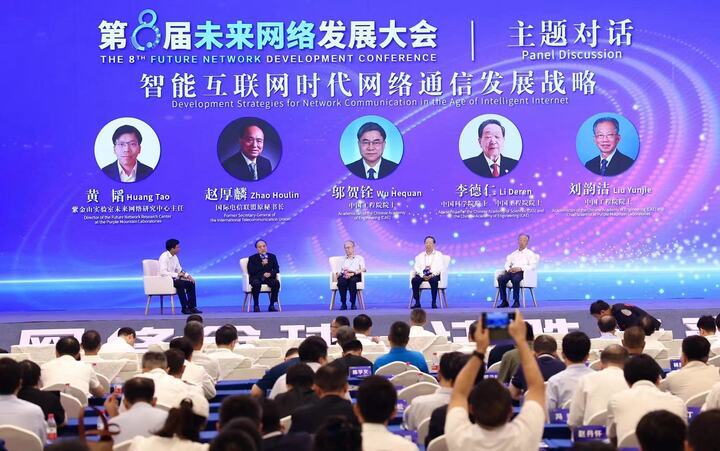
Houlin zhao: Promoting the Evolution from 5G to 6G and Providing China Experience
The official completion of CENI indicates that China’s network infrastructure has reached a new level, and all network-based digital development will be developed on a brand-new platform. On the one hand, we can gather well-known Internet companies and small and medium-sized enterprises to explore original development, so that the application of the Internet in the industrial field will become wider and wider. On the other hand, we should also note that even though the application scale of China’s 5G network has far surpassed that of other countries, there are still some remote areas where network signals cannot be covered. We should actively give full play to the advantages of 5G basic network coverage, expand the network layout in the sea, lakes and mountains and forests, accelerate the integration and development of digital economy and real economy, and bring tangible benefits to the people.
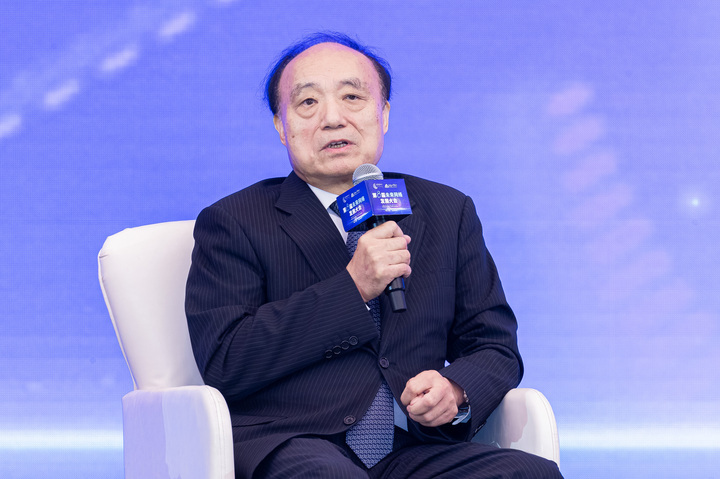
China has worked with its peers in the world to formulate the 5G standard, and there are also a number of 6G network applications in China. From now until 2030, 5G needs to further improve and develop its potential, and continue to strengthen the investment, development and application of 5G networks. After 2030, it will be transferred to the construction and development of 6G. "I predict that holographic 3D will become a new quality productivity with key development in the future, which will greatly affect the future network construction decisions and the lives of ordinary people. I hope China can provide the world with 6G R&D programs in China and China experience in the evolution from 5G to 6G."
Wu Hequan: Creating a "New Internet" with strong security performance, low operating cost and high degree of personalization.
This year marks the 30th anniversary of the Internet’s entry into China. Thirty years ago, China accessed the Internet in the form of dial-up. At that time, the bandwidth was only 28K, but now the fixed network bandwidth has increased by 35,000 times. From 2G and 3G to 5G era, at the current development speed, it is impossible to predict the shape of the Internet in China in 30 years.
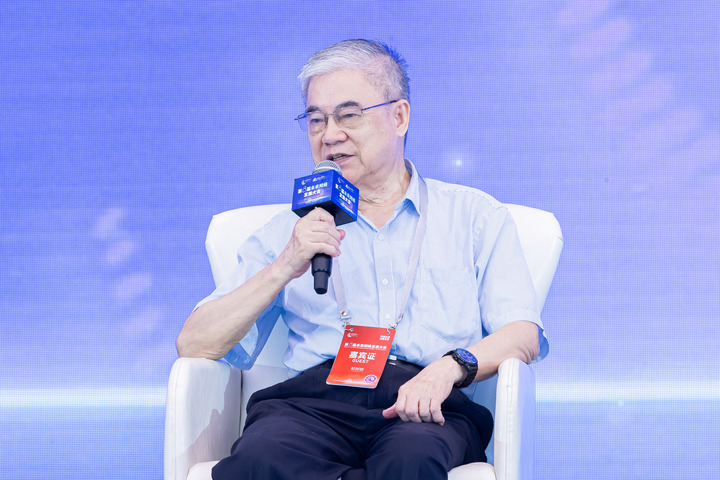
There are four directions for the development of Internet in the next 10 years: the Internet is still the base of optical fiber communication as the whole communication network, but there will be new optical fibers that can support future computing power; 6G network is the main research direction of the Internet in the next 10 years, realizing synaesthesia integration, heaven and earth coordination, and opening up more applications in different industries; In the future, the core network will still take IPv6 as the mainstream, and further realize the traceability of data circulation, automation of network driving, and endogenous security of network services, which can not only meet consumer-grade Internet applications, but also solve problems in industrial production and social management. After 10 years, the national computing power may exceed 3,000 EFLOPS, by which time, the interconnection of computing power hubs in different places can be realized, and more scenarios of robot application can be promoted, so that computing power can better serve new quality productivity.
At present, the intelligent Internet is not the only feature of the Internet. In the future, the Internet will become a "new Internet" with strong security performance, low operating cost and high degree of personalization, which can better support the development of new productivity.
Li Deren: Let China lead the world in the era of Internet of Everything.
The internet realizes the interconnection of everything, and digital twinning transmits information of human activities and natural changes to cyberspace and uses artificial intelligence to assist management. In the era of the interconnection of everything and digital twinning, we should consider how the sky, the earth and the sea can closely integrate and exchange information through the network.
As a researcher of remote sensing application, I think that in the future, the network should transmit the target characteristic information detected by remote sensing satellites from the air to users’ mobile phones with the fastest speed and the best cost, so as to expand the application scenarios of remote sensing technology and create more value.

For the future development of Internet in China, I think we can achieve four ubiquities: first, ubiquitous communication, and barrier-free communication between the sky and the sea; Ubiquitous navigation, Beidou navigation is outdoors, and 5G navigation can be used indoors; The third is ubiquitous perception, and more information is obtained through remote sensing satellites, cameras and even robots; Fourth, the ubiquitous intelligence, moving towards the era of tens of billions of robots, robot bees and robot ants can be more widely used in national defense, economy and people’s livelihood.
Liu Yunjie: Relying on CENI Network to Promote Industrial Digital Transformation
If the current network can’t meet the needs of AI development, this network will restrict the development of the whole society. In the future, computing power will be connected to thousands of households like hydropower, which is part of urban infrastructure construction. At present, the biggest problem that the Internet needs to solve is to meet the needs of computing power network. In the future, CENI research and development should also aim at AI field, protect data privacy, promote data circulation, and play the role of scientific apparatus.
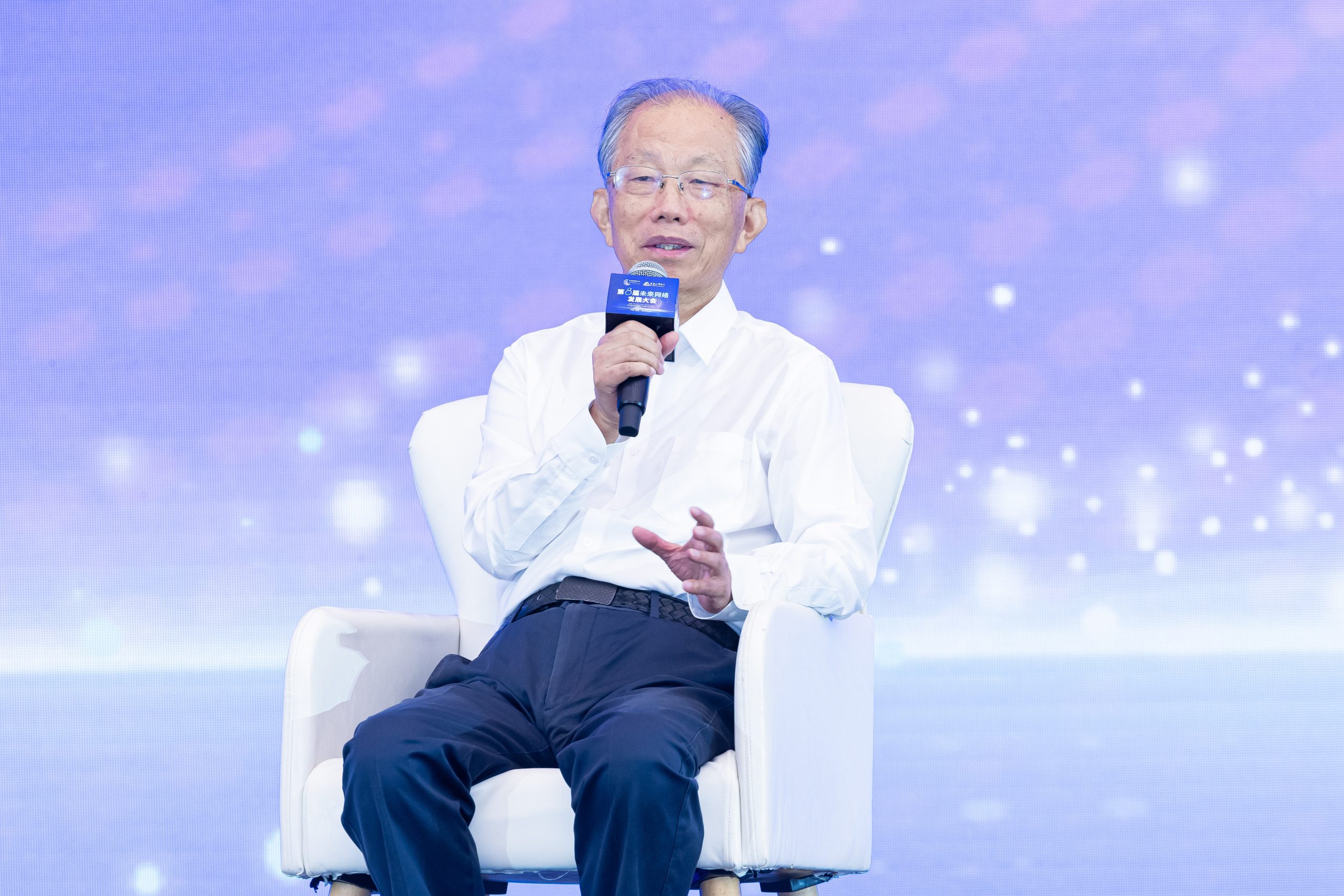
At present, the digitalization, networking and intelligence of small and medium-sized enterprises still face many problems. China’s manufacturing industry has a complete system and a very complete data system, but these data elements are not circulated and shared, so they can’t really play a role. This year, 13 districts and cities in Jiangsu will open deterministic networks, and encourage provincial big data bureaus and big data bureaus in all districts and cities to actively guide production enterprises to cooperate with network operators, jointly develop industry models, give play to market mechanisms, and assist manufacturing industries to overcome the threshold of digital and intelligent transformation.
Xinhua Daily Meeting Point reporter Zhang Xuan Cai Shuwen Yang Yizhen Chen Tong