After 14 years, CCTV will broadcast Japanese animation again. How many opportunities will Japanese entertainment have?

Author | Li Na Mao
Editor | Li Chunhui
In the first year of 2021, China, Japan and South Korea ushered in a rare "honeymoon period of three countries" in the field of cultural cooperation.-In the past, the familiar spell of "China-Japan friendship depends on South Korea" and "China-South Korea friendship depends on Japan" was finally broken, and this situation can be regarded as a long-lived sight.
The clear signal was sent by CCTV. On this side, CCTV is holding hands with KBS, only to hear that the "Korean restriction order" whose name is not seen has finally been lifted. It is even more legendary that Korean movies will land in domestic cinemas, and the first one is the new work of former national husband Song Joong Ki;
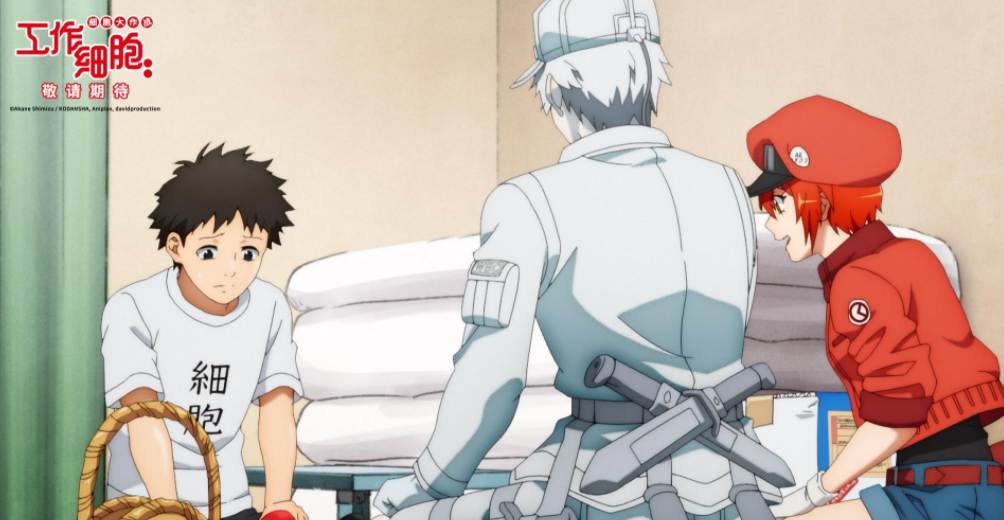
On the other hand, CCTV introduced Japanese animation again after a lapse of 14 years, and the Chinese version of "Working Cell" caused a heated discussion on Weibo because of its magical northeast dialect. The film version of "Working Cell" has also been confirmed, and the schedule is to be determined.
In the folk, the initial rating stage of the two men’s team draft "Youth with You 3" and "Creation Camp 4" was broadcast one after another. The number of Japanese players in "Creation 4" was large and strong, and many viewers said that "give more debut positions, don’t want overseas pearls to be dusty"; Although there is only one Japanese player in "Qing 3", a song "Sudden Love" (the theme song of "Tokyo Love Story") also attracted my sister’s sympathy.
However, it should not be ignored that while the official clearly released the friendly signal, the friction between Chinese and Korean netizens continued. With the popularity of "Chuang 4", some domestic audiences expressed dissatisfaction with Japanese players out of national feelings.
And unlike the Korean Wave, which actively explored the European and American markets after leaving China,Japanese entertainment, which led the Asian entertainment trend in the 1980s and 1990s, is just like Japan’s "lost decade" and "lost twenty years" in the economic field, and the cultural field is also in a state of malaise.In the past decade, it can only be said that the enclosure has sprouted, and the decline in external influence is an indisputable fact.
China’s post-80s and post-90s generations are undoubtedly deeply influenced by Japanese culture, but how much love can we have when we return to the Japanese entertainment market in China 14 years later?
Fourteen years of reunion, animation myth is difficult to continue.
Japanese media generally regard the return of "Working Cell" to CCTV after 14 years as a great benefit, and some optimists say that with the broadcast of "Working Cell", the scene of Japanese animation sweeping Chinese mainland in that year will reappear.
However, I’m afraid "Working Cell" will disappoint them.
On February 13th, "Working Cell" premiered on six CCTV movie channels. Although it is a Spring Festival file+winter vacation file, the new broadcast has not caused much discussion. Many of them have already seen the original version of "The Second Prickling Ape", saying that it is better not to read the imported version if it must be deleted.

It was not until the last day of February that a blogger edited the dubbing part of "Working Cell" in Northeast China, and this animation caused widespread concern and discussion among netizens. From the broadcast to the topic, "Working Cell" has been fermented for two weeks, and the results are not bright.
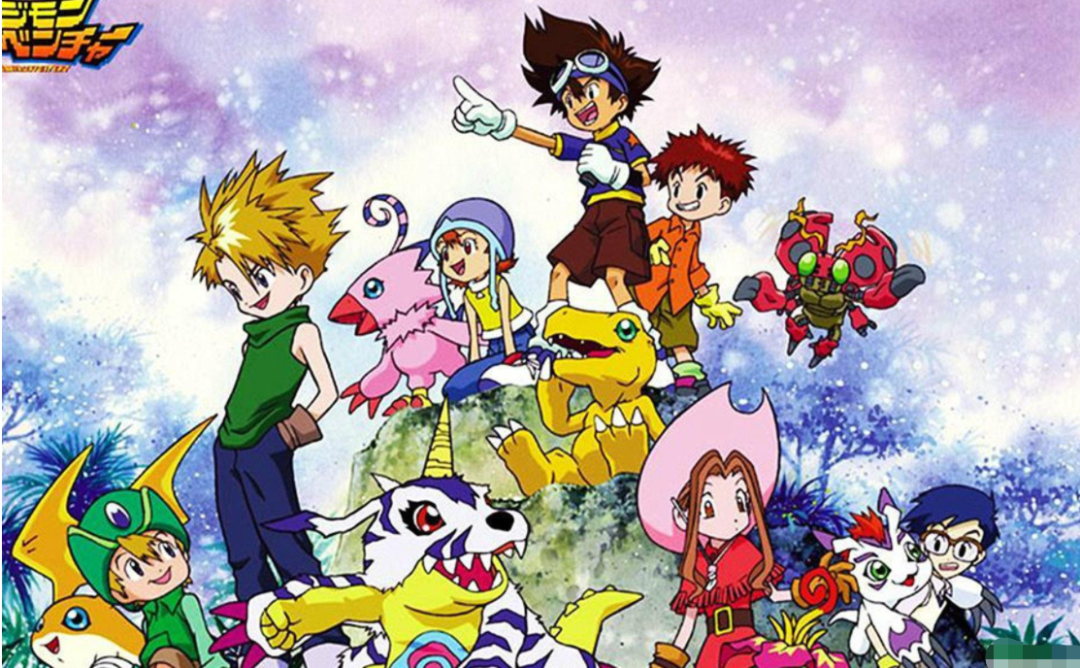
Japanese animation was once invincible in China, which was related to the dividend of the times. In 1980s, with the honeymoon period of Sino-Japanese relations, a large number of Japanese audio-visual products were introduced to China. Animations such as saint seiya the Saint, Slam Dunk Master and Detective Conan have become childhood memories after 1980s and 1990s.
At that time, China’s animation, although there were many excellent works such as Hulu Brothers, Shunk and Beta, was on the low side for the whole age group, and the painting style was somewhat old-fashioned in the eyes of teenagers at that time. Japanese anime, which focuses on teenagers and even all ages, quickly captured the hearts of teenagers.
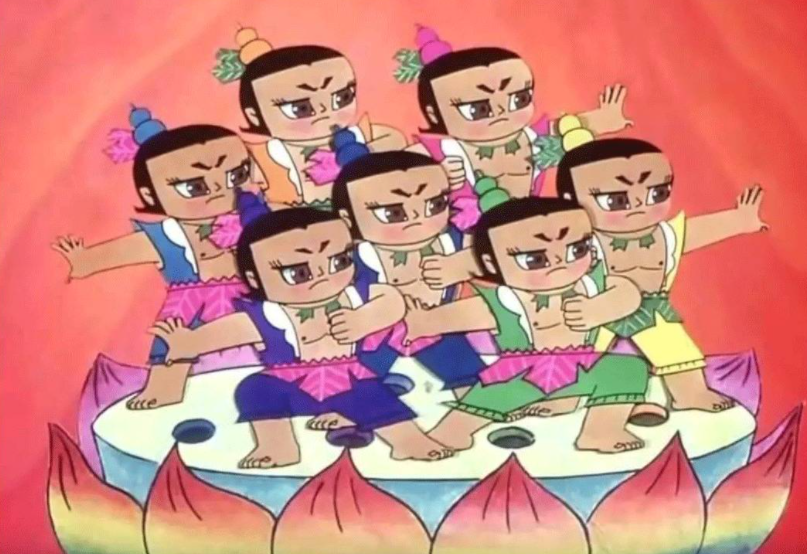
At the end of 1980s and the beginning of 1990s, domestic animation still stayed at the stage of "telling stories to children", while Japanese animation has developed to the stage of "adult stories in young coats". Even primary school students’ animations such as Cherry Maruko, Crayon Shinchan and Doraemon have some thought-provoking parts that export social phenomena.
The exquisite adult painting style, the visual effect presented by the Japanese animation industry system and the depth of the story itself swept China in the 1990s. Today, many content workers who are in their prime of life in China are deeply influenced by the spread of Japan (such as Jing M.Guo).
In 2006, with the release of the Notice of the State Administration of Radio, Film and Television on Further Standardizing the Broadcasting Management of TV Cartoons, TV stations at all levels in China are not allowed to broadcast overseas cartoons from 17: 00 to 20: 00.. The influence of Riman in the new generation of children has declined rapidly, and with the rise of Guoman, it has become a generation that looks at Guoman after 00.
The post-80s and post-90s generations are the most profoundly affected by the Japanese flooding. But in the past, teenagers have become migrant workers, and their attention to entertainment is not as enthusiastic as in the past. On the one hand, Generation Z has no childhood filter for Riman, on the other hand, it has a stronger sense of national pride and more channels to obtain information. Guoman, Han Man and even Mei Man all have a place.

With the end of the three "migrant workers" of Death, Huo Ying and One Piece, Japanese animation has entered a long bottleneck period, and "magic works" are not magical, but "charming houses" are popular.
On the other hand, Guoman has the advantages of huge market and Internet industry model, and the explosions of Fox Demon Little Matchmaker, Under One Man, Soul Street and so on continue. In the Z generation group, Guoman’s influence has surpassed that of Riman.
Idol first, can Japanese music rejuvenate again?
A few months ago, when the list of players was officially announced, the masses were still complaining about "too many Japanese" and "refusing to protect foreigners with double tracks". With the broadcast of "Chuang 4", it was really delicious for only a moment. While Japanese players conquer Xiufen by virtue of their strength, can Niyin rejuvenate the China market by this wave of "idols first"?
It is a thing of the last century that Japanese pop music dominated Asia. How many popular songs in Hong Kong and Taiwan that we are familiar with all came from Japanese music, and Miyuki Nakajima even has the reputation of "feeding Hong Kong and Taiwan pop music with only one person".

However, with the rise of the Korean Wave, the dominance of Japanese music in Asia is gone. Although musically, Korean Wave, which focuses on toxic melody, is simply the difference between street fast food and private kitchen stir-fry compared with professional euphemistic Japanese sound. However, fast food has a low threshold and is reproducible and imitative. It is reasonable that Korean Wave, which started by imitating Japanese sounds, can catch up later.
The strength of a country’s cultural momentum is directly related to its economy. At that time, Japanese voice was invincible in Asia and shined brilliantly on the international stage, which was also the most arrogant time for Japanese economy. Japan’s economic bubble burst in the early 1990 s, but the hundred-footed worm died without being stiff.The influence of Nishino continued until around the Millennium, until it ended with the end of the Japanese diva era.
For example, today’s music has lost its influence, but japanese pop people have not stopped pursuing musicality, but this pursuit is biased towards domestic communication and self-entertainment, and its ability to go to sea has become worse.
In the past, the spread of Japanese golden songs, in addition to the appeal of several big singers and bands themselves, Shenfan will also bring red BGM. At the same time, Digital Baby became popular with OP《butterfly, and the singer Wada Kouji was called "an old friend of China Eryuan". However, as mentioned above, Riman’s influence in China has fallen sharply, and the chance to bring the divine comedy is gone.
In addition, China, Japan and South Korea have always had folk opposition caused by historical problems. Compared with the "stealing nature" of Koreans, the war of aggression against China has made the Chinese and Japanese folk sentiments more complicated and easier to be over-interpreted.
This time, the Japanese players of "Chuang 4" shined brilliantly and attracted a lot of entertainment. In order to send their younger brother out, it is natural to raise funds and play the list. Therefore, some netizens found that, unlike domestic players’ unified fund-raising to the support club, the final flow of funds raised by several Japanese players was remitted to the staff account of the company to which the players belonged.
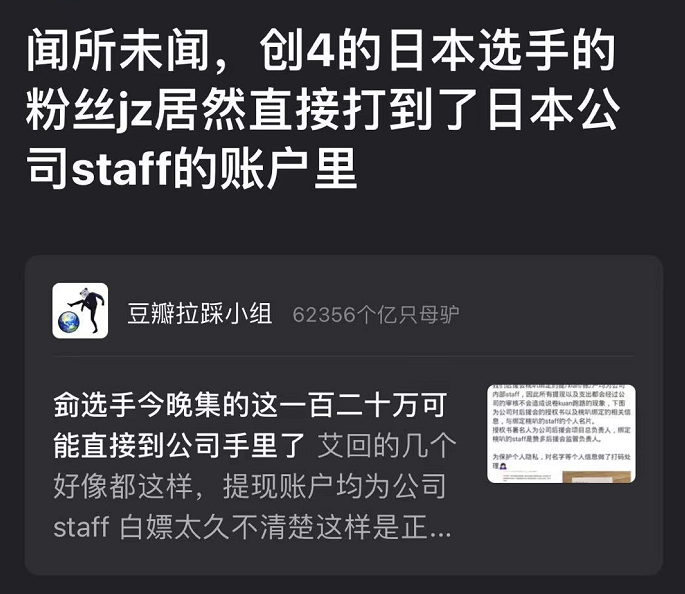
Supposedly, every year, there is a fund-raising scandal that the support club runs away and the management likes to mention the sea view room. It is also a way to protect the fund-raising funds by the company’s main control. But in the eyes of some netizens, who knows if they will use the money for special purposes when they hit foreign companies?
In addition, Xiufen sells Amway too hard, so it is reasonable for fans to say something "above". But it can’t stop passers-by from being rebellious. Qing Lian, a Japanese player who performed well on the initial stage, has been accused of similar discrimination against women, and her debut is a bit more uncertain.
Japanese shadow, Japanese drama and Japanese synthesis, adaptive complementary geometry
With the "lifting of the ban" on animation, idols working abroad, and the bombing of several IP animated films last year, if the policy is further relaxed, it is also worth paying attention to whether Japanese TV dramas can make a difference in the China market.
Compared with the restricted Korean dramas, Japanese movies and Japanese dramas have not been introduced in recent years, but at least they have the opportunity to meet the audience in China every year. However, compared with Korean dramas and American dramas, the influence of Japanese dramas is more confined to fixed circles.
The fact that the shadow of the sun can’t be widely discussed in China is related to the taste deviation of the audiences in the two countries. Neon Gold has a special liking for animated films and real people. In 2020, the Japanese box office champion "The Blade of the Ghost" earned a total box office of about 32.5 billion yen. The second place was a real-life adaptation of "I am a mobile phone", with a box office of about 5.4 billion yen; Even the decades-old IP Doraemon won the fourth place at the box office of 3.35 billion yen.
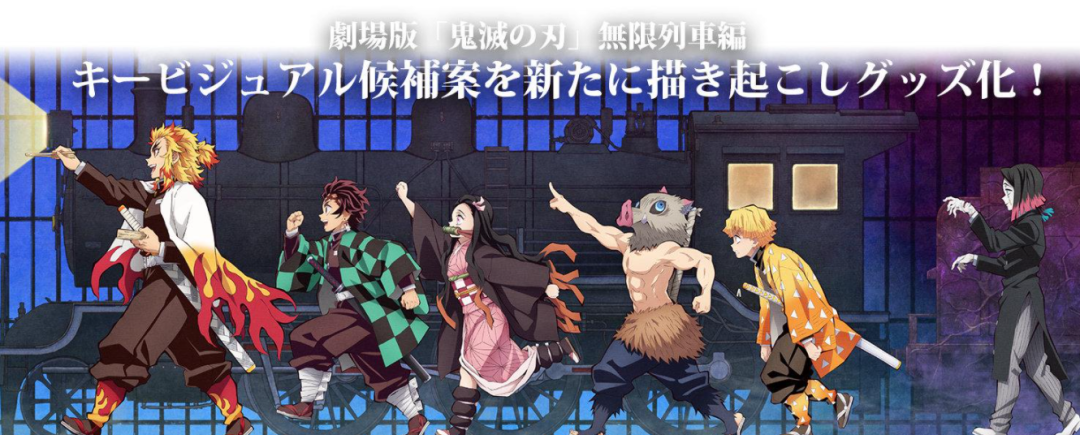
Animated movies and real-life movies are invincible in Japan, which is of course related to Neon Jin’s deep love for the second element. But the same content, I’m afraid it won’t work in China market. Doraemon and Conan, the big IP that dominated China TV stations in the 1990s, can also attract post-80s and post-90s children into the cinema by their feelings. Besides hardcore second dimension, it is difficult to incite other people to watch movies.
Except for animated films and real people, other types of Japanese films tend to take a slow-paced and implicit route, which is not in line with the Chinese people’s taste of watching movies. In 2018, Hirokazu Koreeda’s "Thieves’ Family" won the Palme d ‘Or Award and Douban 8.7 points, but it still failed to exceed 100 million at the box office in China. Hard candy lovers are deeply sorry.
The same is true of Japanese dramas. Although there is a lot of word of mouth, Japanese drama lovers are surprised to find that Amway just can’t be sold. On the contrary, it is a Korean drama that follows the route of running dogs and catching horses next door, which has attracted countless people to jump into the pit actively.

Japanese drama "I’ll live well in the next life"
This may be because the theme of Japanese drama has already shifted to the questioning of what is true fairness and justice, personal desire and other value issues. Even with the same social issues as the starting point, such as "cheating" and "social animals", although Korean dramas are bloody, they are still cool and logical, but Japanese dramas always have a lingering sense of loss.
Life is already so hard, why bother asking for it? In the mainland market where sweet pets and cool dramas are popular, it is conceivable that Japanese dramas are not to be seen.
Different from the direct introduction of film and television dramas, the influence of Japanese synthesis in China depends on the extent to which it can "serve us".
South Korea’s Luo PD is a deity in China. Apart from the quality of the program itself, it also thanks to the "reference" of its peers in China. As a "mentor", Japanese comprehensive once enlightened the development of various arts in Han Zong, Guozong, Taiwan Province and other countries and regions, but now it is more focused on dialogue-oriented, small and beautiful Japanese comprehensive, which is probably no longer suitable for the current China market.
Whether the Japanese comprehensive is wonderful or not depends to a great extent on the openness of the actors. You dare to ask me, I dare say that the punishment link is not lenient because the other party is a big star. If the same punishment is transplanted to domestic programs, don’t think about it, fans will immediately call the hotline to defend their rights.
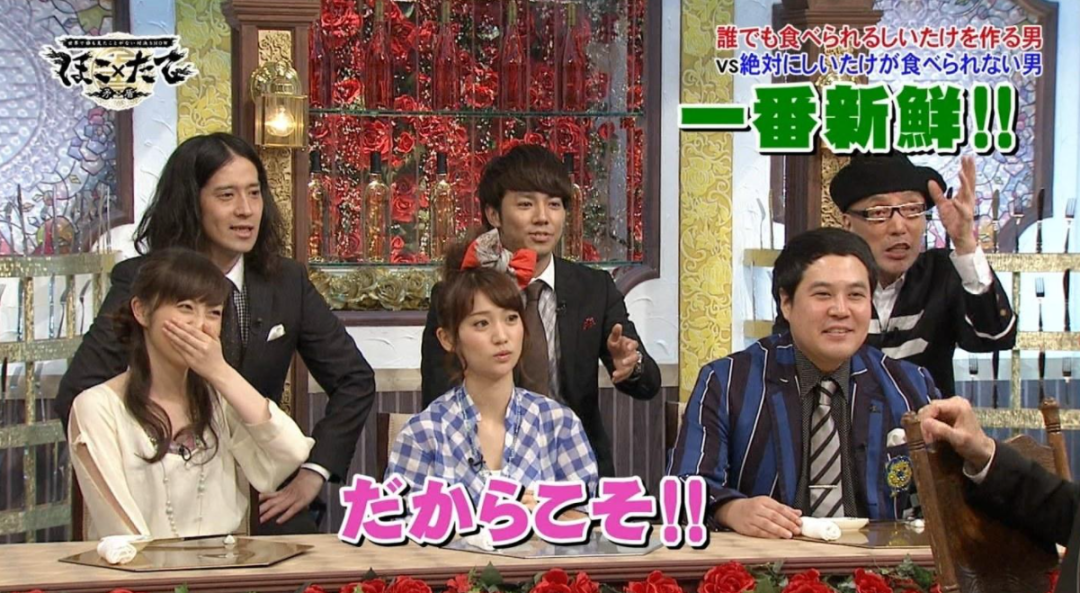
Street talk shows such as Yue Yao are more suitable to appear on short video platforms, although they have stems and tears. As for the alternative male and female variety "Wolf Jun" and "What’s the harm of having a heart" introduced by Hard Sugar Jun before, it may not even pass the examination because of the scale and other issues.
In any case, the current situation of open cooperation among the three East Asian countries is a good thing. But for Japanese entertainment as a whole, the Asian market, including China, has already changed. However, the internal entertainment, which has been catching up for many years, suddenly stood in front. In the absence of anyone to imitate, where will the internal entertainment lead? Apart from the huge market, what kind of culture and model can internal entertainment export? The revolution has not yet succeeded, and comrades still need to work hard.