Never consume yourself at work.
Original insight

Author: insight ciyu
If you want to make money, you must make yourself valuable.
Rockefeller, the American oil magnate, worked for a company called tuttle when he was young.
In the first two years of his work, he was only responsible for handling some business chores and paperwork of the company.
Colleagues who joined the company with him lamented that they disliked the low salary, no value, no spirit, and lived in a daze.
But Rockefeller is different.
When he goes to work every day, he will listen carefully to how his predecessors discuss problems, make plans and make decisions.
Because negotiation is often involved in the company’s business, he tries his best to learn some negotiation skills.
Rockefeller recalled that this career had a great impact on his career development.
Amy Resness, a psychologist at Yale University in the United States, once divided work attitudes into three types:
Take work as an errand, a career and a mission.
Different working attitudes determine that you will reach different heights.
Taking work as an errand and torture will only consume you constantly.
Only by treating work as a practice and a whetstone can we cultivate ourselves stronger and stronger.

01
I agree with one point: the meaning of our work is to serve life, not to add to it.
But many people still get it backwards.
Complaining is the normal state of work, and fishing is the main purpose of work.
They stand on the opposite side of their work with bitter hatred and consume all their energy in their work.
1. Consumption value
There was a tip about fishing at work on the Internet:
Buy a big thermos cup, set 8 alarm clocks, and use an excuse to fetch water every 50 minutes;
Do exercise in the tea room for 15 minutes, and then return to the station after consuming the time;
Drink more water and you can go to the toilet with pay. The more you drink, the longer you rest …
But these people didn’t expect that they were not perfunctory, but perfunctory themselves.
The economist Xue Zhaofeng’s words tell the truth of the workplace: "Everyone, every moment, is working for his resume."
If you work hard and create benefits, your value will rise.
Every time you paddle, you can’t solve problems for the company, and you will naturally become a marginal person.
Media person @ Yang Mingyuan mentioned one of his colleagues.
Lao Jiang, who graduated from a prestigious school, has been working for 5 years.
Lao Jiang likes to talk a lot, but when it comes to work, he can be lazy and never work hard, and he can fool and never work hard.
Every time the leader arranges a business trip, he either says that there is something at home or excuses that he is not feeling well.
He sits in front of the computer every day, seemingly drawing seriously, but actually secretly playing games and brushing videos.
In the first half of the year, the company laid off employees, and Lao Jiang’s name was impressively listed.
Yang Mingyuan was puzzled, but Lao Jiang was a veteran, so he ran to ask the boss why.
As a result, the boss said something cruel but profound: "People like Lao Jiang who muddle along every day will not be laid off when the company’s income is good." But once the company’s earnings get worse, these people are the first to be eliminated. "
No company is willing to keep idle people. When you are fooling around, it is not far from being abandoned.
You think you are taking advantage of the company, but more is killing your own value.
Step 2 consume emotions
The writer james allen talked about a "garden effect".
The human mind is like a garden. If harmful seeds are sown, poisonous weeds will take root and sprout, and the garden will be barren.
At work, many people have inadvertently planted bad emotions.
If the leader is harsh, he will fall into depression.
The thought of dealing with annoying customers suddenly sank to the bottom.
If you compete with your emotions so blindly, your work will become the source of your pain.
Junichi Watanabe wrote a story in "Blunt Sensibility".
There is a professor-level doctor in the hospital where he practises. Although he has a good medical skill, he has a bad temper and scolds him mercilessly when he encounters any problems.
Many interns are unhappy when they hear that they are assigned to be his assistants.
Before the operation, I was nervous and afraid of being scolded again;
After the operation, I was bursting with negative energy and in a very bad mood.
One of them, Dr. S, is different. He just devotes himself to studying the professor’s medical skills.
For those swearing words, he went in one ear and out the other, and forgot all about them.
In this way, Dr. S became the fastest progress in surgery among his peers.
I’m depressed about the difficult task, I’m sorry about the chores, and I’m angry about my annoying colleagues …
If these emotions occupy your mind all the time, the working day will become a good Friday.

3. Consume skills
An editor friend in Luo Zhenyu once proudly told him that he had learned a trick. When editing any article, he only used three copy-and-paste key combinations, but not one more.
Luo Zhenyu wondered why he was so.
He explained that because the boss gave too little money.
Luo Zhenyu asked, has your level improved or declined in recent years?
He sighed and said that it had fallen so badly that he couldn’t find a job when he went out to look for it.
The story of Luo Zhenyu, a friend, is a true portrayal of many people.
Many programmers never ask Baidu anything, so that the ability to type code is fading, and the effort to search for answers is perfect.
If they are allowed to take the lead and solve the problem by themselves, they will only scratch their heads.
There are also many designers who hang out in various design websites and collect dozens of templates. If the leaders have any requirements, they will pull out a set of templates to deal with them.
They beat the world with a PS, and several other design softwares will not be used until they are used.
Working for many years, without by going up one flight of stairs, I have honed my skills to the extreme, but I have abandoned my martial arts and become more and more mediocre.
They finally became a screw, stuck there, unable to climb up, and going out, the dogs were disgusted.
02
Daisuke Iwase, the founder of a well-known Japanese insurance company, worked for many well-known consulting companies and venture capital institutions after graduation, and finally chose to start a business.
Looking back on his years in career life, he once summed up a set of "three working principles", one of which is:
There will never be a boring job, and any post should strive to add its own added value.
The weak are squeezed out by work, but the strong regard work as a training ground.
1. Cultivation ability
This society follows a conservation principle.
The higher your ability level, the higher your value and income will naturally rise.
When Alibaba just started, Tong Wenhong applied for the front desk position and needed to do both front desk and administrative work, with a salary of only 500 yuan.
But instead of complaining, she took these two jobs to the extreme:
In order to skillfully solve customers’ problems, she learned all the business of the company from scratch;
In order to improve work efficiency, whenever a colleague is on a business trip, she will help to check the train number and time in advance.
Three years later, she became the chief executive.
Later, Ali developed the logistics business and founded the rookie package, and she took on the organizational responsibility.
Every day, in addition to signing talents, she also actively learns warehousing and logistics knowledge to help build a big data operation platform …
Under her leadership, the rookie package was established less than three years ago, and its valuation exceeded 100 billion.
In fact, the essence of work is interest exchange: if you want to make money, you must make yourself valuable.
Envy others for promotion and salary increase, it is better to concentrate on polishing your own expertise.
The cake you eat is as big as your ability.
Step 2 cultivate your mind
In 1967, American psychologist seligman did an experiment called learned helplessness.
He kept a dog in a cage and gave the dog an electric shock as soon as the buzzer sounded.
After many experiments, seligman changed his ways.
After he pressed the buzzer, he opened the cage door.
Unexpectedly, the dog didn’t escape, but fell to the ground moaning and shaking all over, giving up the chance to escape from the cage.
The same is true of people.
Once we are afraid of problems and complain about failure, we will be imprisoned and fall into the state of learned helplessness.
Dong Yuhui talked about his feelings about work:
"The world will not always be kind to you, and your vulnerability will sometimes become a fatal flaw.
What we have to do is to constantly strengthen ourselves and change blx into steel in the long life. "
There are not so many smooth sailing in the workplace, but more bad worries and troubles.
If you want to be a master copywriter, you have to rack your brains to polish every word. Getting stuck is a common occurrence, and it is also common to kill manuscripts, but these setbacks are part of your work and growth.
If you want to be a gold medal seller, you may be shut out again and again if you sell it humbly; If you please customers with a smile on your face, you may get insults …
Behind those high commissions are clever mouths and even more cheeky.
Everyone has a fragile heart.
It’s just that someone trained it to be made of stainless steel and built bridges and mountains all the way.

3. Practice cognition
In an interview, Zhang Yiming pointed out: Cognition is a person’s core competitiveness.
Many people repeat the same work every day and get in touch with the same information. Over time, they are trapped in the cocoon of thinking.
Zhang Yiming, on the other hand, forced himself to upgrade his cognition.
At Cool News, many of my colleagues were masters and doctors in computer science from famous universities such as Tsinghua, Peking University and Stanford, and he learned their way of thinking and attitude.
When he was at Microsoft, he would take the initiative to sum up the experience of large enterprise management.
In his spare time, he will read biographies and psychological books of various characters to expand his thinking and break down cognitive barriers.
In a wide range of reading, he refined an essential trait of successful people: the ability to delay satisfaction.
So his life is simple and focused, and he puts all his thoughts on researching products and reading.
His knowledge of human nature enabled him to lay his own business map in a short time.
If you are trapped in cognition, you will be trapped at the bottom of your life, and you will be able to upgrade your cognition to make your life a higher level.
A short-sighted migrant worker, looking down and looking up, is concerned about his own one-acre three-point field.
What is tangled is the details of the current work, and what is pondered is how to perfunctory the task.
But visionaries will focus on their own growth and industry changes.
The cognitive deviation between the two determines that their future stage must be different.
▽
Some people divide people in the workplace into two types:
One is the consumption type, which only increases the length of service and does not increase the ability.
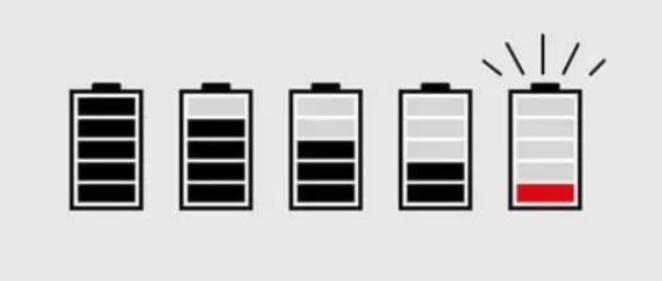
A rechargeable type, with the groping in the workplace, both ability and cognition have been greatly improved.

If you are the former, you will find that all the lazy things you have stolen and avoided will become the weight of life.
If you are the latter, you should believe that the self-investment and self-appreciation of your work will be a rich reward in the future.
Original title: "Never consume yourself at work"
Read the original text