What changes will the Forbidden City usher in if the new and old dean of the Forbidden City changes for one month?
Beijing, May 9 (Reporter Shangguan Yun) One month after leaving office, Dan Jixiang, former president of the Palace Museum, was appointed as the president of the Palace College. According to media reports, on the 8th, Wang Xudong, the current director of the Palace Museum, presented a letter of appointment to Dan Jixiang. It was also during this month that they worked hard in their own ways, hoping to "hand over the magnificent Forbidden City to the next 600 years".
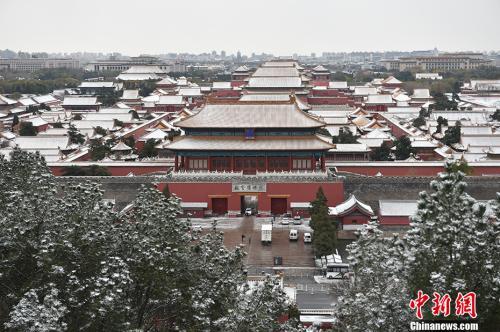
Official website, the Palace Museum, introduced that the Palace Academy was established in November 2013, which is a business training and education institution, and the first "academy" established in China with the mode of running a museum. The first president is Song Jirong, the former vice president of the Palace Museum.
From 2012 to 2019, during Dan Jixiang’s seven years as dean, the Palace Museum has changed its past seriousness and high cold, and become "cute" and grounded. Many people say that he is the head of the Forbidden City, but Dan Jixiang prefers to call himself the gatekeeper.
On April 8 this year, Dan Jixiang, who had been in charge of the Forbidden City for seven years, officially retired as the director of the Palace Museum and was replaced by Wang Xudong, then the director of Dunhuang Research Institute.
On the night when the president of the Forbidden City stepped down, Dan Jixiang and the new president, Wang Xudong, inspected the central control room and security department of the Forbidden City overnight. The next day, the two men walked another 15,000 steps together for inspection and handover.
After retirement, Dan Jixiang is still very busy. He has traveled all over Anhui, Shandong, Zhejiang and other provinces, bringing humorous lectures and running around in the front line of cultural relics protection.
On April 11th, Dan Jixiang gave a speech in Ningbo, which included the changes of the Forbidden City, as well as his experience in the protection of cultural relics and the development of museums.
He feels that only when cultural relics have dignity and come back to people’s lives can they be called good cultural relics protection; A good museum is only if it has a place in people’s lives, and people linger in it, unwilling to leave when they come, and want to come again when they leave.
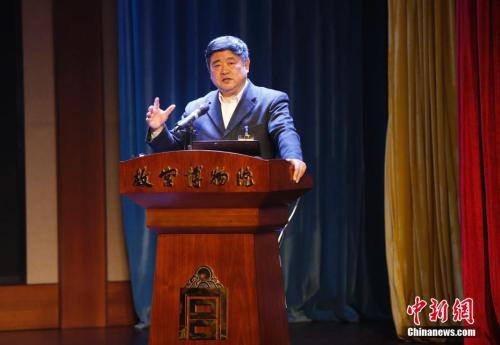
"What is a good museum curator? It is a good curator to make every effort to ensure the safety of cultural relics and dedicate more cultural relics to the society. " Dan Jixiang said, "We didn’t do enough, but we worked hard."
Then, in the digital age, how can the Forbidden City with a history of nearly 600 years be more dynamic?
Wang Xudong, the current president of the Palace Museum, has his own thoughts. On May 7th, he stood on the podium of the Digital Haisi Sub-forum of the 2nd Digital China Construction Summit, which was the first time that Wang Xudong attended such a formal academic activity as the president of the Palace Museum.
"A month ago, I came to the Palace Museum from Dunhuang Research Institute, and I am very honored to serve two of China’s greatest world cultural heritages." Wang Xudong said that these two world cultural heritage management institutions have always been closely linked with the digital age in the process of cultural heritage protection research and management.
He introduced the digital work of the Forbidden City to everyone. "Today’s Forbidden City is already a cultural heritage site closely connected with the digital age, and our network has covered nearly 90% of the area."
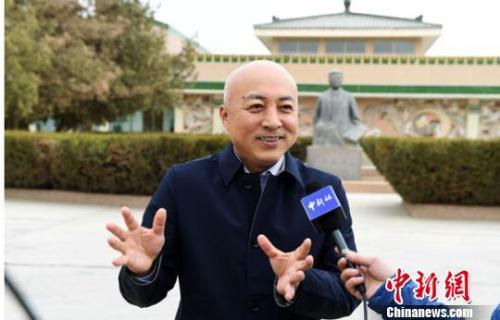
However, Wang Xudong mentioned that there is still a lot of work to be done in the digitalization of the Forbidden City: the Forbidden City, which covers an area of 720,000 square meters, and the entire building area of 167,000 square meters also need to be "digitized". "Now we have only completed part of the 3D modeling, which is still far from the overall planning of the digitalization of the Forbidden City."
Indeed, with the help of digitalization, the precious cultural relics of the Forbidden City can be disseminated through the all-media platform and interacted with new technologies, so that more people can feel the beauty of the Forbidden City and cultural relics in another form.
Wang Xudong said that today, the Forbidden City has carried out a lot of digital collection, and these data have been used to spread these cultural relics further by building an all-media website. Now there are many websites in the Forbidden City. At the same time, many apps have been developed to let more young people pay attention to cultural heritage and Chinese excellent traditions.
"The Forbidden City is vigorously promoting the construction of basic networks. We must seize the opportunities brought by 5G, from the construction of basic networks to the collection, transmission, management and application of data, and we can have a greater improvement. " Wang Xudong explained.
All efforts are made in the hope that the Forbidden City will become better. In that speech in Ningbo, Dan Jixiang showed the audience a photo: Zheng Xinmiao, Dan Jixiang and Wang Xudong, three directors of the Palace Museum, sat together. He said, we made an oath, "We must hand over the magnificent Forbidden City to the next 600 years."