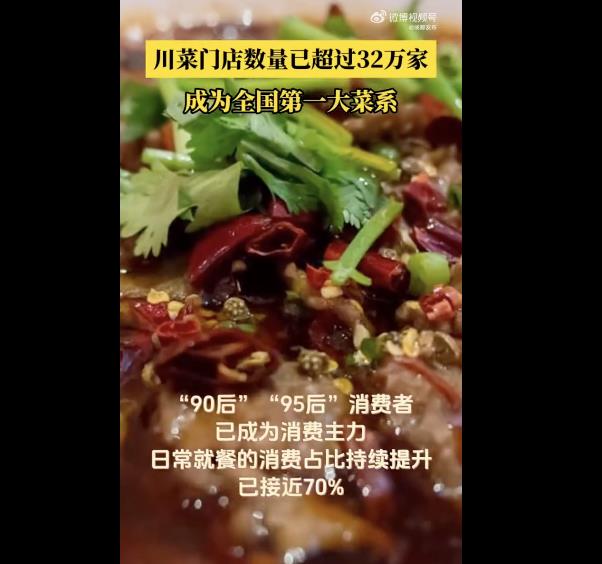
Sichuan cuisine has become the largest cuisine in China, and the number of stores has exceeded 320 thousand.

  On November 16th, the 6th World Sichuan Cuisine Conference officially opened in Guang ‘an, Sichuan. The conference released the Report on High-quality Development of Sichuan Cuisine Industry (2023). According to the report, by the first half of 2023, the number of stores in Sichuan cuisine had exceeded 320,000, far exceeding the number of stores in Guangdong cuisine, Jiangsu cuisine and other cuisines, and it was truly the largest cuisine in China. Spicy, spicy, green pepper and other flavors became consumers’ favorite flavors of Sichuan cuisine, which provided flavor guidance for the research and development of innovative dishes in Sichuan cuisine. It turned out that Sichuan cuisine was not just spicy. It is worth mentioning that in 2021, the Michelin list officially landed in Chengdu, becoming the fourth Michelin city after Shanghai, Beijing and Guangzhou. Do you like Sichuan food?
sc_20231118090032  Introduction of eight Chinese cuisines;

  The eight recognized cuisines in China are Sichuan cuisine, Guangdong cuisine, Shandong cuisine, Jiangsu cuisine, Zhejiang cuisine, Anhui cuisine, Hunan cuisine and Fujian cuisine.

  The eight major cuisines are permeated with the Confucian spiritual pursuit of "never tire of delicacy and delicacy". After hundreds of years of inheriting ancient methods and innovation, the cooking techniques are rich and the dishes taste mellow, which has laid a good foundation for Chinese food to be fine, moderate, delicious, beautiful and healthy.

  The characteristics of the eight major cuisines:

  Sichuan cuisine is spicy and delicious, with heavy oil and heavy taste;

  Cantonese cuisine is rich in color, smooth but not greasy;

  Shandong cuisine is fresh and tender, and the soup is thick and mellow;

  Su cuisine is fresh, crisp and rotten, with a sweet taste;

  Zhejiang cuisine is delicious, crisp and tender, and the food is as beautiful as its scenery;

  Anhui cuisine is simple in material selection and mellow in taste;

  Hunan cuisine is widely used, fragrant, fresh and sour;

  Fujian cuisine is mainly seafood, sweet, sour and salty.

one

Sichuan cuisine

Characteristics of Sichuan cuisine: spicy and delicious, famous for its rich, wide, thick and strong flavor. Enjoy the reputation of "one dish, one grid, one hundred dishes and one hundred flavors".

Representative dishes: kung pao chicken, shredded pork with fish flavor, boiled fish, pork slices for couples, etc.

  1, kung pao chicken, with chicken as the main ingredient, supplemented by peanuts, peppers and other accessories, tastes red but not spicy, spicy but not fierce, and the meat is smooth, with crispy peanuts, which makes people drool. Legend has it that this dish was handed down from Shandong in the Qing Dynasty, and it originated from the "Fried Chicken with Sauce" in Shandong cuisine.

  2. Fish-flavored shredded pork. This dish is made of shredded pork tenderloin fried with pickled peppers, ginger, garlic, sugar and vinegar. It is salty, fresh, sweet and sour, and the onion, ginger and garlic are rich.

  3, boiled fish, usually made of fresh grass carp, bean sprouts, peppers and other ingredients. It is characterized by "oily but not greasy, spicy but not dry, hemp but not bitter, and tender meat".

  4. Husband-and-wife lung slices are marinated with cow scalp, beef heart, beef tongue, tripe and beef as the main materials, then sliced, made with auxiliary materials such as Chili oil and pepper noodles, and poured with red oil. The taste is spicy and spicy.

2

Cantonese cuisine

Characteristics of Cantonese cuisine: the color is slippery but not greasy, and it pays attention to frying, frying, stewing, stewing, etc. The taste characteristics are cool, light, crisp and fresh.

Representative dishes: roast suckling pig, sweet and sour sweet and sour pork, lobster baked in soup and sweet and sour melon cups.

  1. Roasted suckling pig: It is characterized by crispy skin, tender meat and crisp bones, and it melts in the mouth, which is one of the Guangdong roast flavors.

  2, sweet and sour meat: golden color, crisp outside and soft inside, crispy skin and tender meat, sweet and sour taste. Enjoy a high reputation at home and abroad.

  3. Baked lobster in soup: a seafood dish with lobster as the main ingredient and broth, especially suitable for nourishing.

  4. Eight-treasure winter melon cup: Dice lean pork, chicken, ham, prawns, mushrooms, magnolia and scallops, add refined salt, monosodium glutamate, cooked lard and appropriate amount of water, and steam with high fire. This dish is clear and white in color, fresh and soft in wax gourd meat, and fragrant in flavor. It is a delicious seasonal delicacy.

three

Shandong cuisine

Characteristics of Shandong cuisine: strong and fresh flavor, preference for onion and garlic seasoning, especially for cooking seafood, various animal offal and soup.

Representative dishes: Jiuzhuan large intestine, stir-fried kidney flower, sweet and sour carp, fried sea cucumber with onion, fried clam with oil, stewed mullet egg soup, etc.

  1. Jiuzhuan large intestine is a representative dish of Shandong cuisine and a traditional famous dish in Jinan City, Shandong Province. It was initiated by the owner of Jiuhualin Restaurant in Jinan in the early years of Guangxu in Qing Dynasty. It was originally called "Braised Large Intestine" and later renamed "Jiuzhuan Large Intestine". This dish is ruddy in color, soft and tender in texture, and has five flavors of sour, sweet, fragrant, spicy and salty. It was rated as "Chinese food" and one of the top ten classic dishes in Shandong.

  2, stir-fried kidney flower, a classic dish in Shandong cuisine. The heat mastered when stir-frying kidney flowers is sweet and sour, which is the chef’s competition skill. This dish tastes particularly tender, and its lips and teeth are fragrant. It feels like slipping into the throat when eaten in the mouth, which is particularly refreshing.

  3. Sweet and sour carp, the most representative dish of Shandong cuisine. The shape fried by carp is like carp yue longmen, which is very beautiful. After the fish body is poured with juice, it looks particularly red and bright, and its taste is crisp, sweet and sour, which has been recognized by many people.

  4. Scallion-roasted sea cucumber is mainly made of water-soaked sea cucumber and green onion. The sea cucumber tastes soft and smooth, and the green onion is a specialty of Zhangqiu, and it tastes sweet. Sea cucumber is a kind of eight treasures, and it is also a very nutritious food, which has the functions of improving memory and preventing arteriosclerosis. So this dish is a delicious and healthy famous dish.

four

Jiangsu cuisine

Characteristics of Jiangsu cuisine: fresh, crisp and rotten, with a sweet taste. Cooking skills are famous for stewing, stewing and stewing, and attention is paid to mixing soup and keeping the original juice.

Representative dishes: Squirrel mandarin fish, duck blood vermicelli soup, Qingong meatballs, Nanjing salted duck, etc.

  1. Squirrel mandarin fish (Sweet and Sour Mandarin Fish) is a traditional local dish in Suzhou City, Jiangsu Province. When the fried mandarin fish (or mandarin fish) is served on the table, it is immediately poured with steaming marinade, and it squeaks, hence its name because it sounds like a squirrel. Emperor Qianlong once tasted this dish. This dish is characterized by crispy outside and tender inside, orange color, sweet and sour taste and pine red fragrance.

  2. Duck blood vermicelli soup is a traditional dish in Nanjing and an important representative dish in Jinling cuisine. Duck blood vermicelli soup is made of duck blood, duck intestines, duck liver, etc., and duck soup and vermicelli are added. It is popular all over the country because of its mild taste, fresh fragrance and smoothness, as well as the taste characteristics suitable for both north and south.

  3. Qingong meatball is a traditional Huaiyang dish. It was once a famous tribute in the Qing Dynasty, so it is also called "Qinggong meatball". It has been made for hundreds of years and is one of the top ten famous dishes in Jiangsu Province. It is characterized by smoothness, tenderness, elasticity, white soup and delicious taste. There is a saying that "falling on the ground and jumping a few times will make your mouth tender and fragrant". Eating meatballs often also has dietotherapy effects such as fitness and beauty, tonifying the middle energizer and benefiting qi, and improving immunity.

  4. Nanjing salted duck is a famous specialty in Nanjing and one of the important representatives of Jinling cuisine. Nanjing salted duck has a long history of making, and the salted duck skin produced is tender, fat but not greasy, delicious, fragrant, crisp and tender. In the season when osmanthus is in full bloom around Mid-Autumn Festival, the salted duck is the best in color and taste, so it is also called osmanthus duck.

five

Zhejiang cuisine

Characteristics of Zhejiang cuisine: fresh and tender, soft and smooth, mellow and glutinous, refreshing and not greasy.

Representative dishes: West Lake vinegar fish, Dongpo meat, Longjing shrimp, steamed meat with lotus leaf powder, etc.

  1. West Lake vinegar fish, alias uncle and sister-in-law Chuanzhen, is one of the top ten classic dishes in Zhejiang and four famous dishes in Hangzhou, belonging to hangzhou dishes. The vinegar fish in the West Lake began in the Southern Song Dynasty. According to legend, Zhao Gou, Emperor Gaozong, visited the West Lake by dragon boat, tasted its fish and praised it. Later, he was regarded as the "grandmaster" of the fish. This dish is bright red in color, tender and delicious with crab flavor, sweet and sour, and unique.

  2. Dongpo Meat, a famous dish in Hangzhou, is a return meat from Xuzhou, which is one of the "four treasures of Dongpo" in Xuzhou. According to legend, it was created by Su Dongpo. Dongpo meat is a dish with bright red color, half fat and half thin meat, fat but not greasy, and sweet and salty flavor at the entrance.

  3. Shrimp with Longjing, a famous traditional dish in Hangzhou, Zhejiang. This dish is fresh and soft, the shrimps are white and tender, the buds and leaves are fragrant, and the color is splendid. There is tea fragrance in the shrimp, and there is shrimp fresh in the tea, which has endless aftertaste. Longjing shrimp was rated as one of the top ten classic dishes in Zhejiang Province.

  4. Steamed pork with lotus leaf powder is a special traditional dish in Jiaxing City, Zhejiang Province, which belongs to Zhejiang cuisine. In the late Qing Dynasty, it was said that its name was related to the "Wind and Lotus in Quyuan" of the "Ten Scenes of West Lake". It is made of fresh lotus leaves from Hangzhou, fried rice flour and seasoned pork wrapped and steamed. The characteristics of steamed meat with lotus leaf powder, lotus leaf can cool blood and detoxify, the meat is crisp and rotten, the rice flour is soft and glutinous, and the meat is fragrant and fat but not greasy.

six

Hunan cuisine

Hunan cuisine is characterized by strong oil color, spicy, delicious and soft; The method of making is known as stewing, stewing, waxing, steaming and frying.

Representative famous dishes: fish head with chopped pepper, western Hunan Waipo, Jishou sour meat, Yongzhou blood duck, etc.

  1. Chopped pepper fish head, mainly made of bighead carp fish head and chopped pepper, and steamed with soy sauce, ginger, onion, garlic and other accessories. The dishes are bright red in color, rich in flavor and tender in meat. Fat but not greasy, soft and waxy, fresh and spicy.

  2. Pickled dried prunes (potherb mustard), dried radishes, Jiangdou Gan, shredded cabbage, etc. are used as the potherb in western Hunan, and white pepper (pepper), ginger, red dried pepper, vegetable oil, salt, garlic, chives, etc. are added and stir-fried to serve.

  Features: spicy and delicious, bibimbap is excellent, delicious and appetizing.

  3. Jishou sour meat is a dish made of fat pork. Materials include fat pork, refined salt, pepper powder, corn flour, dried red pepper, green garlic, peanut oil, vinegar and so on.

  Characteristics, yellow and spicy, slightly sour, fat but not greasy, unique flavor.

  4, Yongzhou blood duck, choose 2-3 kg of live duck, kill the duck blood for later use, and cut the duck into pieces. Add peanut oil in an iron pan. When the oil temperature is seven minutes hot, pour the chopped ginger, onion, garlic and dried red pepper into the wok and stir-fry until fragrant. Add eggplant pieces and coriander, then add duck pieces and stir-fry, and then add soup to stew. Collect juice, pour duck blood on it, stir fry, add cooking wine and pepper, pour sesame oil out of the pot.

  Features: This dish is bright in brown and black, red in black, spicy, fresh and tender, with heavy oil, salty and palatable, and is suitable with wine and meals.

seven

Anhui cuisine

Characteristics of Anhui cuisine: simple selection of materials and mellow taste. With ham as seasoning, crystal sugar is fresh, good at stewing and paying attention to pyrotechnics.

Representative dishes: Huizhou Stinkfish, Gourd Duck, Huangshan Fang La Fish and Huizhou Yipin Pot.

  1. Huizhou Stinkfish is a traditional dish in Huizhou. This "flavored mandarin fish" smells smelly, tastes fragrant, and the meat is tender, mellow and refreshing, keeping the original flavor of mandarin fish. Its production process is very particular, that is, fresh mandarin fish is marinated in a wooden barrel with light salt water at room temperature of about 25℃, and the fish body will give off a smelly smell. Then fry in oil pan, add pork slices and bamboo shoots, and braise in soy sauce over low heat until the soup is concentrated.

  2, gourd duck, belonging to Huaiyang cuisine, is a traditional Suzhou dish with a long history. Its dish is shaped like a gourd, the duck meat is soft and boneless, fat but not greasy, the stuffing is loose and waxy, and the taste is fresh, salty and mellow, which is very suitable for the elderly and children.

  3. Huangshan Fang La Fish is one of the traditional famous dishes of Anhui cuisine. Fang La, the leader of the Northern Song Rebel Army, used raw fish and shrimp to repel enemy soldiers. The locals created this dish in memory of him. This dish is mainly made of mandarin fish and shrimp, and is made by different cooking methods such as frying, sliding and steaming. It tastes salty and delicious, with sweetness in acid.

  4. Huizhou Yipin Pot is a special hot pot food that is often eaten in Huizhou in winter. Its ingredients are very rich, including shark’s fin, abalone, hen, etc. It tastes very delicious, with good color, fragrance and taste.

eight

Fujian cuisine

Characteristics of Fujian cuisine: seafood is the main raw material, paying attention to sweet, sour, salty and fragrant, and the color is delicious and fresh.

Representative dishes: Buddha jumping wall, shredded chicken bird’s nest, emerald pearl abalone and litchi meat.

  1. Buddha jumps over the wall, which is a famous dish among the top ten representative dishes of Fujian cuisine, so it will be served at many banquets, especially state banquets. Its ingredients are relatively expensive, such as abalone, shark’s fin and sea cucumber, but they are really delicious.

  2, shredded chicken bird’s nest, which belongs to a relatively high-standard dish, tastes light, but it tastes particularly delicious, and it is also particularly nutritious, which is very suitable for pregnant women and the elderly.

  3. Emerald Pearl abalone is a traditional dish in Fuzhou. With abalone and scallops as the main ingredients, it is made by seiko. Because it is shaped like jade, it is named jade pearl abalone. This dish is rich in nutrition, beautiful in shape, delicious in taste and expensive in materials, so it is naturally the top grade of the banquet.

  4. Litchi meat is one of the traditional famous dishes in Fuzhou and one of the five representative dishes of Fujian cuisine. It has a history of more than 200 years. Litchi meat is named after its tender and smooth taste, sweet and sour taste, and its shape, color and taste are all like litchi.


Original title: Sichuan cuisine has become the largest restaurant in China, with more than 320,000 stores.
Editor in charge: Zheng Lili

Notice of the General Office of Beijing Municipal People’s Government on the Establishment of Beijing Central Wholesale Market Management Committee for Vegetables, Fruits and Flowers

Beijing Zhengban made [1995] No.20

The people’s governments of the districts and counties, the commissions, offices and bureaus of the municipal government, and the municipal institutions:

  In order to meet the needs of the construction of the socialist market economic system, speed up the construction of the market system in this city, strengthen the macro-control of the municipal government on the agricultural products market, and prosper and stabilize the agricultural products market in the capital, the municipal government has decided to set up the Beijing Central Wholesale Market Management Committee of Vegetables, Fruits and Flowers, which is a fairly bureau-level institution sent by the municipal government to act as the relevant administrative functions of the municipal government.

  The main duties of the Beijing Central Wholesale Market Management Committee of Vegetables, Fruits and Flowers are: to formulate and organize the implementation of the phased planning and construction plan according to the overall market plan determined by the municipal government, and to handle matters such as land expropriation, project development, land use right transfer, relocation and resettlement of farmers (residents) and enterprises within the overall market plan; In conjunction with relevant departments, review and handle the project initiation, feasibility report, contract articles of association, architectural design and construction of construction projects within the market, and examine and approve various enterprises and import and export agency business in the market; Supervise and manage enterprises and institutions in the market according to law; To study and formulate specific policies, systems and measures for the development, construction, operation and management of this market.

  The internal organization of Beijing Central Wholesale Market Management Committee of Vegetables, Fruits and Flowers shall be separately approved by the Municipal Compilation Office. 

  March 25, 1995  

Law enforcers are "protective umbrellas" for black cars and crazy trucks. Harbin dug up 251 cars a year.

On June 28th, CCTV reported that it was supposed to be the law enforcement department of traffic violators, but it acted as an "umbrella" for those who were rectified. Since June last year, Harbin has destroyed 251 "protective umbrellas" hidden in the traffic system in two batches. Hongsheng Wang, the former detachment leader of the municipal traffic administrative comprehensive law enforcement detachment, and Wang Wei, the former deputy detachment leader of the municipal traffic police detachment, have been "double-opened" and transferred to judicial organs for legal treatment.

129 law enforcers act as umbrellas for personal gain.

The phenomenon of "black car" in Harbin has a long history. As early as 2007, some people reported that some people bought scrapped vehicles as taxis and operated in different regions. By 2015 and 2016, the phenomenon of "black car" reached its peak, and even openly competed with regular taxis to grab passengers, asking for exorbitant prices, looting and extortion, and passengers suffered greatly.

Hongsheng Wang, the former detachment leader of Harbin Traffic Administrative Comprehensive Law Enforcement Detachment, accepted the trial site (data picture)

As soon as the "black car" is rectified, it will disappear, and if it is not rectified, it will be on the road again. For more than 10 years, the problem of "black cars" has been banned and repeated. The reason is that, in addition to the benefit drive, the "umbrella" within the management department is the direct cause of the proliferation of "black cars".

"We must resolutely guard against and correct what the people oppose and hate", and implement the requirements of the Supreme Leader General Secretary. The main leaders of Heilongjiang Province and Harbin clearly put forward that it is an important task to punish illegally operated vehicles and investigate and deal with "protective umbrellas" to safeguard the interests of the people. On June 26 last year, a task force was formally established in Harbin to crack down on illegal operation of vehicles and strictly investigate the "protective umbrella" behind them.

The Municipal Commission for Discipline Inspection dispatched more than 30 business backbones of discipline inspection and supervision offices to participate in special rectification actions throughout the process. In the early stage, in order to investigate the problem more thoroughly, the cadres of the Commission for Discipline Inspection disguised themselves as unannounced visits, ventured to take a "black car" many times to understand the situation and mastered a lot of valuable information. After a month’s careful arrangement, starting from the early morning of July 27th, the Municipal Commission for Discipline Inspection organized and coordinated the public security, transportation and other departments to launch the "closing the net" action.

After checking 16,800 related vehicles, seizing 214 illegally operated taxis, knocking out 7 "black car" gangs, and handing over the clues of 174 illegally operated taxis to the public security organs, the "protective umbrellas" hidden behind them were revealed one by one.

On November 13th of that year, the Supervision Bureau of Harbin Municipal Commission for Discipline Inspection publicly reported the investigation and punishment of party member cadres and staff acting as "protective umbrellas" for illegally operating taxis, and severely investigated and held 129 party member cadres and staff accountable.

Among the 129 public officials notified, some involved the supervision department’s ineffective performance of the main responsibility, dereliction of duty, some involved the inaction and disorderly actions of law enforcement departments, some party member cadres lost their principles, interceded for illegal operators to ask for cars and mitigated punishment, some party member cadres tipped off illegal operators or tried to cover up the people involved, and even worse, they abused their powers because of accepting benefits and acted as "protective umbrellas" for the illegal operation of "black car" gangs.

Seven cadres, including Hongsheng Wang, the detachment leader of the Municipal Traffic Administrative Comprehensive Law Enforcement Detachment, and Li Lun, the political commissar, were expelled from the Party and public office for allegedly abusing their powers to commit crimes, harboring crimes or accepting bribes, and were transferred to judicial organs for legal treatment. Other party member cadres were punished by probation, dismissal of their posts in the Party, and severe warnings within the Party, depending on the seriousness of the case, for accepting bribes, informing people, caring for intercession and other violations.

Eight party member cadres, including Tan Hongzhi, former party secretary and director of the Municipal Transportation Bureau, Qi Ming, deputy director, and Liu Wei, leader of the discipline inspection team, were dismissed from their posts in the Party and removed from their posts by the administration for failing to perform their main responsibilities and supervisory responsibilities.

Among the 122 "protective umbrellas", 108 people are involved in the public security system.

It’s only been more than half a year since the last briefing. On June 25th, the Supervision Committee of the Harbin Municipal Commission for Discipline Inspection informed 122 leading cadres and public officials about the issue of "protective umbrellas" for the "crazy trucks". Among them, Wang Wei, deputy detachment leader of the municipal traffic police detachment, Ming Changqing, team leader of the municipal traffic police Daoli, and Yu Guangjun, etc. 11 people were transferred to judicial organs for legal treatment.

Wang Daoan, the captain of the city traffic police, Li Renming, the captain of Taiping, Han Ming, the captain of Haxi, and Gao Wenfeng, the political commissar of Acheng Brigade, were dismissed. Zhang Jidong, the former captain of the patrol brigade of the municipal traffic police detachment, and Pan Guangping, the captain of the bungalow, were respectively punished by party discipline and government affairs.

Ma Tengxiang, former deputy director of Nangang Branch of the Municipal Public Security Bureau, intervened in law enforcement and provided protection for illegal acts of trucks. He was punished by staying in the party and determined his retirement benefits according to his non-leadership positions at the official level.

Fourteen public officials from Daoli District, Daowai District, nangang district, Xiangfang District, Songbei District Urban Management Law Enforcement Bureau and Transportation Management Office of the Municipal Transportation Bureau failed to perform their supervisory responsibilities, and were punished by party discipline and government affairs respectively.

These 122 leading cadres and public officials have various ways to violate the law and discipline, some abuse their powers to give the green light, some reveal secrets to sell people’s feelings, some organize groups to violate the rules, some interfere in law enforcement, some interfere in the project for personal gain, and some release water from the source to make changes, which seriously undermines the authority and credibility of law enforcement.

It is worth noting that among the 122 "protective umbrellas", 108 people are involved in the public security system, including 100 public security traffic police.

In order to make the cadres of public security organs deeply learn the painful lessons of this case, earnestly rectify the problems, thoroughly eliminate the negative effects, and reshape the new image of public security traffic police, on the 27th, Harbin public security organs held a warning education conference.

The Harbin Public Security Bureau has studied and promulgated the "six whatevers and six unifications" prohibition iron regulations, thoroughly investigated and sorted out hidden dangers in the overall scope, and comprehensively carried out special rectification in terms of team style, police handling, law enforcement quality, and collusion between traffic police and police stations and police officers.

At the same time, a key work inspector group was set up to station in the traffic police detachment to comprehensively supervise the work of building a clean and honest party style, rectifying work style, and providing four zero services. Solidly promote the strict management of the party and the police in an all-round way, and regard June 27 of each year as the overall "warning education day" to guide the education of the whole police not to forget the shame and alarm bells.

(Reporter Li Wenxue)

How to prevent influenza in winter? How to take medicine after infection?

The cold wave strikes, and every time this season, colds seem to become "frequent visitors." In the office, subway and bus … I hear sneezing and coughing from time to time.

Many people have complained that they feel weak all day after catching a cold, and their whole body aches, and sometimes they have fever, which is even heavier than usual colds. If you have the above symptoms, you are likely to have influenza, also known as flu.

Winter is the season of influenza, and the intensity of influenza is increasing in many places at present. How can we prevent it? How to distinguish influenza from common cold?

Today, we invited Li Yanhong, director of Peking University Shenzhen Hospital, to lead us to understand the flu and take preventive measures during the winter solstice.

National monitoring data show that influenza is the main respiratory infectious disease in China, and the number of reported cases in China is increasing gradually, among which influenza A virus and influenza B virus are the main sources of infection.

The flu is coming, which makes people wonder why it is more vulnerable to the flu in winter.

First of all, when the temperature drops in winter, the influenza virus is more likely to survive and spread in a cold and dry environment.

The transmission route of influenza is mainly respiratory droplets, and it can also be transmitted directly or indirectly through oral cavity and nasal mucosa. In winter, people prefer to move indoors, with many people in contact and a relatively sealed environment, which undoubtedly creates good conditions for the spread of the virus.

Secondly, the immune system may be weakened in a cold environment, and in winter, people do relatively little exercise and outdoor activities, and the sunshine time is short, which leads to the decline of vitamin D level, relatively weak immunity, and are more susceptible to influenza virus infection.

Furthermore, if you still have bad habits such as unbalanced diet and lack of adequate sleep, which affect the health of the immune system, the flu will easily find you.

In a word, the increase of influenza patients in winter is the result of many factors, from environmental conditions to people’s behavior habits, which will affect the spread and incidence of influenza.

Influenza and common cold are two different respiratory diseases. Although they are both caused by viruses, there are some differences.

● Virus type: Influenza is caused by influenza virus, while common cold is caused by many different viruses, such as rhinovirus and coronavirus.

● Severity: Compared with a cold, the course of influenza is generally longer, taking 5-10 days, and the symptoms are usually more serious, mainly including high fever, severe headache, body aches, cough and sore throat. The common cold can be cured in 5~7 days, and its symptoms are relatively mild, usually manifested as respiratory symptoms such as stuffy nose, runny nose, cough and sore throat.

● Onset speed: The onset speed of influenza is relatively fast, and the illness is rapidly aggravated within one or two days. The onset of the common cold is slow, and the symptoms gradually appear.

Comparison of onset speed

● Scope of infection: Influenza usually causes a large-scale epidemic, while the common cold is commonly spread among individuals.

● Risk of complications: Influenza may cause serious complications, such as pneumonia, myocarditis and craniocerebral encephalitis. The common cold generally has fewer complications.

Generally speaking, the flu is relatively serious and spreads quickly, while the common cold is lighter and has a smaller spread range. In terms of treatment and prevention, influenza needs more attention, while the common cold can generally be relieved by rest and appropriate drugs.

At present, influenza has entered a period of high incidence, and the following susceptible groups need special attention.

For example, pregnant women, young children, the elderly, patients with chronic diseases such as heart disease, lung disease and diabetes have relatively weak immunity and are more susceptible to influenza virus.

Although influenza is mostly a self-limited disease, symptomatic treatment is generally adopted to alleviate symptoms, but a few patients can develop pneumonia and even rapidly develop into severe diseases.

Therefore, for people susceptible to influenza, it is necessary to do personal protection.

The key to prevent influenza is to strengthen personal protection;

◆ Pay attention to hygiene: wash your hands with soap and water frequently, or use alcohol-based hand sanitizer, especially after touching public places, coughing and sneezing.

◆ Healthy lifestyle: keep enough sleep, eat a balanced diet, exercise moderately, improve your immunity, and keep windows open and ventilated every day at home.

◆ Wear a mask to avoid contact with viruses: Be sure to wear a mask when going out, try to avoid close contact with people who have been infected with the flu, avoid going to crowded places, and reduce the chance of infection.

◆ Vaccination against influenza: Influenza vaccine is one of the most effective ways to prevent influenza. Regular vaccination against influenza can improve immunity and reduce the risk of influenza infection. In particular, people with poor resistance can be vaccinated against influenza in advance.

If you have flu symptoms, it is recommended to rest at home and keep enough rest. Minimize contact with others, drink plenty of water, and properly ingest foods rich in vitamin C, such as citrus fruits and green leafy vegetables, which will help relieve symptoms. For ordinary patients, it is mainly symptomatic treatment.

○ fever < 38.5℃: physical cooling.

○ High fever (≥38.5℃): antipyretic drugs such as ibuprofen and acetaminophen can be taken;

○ Cough and expectoration: ambroxol hydrochloride, acetylcysteine, Su Huang to relieve cough;

○ Diarrhea: probiotics, montmorillonite powder, etc.

At the same time, it is also necessary to use targeted anti-influenza drugs, such as oseltamivir and mabaloxavir. However, it should be noted that oseltamivir and mabaloxavir are mainly used for the treatment of influenza A and B, but not for the common cold and bacterial infection. And when used for treatment, the sooner the flu symptoms appear, the better, and it needs to be taken within 48 hours after the symptoms appear, which can shorten the duration of symptoms.

Tips: oseltamivir and mabaloxavir are prescription drugs, so it is best to take them under the guidance of a doctor.

Expert style

Li Yanhong:

Chief physician, Department of Respiratory Medicine, Shenzhen Hospital, Peking University

Good at direction:

He has been engaged in clinical, teaching and scientific research work in respiratory medicine for more than 30 years, and went to the hospital of Japan Independent Medical University for further study in 2014. He undertook theoretical teaching and clinical teaching for 8-year graduate students in Peking University, presided over the completion of one Shenzhen-level project, and published more than 20 papers in SCI journals and core journals.

Social service:

He is currently the vice chairman of the Shenzhen Medical Association’s respiratory disease society of integrated traditional Chinese and western medicine.

Vice Chairman of Allergy Committee of Shenzhen Medical Doctor Association

Vice President of Shenzhen Respiratory Diseases Branch of Chinese Medical Doctor Association

Vice Chairman of Allergy Prevention Committee of Shenzhen Preventive Medicine Association

Member of Guangdong Allergy Branch

Member of Respiratory Diseases Branch of China Geriatrics Society.

Standing Committee member of Shenzhen Medical Association Respiratory Disease Branch

Member of Sleep and Respiratory Branch of China Geriatrics Association.

▍ Image source: giphy.com; Network. If there is any infringement, please contact to delete it.

Read the original text

Guangzhou Customs cracked 1.355 billion yuan fruit smuggling case.

  Recently, the Anti-smuggling Bureau of Guangzhou Customs, with the assistance of the Anti-smuggling Bureaus of Huangpu, Jiangmen, Kunming and Nanning, launched the "Fighting 28" special campaign to crack down on the smuggling of imported fruits, successfully destroyed three smuggling criminal gangs and arrested 12 suspects, involving a case value of about 1.355 billion yuan.

  The smuggling gang involved in the case has been purchasing mangosteen, longan, durian and other fruits of Thai origin overseas for a long time in the name of a company in Guangzhou, and after transporting them to the borders of Guangxi and Yunnan, the local smuggling gang responsible for customs clearance declared imports through border small-scale trade and general trade by falsely reporting the origin and underreporting the price, and sold them to Guangzhou and other places for profit. In addition, it was found that smuggling gangs smuggled fruits in the border market under the guise of "border residents".

  At present, the case is under further investigation. Guangzhou Customs will resolutely implement the deployment of the special action of "National Sword 2020" of the General Administration of Customs, and resolutely crack down on smuggling crimes by relying on the working mechanism of "smuggling by all staff" to safeguard the "safety at the table" of ordinary people.

Notice of Beijing Municipal Bureau of Human Resources and Social Security on Further Strengthening the Employment Management Service of Rural Labor Force

Jing Ren She Fa No.42 [2022].

Human Resources and Social Security Bureau of each agriculture-related area:

  In order to further deepen the "streamline administration, delegate power, strengthen regulation and improve services" reform in the field of employment, standardize the employment management of rural labor force in this Municipality, continuously improve the ability and level of employment service, and promote the rural labor force to achieve employment insurance, the relevant work on strengthening the employment management service of rural labor force is hereby notified as follows:

  First, strengthen data support and demand inquiry

  (1) Adjust and optimize the data platform for rural labor employment and insurance. Based on the information of agricultural registered population in this city, the scope of rural labor force is defined by sharing data such as students, labor ability appraisal, pension insurance benefits and social insurance registration. Comprehensive rural labor employment insurance status, social insurance payment period, etc., to determine the key assistance targets of employment insurance work, to provide data support for promoting rural labor employment insurance.

  (two) to carry out the employment demand survey. Focusing on the unemployed insured rural labor force, through telephone communication, on-the-spot visits, etc., we carried out a survey of employment demand, and learned in detail the basic information, unemployment reasons, skill level and employment insurance willingness of the unemployed insured rural labor force. If the employment status of rural labor force changes, guide it to handle relevant registration in time.

  Second, streamline and optimize the registration procedures

  (1) Broaden the channels for handling. Eligible rural laborers can hold valid identity documents (including resident ID cards and social security cards), provide personal information on job hunting or employment transfer, and register for job hunting or employment transfer through public employment service agencies in towns (streets) where they are registered, or through online channels (including the government website of the Municipal Human Resources and Social Security Bureau, the "Beijing People’s Society" APP and the "Beijing People’s Society" WeChat WeChat official account), and inform individuals of the results in person or by SMS. When rural laborers who have the willingness to transfer employment apply for job registration or transfer employment registration, they will no longer submit materials such as subsistence allowances, disability, education, professional qualifications, employment and unemployment certificates.

  (2) Simplify the procedures. If the rural labor force is recruited by the employer and participates in the social insurance for employees, the registration of transfer employment and the registration of employees’ social insurance shall be handled together, and the registration information of transfer employment shall be subject to the registration information of employees’ social insurance, without separate registration of transfer employment. If the rural labor force has any objection to the result of the merger, it may apply to the township (street) public employment service agency of the domicile for review. Township (street) public employment service agencies should do a good job of review, and inform individuals of the results of the review in a timely manner.

  (3) Promote the application of social security cards. The social security card will be used as the main certificate for rural labor force to apply for job registration, transfer employment registration, enjoy public employment services and various employment promotion policies, and the Beijing Rural Labor Force Transfer Employment Certificate will be gradually abolished. The issued Beijing Rural Labor Force Transfer Employment Certificate will continue to be valid. If the rural labor force does not hold a social security card or really needs the Beijing Rural Labor Force Transfer Employment Certificate, it can apply for an electronic certificate or print the transfer employment registration record at the township (street) public employment service agency and online channels where it is registered.

  Third, strengthen public employment and follow-up services

  Township (street) public employment service institutions should strengthen the dynamic tracking management of the rural labor force in this city, provide refined public employment services, and record the service frequency, service effect and policy implementation throughout the process.

  (1) For rural laborers who have not achieved employment insurance, according to their personal needs, they actively provide basic public employment services such as policy and regulation consultation, career introduction and career guidance, promote employment and entrepreneurship policies and vocational training programs, carry out job-seeking skills guidance, accurately match job information and pay a return visit to job-seeking results.

  (two) to meet the conditions of people with employment difficulties, give priority and key assistance, carry out one-on-one employment assistance, track and solve the difficulties and problems in the employment process, and help them achieve employment insurance as soon as possible. If it is difficult to achieve employment through market channels, it can be included in the social welfare employment organization as required.

  (3) To provide regular follow-up services for rural laborers who have achieved employment insurance, focus on the employment trends of rural laborers, strengthen the promotion of employment and social security policies, and improve the stability of rural labor employment.

  Fourth, the job requirements

  (1) attach great importance to it. Standardizing rural labor employment management services is an important measure to promote rural labor employment and insurance. The human resources and social security bureaus in agriculture-related areas should strengthen publicity and guidance, classify policies, provide accurate assistance, and improve the effectiveness of their work in light of the regional reality, focusing on the outstanding problems such as the uneven demand for rural labor employment and insurance, and the difficulty in transferring key assistance objects to employment.

  (2) Focus. The human resources and social security bureaus in agriculture-related areas should increase the intensity of basic public employment services, make overall plans to promote the demand arrangement, service provision, job recommendation and policy implementation of unemployed rural laborers, and generally carry out a survey of rural laborers’ willingness to participate in employment before the end of each year. At the same time, according to the actual situation in the region, we will study and introduce targeted policies and measures to ensure the steady progress of rural labor employment and insurance.

  (3) Strengthen coordination. The human resources and social security bureaus of the agriculture-related areas shall timely implement the provisions of the documents, strengthen the supervision, guidance and business training of the township (street) public employment service institutions, help solve the problems existing in the promotion of work, and in case of special circumstances, give timely feedback to the Municipal Human Resources and Social Security Bureau.

  This notice shall be implemented as of December 1, 2022. If the provisions of the former Municipal Human Resources and Social Security Bureau are inconsistent with this notice, this notice shall prevail.

Beijing Municipal Bureau of Human Resources and Social Security    

November 17, 2022  

Drug control in China for 20 years: the gradual improvement of laws and regulations has formed a new pattern of drug control

  The drug problem is related to national security, the rise and fall of the nation and the well-being of the people. It is the consistent position and firm proposition of the China government to strictly control drugs. In the past 20 years, faced with the severe challenge of the rapid development and spread of the drug problem, the China government has always attached importance to drug control, insisted on incorporating drug control into the economic and social development plan as an important part of national security and social stability, mobilized all social forces, took all necessary measures, and tried its best to ban drugs and benefit the people.

  In recent years, especially since the 18th National Congress of the Communist Party of China, under the strong leadership of the CPC Central Committee, the State Council and local party committees and governments at all levels, all relevant departments in various regions have adhered to source management, systematic management, comprehensive management, and legal management, and insisted on taking multiple measures to prohibit planting, trafficking, and smoking. Through unremitting efforts, China’s drug control struggle has achieved remarkable results.

  Mobilize all forces to form a new pattern of comprehensive drug control

  Since the late 1990s, the drug situation has become increasingly severe and complicated. Faced with this situation, the CPC Central Committee and the State Council have made a series of strategic decisions to strengthen drug control work, and the responsibility system, leadership system, working mechanism and guarantee mechanism for drug control work have been gradually established and improved, forming a new pattern of comprehensive drug control with unified leadership of governments at all levels, organization and coordination of drug control committees, respective responsibilities of relevant departments and extensive participation of social forces.

  In 1990, the Government of China established the National Narcotics Control Committee composed of 25 departments, including the Ministry of Public Security, the Ministry of Health and the General Administration of Customs, to study and formulate important policies and measures in drug control, coordinate relevant major issues, and lead the national drug control work in a unified way. In 1998, the State Council approved the Ministry of Public Security to set up an anti-drug bureau. Since the national people’s war against drugs was launched in 2005, according to the development and changes of the drug problem in China, the State Council has repeatedly adjusted and enriched the member units of the National Narcotics Control Committee to meet the needs of the anti-drug struggle. At present, the number of member units of the National Narcotics Control Committee has reached 38, and working groups on anti-drug publicity and education, anti-drug investigation information, and drug prohibition and detoxification have been established.

  Adhere to drug control according to law and gradually improve the legal system of drug control.

  The government of China attaches great importance to the construction of the legal system of drug control, constantly speeds up the pace of drug control legislation, and has formulated and promulgated a series of laws and regulations. The legal system of drug control has been gradually improved, and drug control according to law has become the guiding principle of drug control work.

  From the 1970s to the 1990s, the China Municipal Government successively promulgated the Criminal Law, the Customs Law, the Regulations on Administrative Penalties for Public Security and other laws and regulations. On June 1st, 2008, China’s first law comprehensively regulated drug control &mdash; &mdash; People’s Republic of China (PRC) Anti-drug Law was formally implemented. As a book summarizing China’s experience in drug control for many years and absorbing the essence of international drug control legislation, it provides legal guarantee for comprehensively strengthening drug control work under the new situation, and China’s drug control work has thus entered a new historical stage of comprehensive promotion according to law.

  At present, a system of anti-drug laws and regulations has been formed at the national level in China, with the Criminal Law, the Anti-drug Law, the Regulations on Drug Rehabilitation, the Regulations on the Management of Precursor Chemicals and the Regulations on the Management of Narcotic Drugs and Psychotropic Substances as the main body, and local governments have successively formulated a series of supporting laws and regulations, providing a powerful legal weapon for the anti-drug struggle.

  Contain drug sources and crack down on drug crimes.

  China’s anti-drug department has always maintained the trend of cracking down on drug crimes, improved the three-dimensional prevention and control system of land, sea and air mail, and innovated the methods and means of drug enforcement, which severely cracked down on and effectively deterred drug crimes.

  First, vigorously strengthen source blocking and interception to effectively curb the source of drugs. The anti-drug department of China has continuously improved the "three lines of defense" of blocking the first line of the border, checking the second line of the mainland and cutting the main roads, airports, stations and docks, forming a three-dimensional prevention and control system covering the main land, sea, air and postal routes.

  Second, we will continue to carry out special anti-drug campaigns and effectively strengthen investigation and solving cases. Since the people’s war against drugs was launched, a series of special actions such as "pulling out nails" have been organized against foreign drug lords, and a large number of serious cases have been successfully cracked, and more than 80 domestic and foreign drug lords and important drug dealers, including Liu Zhaohua, Han Yongwan, Cai Aishan and Zhong Wanyuan, have been arrested.

  The third is to comprehensively deepen the key rectification of drug control and effectively solve the prominent drug problem. By stepping up efforts to rectify drug trafficking and drug-related problems of special groups, 38,900 drug traffickers were arrested nationwide in 2015 alone. By using satellite remote sensing technology, the "Tianmu" series of drug shoveling operations were continuously carried out, and it was found that the illegally planted opium poppy was completely eradicated. Since the people’s war against drugs was launched in 2005, more than 1 million drug-related crimes have been cracked, 1.15 million drug suspects have been arrested and 751 tons of various drugs have been seized.

  Prevention education is given priority to, and people’s awareness of drug control is generally improved.

  The Anti-drug Law of People’s Republic of China (PRC) defines the policy of "prevention first" in anti-drug work, and stipulates the anti-drug publicity and education in a special chapter.

  Public security, education, civil affairs, judicial administration, culture, trade unions, the Communist Youth League, women’s federations and other departments insist on taking teenagers, unemployed people and migrant workers as the focus of anti-drug publicity and education, create rich carriers of brand education activities, organize anti-drug publicity activities covering the whole year with the national anti-drug publicity month in June as the focus, and promote anti-drug publicity and education into communities, schools, units, families, places and rural areas.

  At present, China has established 9 national demonstration bases for drug prevention education, more than 20 provincial anti-drug education bases, more than 700 anti-drug social organizations and more than 1 million anti-drug volunteers. The annual growth rate of newly discovered heroin users has dropped from 13.7% in 2008 to 6.6% in 2013.

  Advocating people-oriented, actively educating and saving drug addicts

  In view of the serious harm caused by drug abuse to drug addicts, their families and society, we have comprehensively used legal, administrative, economic, educational and medical means to control the drug problem, and education has saved a large number of drug addicts.

  At present, 57 drug rehabilitation places have been built in China, and 95,000 drug rehabilitation personnel have been resettled, which has played a positive role in ensuring people’s livelihood and maintaining social harmony and stability.

  In recent years, China has made great efforts to promote community detoxification and community rehabilitation, with towns and streets as the main body, relying on the masses and communities, mobilizing social forces, developing anti-drug social workers, and vigorously implementing the "August 31" community detoxification and community rehabilitation project. In the past five years, 27,000 community drug rehabilitation and community rehabilitation offices have been established nationwide, with 27,000 full-time drug control social workers and 68,000 part-time social workers. A total of 950,000 person-times of community-based drug rehabilitation have been carried out nationwide, and more than 1.2 million people have given up drug addiction for more than three years.

  Strictly prevent illegal loss and strengthen the control of precursor chemicals

  Proceeding from the fact that China is a big producer and exporter of chemicals, the national drug control department has earnestly implemented the 1988 United Nations Convention against Illicit Traffic in Narcotic Drugs and Psychotropic Substances.

  Over the years, China has always attached importance to the "two-way investigation" in border areas and entry and exit ports, which not only prevents drugs from entering the country, but also prevents precursor chemicals from being smuggled out of the country. At the same time, an international verification system for the import and export of precursor chemicals has been established jointly with the United Nations anti-drug agencies and relevant national authorities, and a management information system for precursor chemicals has been established, which has implemented information management for the production, operation and circulation of precursor chemicals. Over the years, China has actively participated in Operation Purple, Operation Topaz and Operation Prism carried out by the United Nations anti-drug system, and cooperated closely with the Shanghai Cooperation Organization to further strengthen the international verification of precursor chemicals exported by key varieties and countries.

  Since the People’s War against Drugs, more than 23,000 tons of precursor chemicals and non-regulated chemicals have been seized through strict investigation, and 20,500 tons of precursor chemicals have been prevented from being exported through international verification.

  Actively fulfill international conventions and make contributions to the world drug control cause.

  The Government of China has always attached importance to international cooperation in drug control, and, as a responsible big country, has always followed the principle of "extensive participation, shared responsibility, comprehensive and balanced drug control strategy, and emphasis on alternative development" put forward at the twentieth special session of the General Assembly on drug control, and earnestly implemented international drug control conventions.

  Actively promote regional bilateral and multilateral drug control cooperation. The Government of China has hosted many important multilateral international conferences, continuously deepened the mechanism of Memorandum of Understanding (MOU) on drug control cooperation in Greater Mekong Subregion, the mechanism of "ASEAN+China" on drug control, the mechanism of Shanghai Cooperation Organization on drug control, and the mechanism of BRICS countries on drug control, and actively demonstrated China’s influence in the international drug control field.

  Actively promote law enforcement and security cooperation in Mekong River Basin. In close cooperation with relevant countries, the case of "October 5" Mekong River was successfully solved in 2011, and naw kham, the first offender of the "Golden Triangle" mega-armed drug trafficking group, and key members were arrested. Leading the establishment of a law enforcement and security cooperation mechanism in the Mekong River Basin of China, Laos, Myanmar and Thailand, and continuing to carry out joint anti-drug operations to jointly crack down on transnational drug crimes and completely destroy criminal groups that have long endangered the security of this basin.

  Actively carry out foreign law enforcement training, equipment and material assistance exchange and alternative development. China has gradually developed from a recipient country to an annual donation of US$ 1 million to the United Nations Office on Drugs and Crime (UNODC), and has trained nearly 2,000 drug enforcement officials for Myanmar, Laos, Cambodia and other countries within its capacity.

Indian netizens accused the United States of putting "hypocrisy" and "untrustworthiness" on the public screen.

  On 26th, local time, India announced the latest COVID-19 epidemic situation in the country.

  As of 8: 00 on the same day, in the past 24 hours, India has added 352,991 confirmed cases of COVID-19, with a total of 17,313,163 confirmed cases. In the past three days, India has added more confirmed cases; There were 2812 new deaths and 195123 cumulative deaths.In the past three days,The cumulative number of newly confirmed cases of COVID-19 in India has exceeded one million. The newly confirmed and dead cases have once again set a new record in this country.

  The epidemic situation in India continued to worsen, and the cumulative number of newly diagnosed cases exceeded one million in three days.

  △ Schematic diagram of cumulative confirmed and dead cases of New Crown Pneumonia in India on the 26th (Source: WHO)

  According to local media reports, the epidemic in India has been in the losing stage. In the capital, New Delhi, almost every 300 seconds, one person will die because of COVID-19.

  According to the analysis of many foreign media, the epidemic situation in COVID-19 in India is so serious. On the one hand, the successful research and development of various vaccines led to the relaxation of epidemic prevention in India. On the other hand, the United States, as an important importer of medical raw materials in India, started the National Defense Production Law early, and restricted the export of vaccine raw materials for a long time, which led to the lack of medical care and medicine in India.

  India urgently needs vaccine raw materials, but the United States turns a deaf ear.

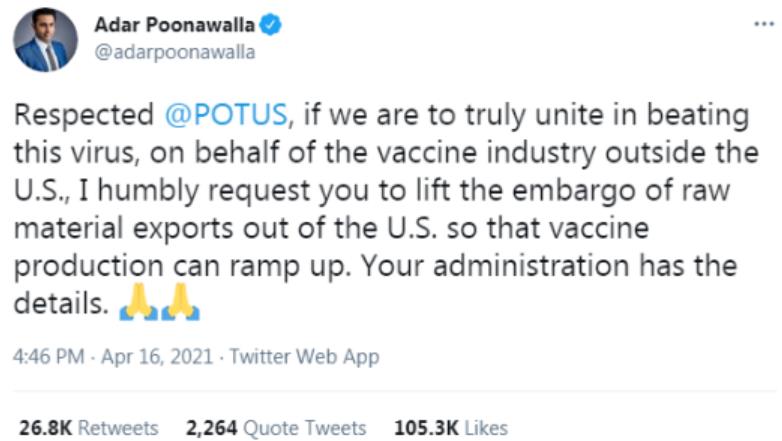
  △ Adar Poonawalla, CEO of the Indian Serum Institute, posted a message on social media, "pleading" with US President Biden to lift the ban on the export of vaccine raw materials in India.

  The world’s largest vaccine manufacturer &mdash; &mdash; Adar Poonawalla, CEO of India Serum Research Institute, posted a message on social media on April 16th, "pleading" Biden’s government to lift the ban on India’s export of vaccine raw materials in order to increase India’s vaccine production. Reuters also revealed earlier that the foreign ministers of India and the United States also mentioned lifting the import ban during their talks on April 19th. However, the United States has never responded to this.

  △ the State Council spokesperson Price

  It was not until 22nd that a reporter’s question at the White House press conference broke the silence of the United States for the first time, although the United States was still pushing each other.

  According to the minutes of the press conference that day, US State Department spokesman Ned Price first pushed the question to the Office of the US Trade Representative in response, saying that it was within their authority. After facing the reporter’s unrelenting questioning, Price said "the truth".

  △ US local media reported that at the press conference that day, Price once again emphasized "US priority" and refused to export vaccine raw materials to India on this ground.

  Price first said that the United States focused on controlling the epidemic in the United States, giving priority to vaccinating the American people, and stressed that the American approach was "ambitious", "fruitful" and "successful". Later, he continued to argue: "We do this for several reasons. First, we have a special responsibility to the American people. Second, in the United States alone, more than 550,000 people have died and tens of millions have been infected. The American people have been hit harder by the epidemic than other countries in the world. " Finally, he concluded: "It is not only in the interests of the United States to vaccinate Americans, but also in the interests of other countries in the world."

  Indian media criticized the United States for making "vague verbal promises"

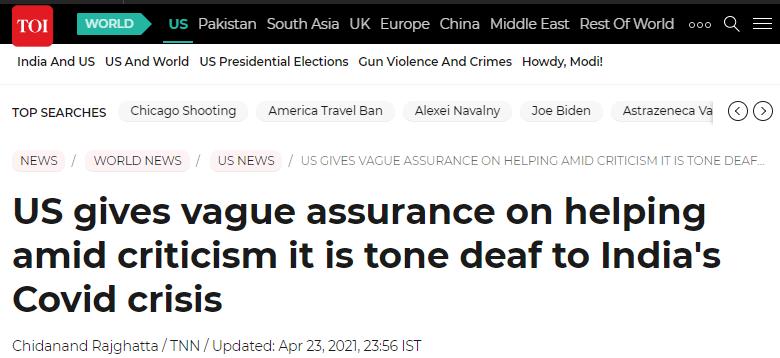
  △ "The Times of India" published an article entitled "The United States made vague verbal commitments because it was criticized for turning a deaf ear to the COVID-19 epidemic in India" on the 23rd.

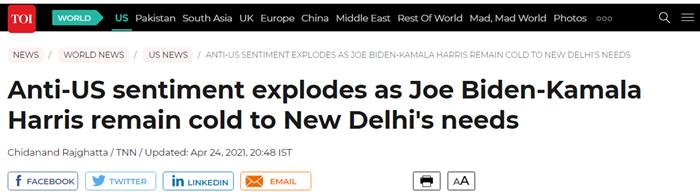
  This speech instantly detonated the anger in India. The Times of India issued a document for two consecutive days, criticizing the U.S. government for turning a deaf ear to the Indian epidemic, saying that the so-called guarantee of the United States is only a "vague verbal promise" and pointing out that the Biden administration has done almost nothing except verbal sympathy.

  △ "The Times of India" published another article on the 24th, saying that the Biden administration was cold-hearted about India’s urgent need for COVID-19 vaccine raw materials.

  According to a report by Washington post on the 24th, only 1.4% people in India have been vaccinated, and overcrowded hospitals are facing the problem of lack of oxygen, while the United States is enjoying a spring full of vaccines. What makes the Indian people even more angry is that the United States would rather throw the extra vaccine in the warehouse like this than export the raw materials for vaccine production to India.

  △ The New York Times reported on March 11 that the United States is sitting on the tens of millions of doses of COVID-19 vaccine that the world urgently needs.

  On March 11th, The New York Times quoted an official familiar with the matter as saying that more than 30 million doses of vaccine were idle in a warehouse in Ohio, USA, and no one had ever used it. The Axios News Network of the United States commented that "when billions of people around the world are anxiously waiting for vaccines, 30 million doses of vaccines are eating ash in Ohio warehouses."

  Indian netizens accused the US of being "hypocritical", "diplomatic rhetoric" and "untrustworthy"

  △ Indian netizens accuse the United States of selfish behavior

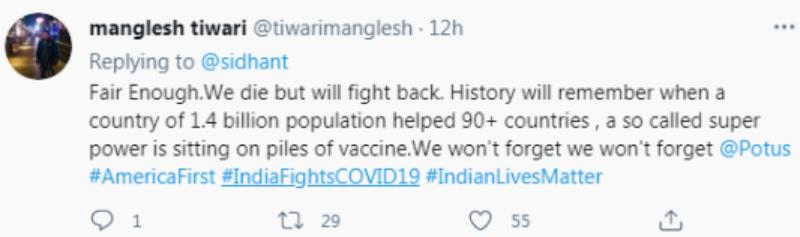
  Under the video of Price’s speech, an Indian netizen commented, "History will remember that a country with a population of 1.4 billion has helped more than 90 countries, while a so-called superpower is sitting on piles of vaccines. We won’t forget it, @ President of the United States ".

  △ Indian netizens talked about India’s previous aid to COVID-19 drugs in the United States, but now the United States has turned a blind eye to India.

  A netizen even turned over the old account and left a message: "When India itself was experiencing a serious COVID-19 epidemic, the United States successfully obtained hydroxychloroquine from India (which was previously considered as a specific drug for treating COVID-19, but was later confirmed by WHO to be almost ineffective). Now the United States is still banning the supply of vaccine raw materials to India. Obviously, the United States has become the most untrustworthy country on earth. "

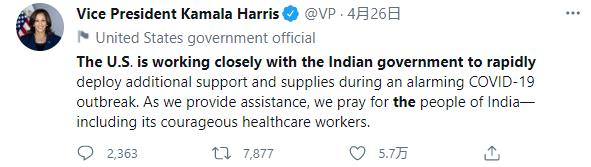
  In the case of accusations from all sides and the growing epidemic in India, it was not until the 25th that US President Biden and Vice President Harris began to formally respond, saying that they would provide assistance to India.

  △ The Vice President of the United States posted a message on his personal social account on 25th local time, saying that he would support India in fighting the COVID-19 epidemic.

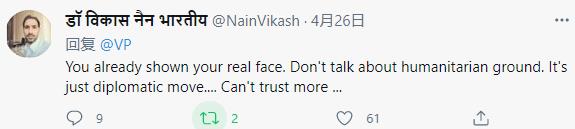
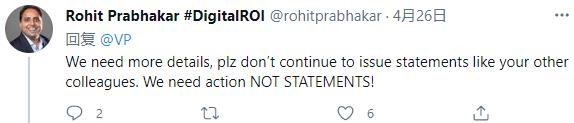
  However, the Indian people who have been deceived and ignored for a long time obviously don’t buy it. A large number of Indian netizens commented that this move is still "hypocritical", "diplomatic rhetoric" and "untrustworthy", and they are still full of doubts about the US statement.

  △ Indian netizens said that Harris’s move was just diplomatic rhetoric and could not be trusted.

  △ Indian netizens replied that we need more details. Please don’t continue to publish such diplomatic rhetoric. We need actions, not "so-called statements".

  The epidemic situation of COVID-19 in India is getting more and more serious, but the aid of the United States is far away

  While the Indian people are still waiting for American aid in the epidemic, the epidemic in India has developed into a frightening situation.

  △ABC reported that the epidemic situation in India continued to intensify, and crematoriums in many places had been cremated by burning bodies in the open air.

  According to foreign media reports, in some crematoriums in India, the metal parts began to melt because of the long running time of gas stoves and wood stoves, and cremation stoves were damaged because of too many bodies to be burned. A large number of bodies could only be burned in the most primitive way. In many hospitals in India, there have been many suffocation accidents caused by lack of oxygen recently.

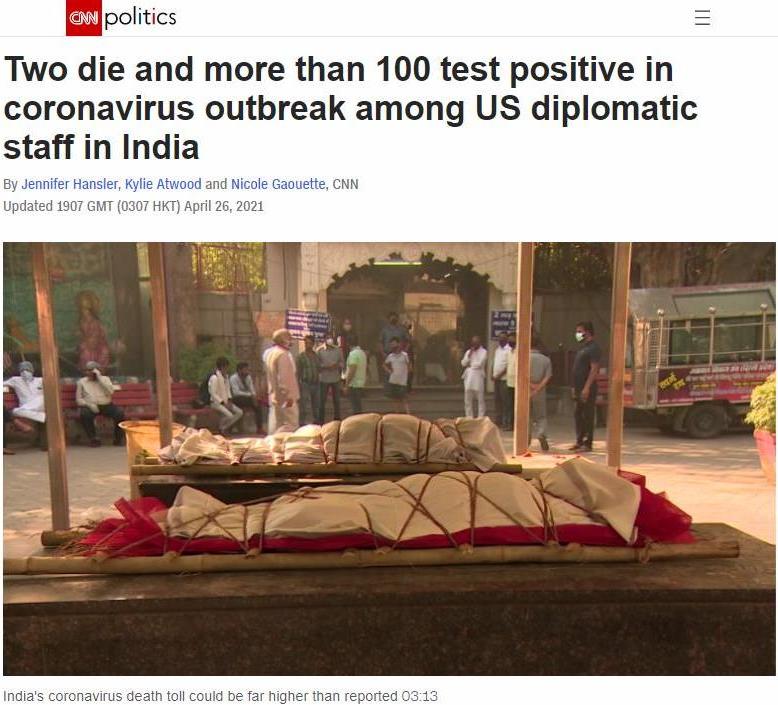
  △ CNN published on the 26 th entitled "The COVID-19 epidemic in India is more severe. Two of the US diplomats in India died and more than 100 people tested positive for COVID-19."

  CNN quoted diplomats working in the US Embassy in India as saying: All the staff were deeply frustrated, and even the staff of the US Embassy could only get vague statements before the actual assistance from the United States arrived.

  Producer Tang Yi

  Producer Zhao Xinyu?

  Editor-in-Chief: Cui Yi

  Editor Jin Lvcheng

From gaining momentum to accelerating the 12-year commercial exploration of Baidu Post Bar

If we go back to 2003, no one can predict how much weight the Post Bar born in that year will occupy in Baidu’s territory. However, in the next 12 years, Baidu Post Bar has steadily and steadily become an important position with a huge number of users and occupying the only social product in Baidu’s entire product system. The various attempts of the business model of Post Bar can also be regarded as a microcosm of the commercialization exploration of China’s online social platform.

From the original forums, Blog, SNS, alumni records, Renren. com, and the rise of Weibo and WeChat in recent years, the wave of social platforms has changed. Many products that once resounded across the country can only survive or even disappear, but the post bar is enduring. The huge user scale, coupled with multi-dimensional and highly segmented groups such as interest, region and identity attributes, makes Post Bar with huge traffic and massive precipitation content become a "gold mine" with great potential.

But even with "the right time, the right place and the right people", Baidu Post Bar has always been alert and cautious, committed to finding the best balance between user experience and commercialization, and slowly carried out various attempts to adjust its own rhythm.

The commercial potential of the post bar detonated by the draft of Xiao He Lou Jiao twelve years ago

In 2003, as the forum (discussion area) began to gradually transfer from four portals to Tianya, Xici, Maopu and other websites, the concept of Blog was still in the initial stage of brewing. Baidu seized this good opportunity to create Baidu Post Bar, which not only enriched the content results of Baidu search engine, but also helped Post Bar quickly accumulate initial users with the help of the long tail effect of search.

During this period, the whole Internet form began to move from the 1.0 era of one-way communication to the 2.0 era of two-way interaction, and the interaction desire of young netizens that had been suppressed for a long time was stimulated intensively, and the product form of Baidu Post Bar just effectively filled this user demand, so it quickly gathered a very high platform popularity.

In 2005, the "Super Girl" draft held by Hunan Satellite TV showed people the power of fans, and also let Post Bar taste the dividend of fan culture. A large number of fans gathered in the super girls’ post bar and had a heated discussion for a long time. Alexa data at that time showed that with the help of Baidu Post Bar, Baidu’s traffic surpassed Sina in one fell swoop and became the largest Chinese website in the world. The first appearance of fan power made people inside and outside the industry smell the great commercial value lurking in Post Bar. However, because the online marketing model was relatively simple at that time, Post Bar did not rush to pursue profit speed, but put the depth of cultivating platform in the first place.

Leverage the Olympic Post Bar to test fan marketing.

Since 2008, the Internet in China has entered the golden age of rapid development. The surge in the number of netizens and the emergence of mobile Internet have spawned various online marketing models. Baidu Post Bar, which has a huge user scale and huge traffic advantages, has also begun to explore the diversified direction of commercialization.

During the Beijing Olympic Games, Baidu Post Bar cooperated with Adidas, Yili and other first-line brands to plan a series of marketing activities, and introduced the Olympic enthusiasm of netizens into the Post Bar. The marketing of this big event successfully attracted a large number of bar friends to participate.

In 2009, Baidu Lighthouse, the first interactive marketing product in China, was officially launched, focusing on tapping the precise marketing value of Post Bar.

In 2010, the launch of "Post Bar Mall" made it possible to realize social traffic. Props, value-added applications, personalized services, etc. made Post Bar earn C-end income, and at the same time, it greatly promoted the activity of Post Bar and improved the user system.

During the London Olympic Games in 2012, Baidu Post Bar became the main battlefield of online Olympic marketing. Taking Coca-Cola as an example, it selected 30 post bars including Sun Yang Bar, Chen Yibing Bar, Liu Xiang Bar and Gymnastics Bar, and posted in the selected post bars through official accounts to cheer for Olympic athletes, and naturally implanted interactive activities with specific themes to promote and solidify its brand. The promotion of Coca-Cola in the Post Bar has covered more than 10 million people, the brand has been displayed as high as 30 million times, and the video has been played 100,000 times. At that time, Weibo was in full swing, and some even declared it as "the pulse of the earth", but advertisers did not dare to ignore Baidu Post Bar. The deep interaction among users of Post Bar can quickly touch, transform and expand the fan base, forming an ecological closed loop of multi-directional, in-depth, efficient and self-growing fan marketing, which is the core advantage that Weibo platform does not have.

Looking back on the period from 2008 to 2013, it was the adolescence of Internet in China. The characteristics of active but restless users not only increased the commercialization opportunities, but also brought greater challenges to the realization of traffic. Fortunately, Baidu Post Bar’s several attempts have not only failed to drain users, but also gained great recognition, especially the cooperation activities during the two Olympic Games have become classic online marketing cases.

Force community fan marketing to dig deep into the value of post bar platform

2014 seems unremarkable, but there are two figures that make this year destined to go down in the history of Internet development in China.

In this year, Internet users in China approached half of the total population for the first time, and the scale of mobile phone users surpassed PC users for the first time. Because of this, the commercial focus of China has also shifted from offline to online, and enterprises have entered an era that needs in-depth communication with consumers. Some people therefore call 2014 the beginning of the Internet 3.0 era. In this context, the commercialization process of Baidu Post Bar began to rapidly enter the rising channel.

In July 2014, Baidu Post Bar announced the official launch of the enterprise platform strategy, and established a fan community for enterprises, institutions, media and other partners by opening the official post bar. This move attracted many powerful enterprises in the media, technology, finance and other industries to settle in. Mobile phone brands such as Meizu and Xiaomi regard the official bar as the most important marketing position.

For vertical industries with broader themes such as "beauty" and "education", Baidu launched the "Post Bar Partner" model in 2015, which opened the operation rights of vertical post bars to partners, provided more professional services for users of related bars, and also expanded its own profit model.

With the help of 100,000 stars and 300 million fans, Baidu Post Bar built the brand of Post Bar Entertainment, which quickly entered the film marketing industry in 2015, making Baidu Post Bar one of the most important film and television marketing platforms. The Nine-story Demon Tower with Ghost Blowing Lights jumped to glutinous rice through the related star bar header, and about 200,000 tickets were issued. Popular variety shows such as Running Man have been deeply interacting with fans in the post bar for a long time. IP-adapted writers of popular online literature such as "God of Heaven" and "Who’s Youth is Not Confused" have all held huge casting activities in their respective post bars, and achieved good results.

The longevity of post bar comes from the youthfulness of core users. According to the data, more than 60% of the 12-year-old Baidu Post Bar’s active users in 300 million months are post-90s. They grew up in the Internet age and are deep Internet users. Among them, 80% of users’ behaviors come from the mobile terminal. Post Bar users not only have strong spending power, but also are generally willing to accept new things. These user characteristics are the natural advantages of Post Bar itself. Throughout the commercialization process of Post Bar, every attempt is centered on the experience of these users, keeping up with the development trend of the Internet, and adapting to the changing rhythm of consumer behavior to the greatest extent. After a series of explorations, the gap between commercialization and users is gradually bridged by Post Bar.

For the Internet social platform, realizing traffic is both a paradise and a hell. If you are not careful, it will slide to the bottom. Along the way, Baidu Post Bar finally crossed the threshold of realizing with the mentality of taking the Long March. This year marks the 12th anniversary of Baidu Post Bar. In the traditional calendar of China, 12 years is the end of a cycle and a new beginning. As the Internet goes deeper and deeper into people’s lives, the prospect of achieving a win-win situation in products and business is more and more promising.

Entrepreneurship loans, training loans … Campus loans "wearing vests" have been repeatedly banned.

  Xinhua News Agency, Shanghai, May 6 thTitle: Venture loan, training loan, job-seeking loan &hellip; &hellip; Under the ban, campus loans are still rampant!

  Xinhua News Agency "Xinhua Viewpoint" reporters Wang Shujuan and Yan Zhihong

  As early as May 2017, several departments, including the former China Banking Regulatory Commission, issued the "Notice on Further Strengthening the Standardized Management of Campus Loans", clearly requiring that all online lending institutions be suspended from conducting online lending business for college students. However, a recent survey by Xinhua Viewpoint reporter found that there are still many online lending institutions that ignore the regulations, put on entrepreneurial loans, graduation loans, training loans, job-seeking loans and other coats, and continue to lend to college students.

  The online lending platform still illegally lends money to college students.

  The reporter’s recent investigation found that in order to avoid the investigation by the regulatory authorities, the marketing methods of some online lending platforms are more subtle, and some continue to lend illegally to college students under the banner of graduation loans and job-seeking loans.

  Many online lending platforms promote their business through QQ group. The reporter’s search found that some salesmen claimed in the group that they could apply for loans for college students, and said that they "ignored debts, didn’t look at credit information, didn’t audit electricity, didn’t video, didn’t write IOUs, and came to the next one".

  Huang Peng, a college student, has borrowed money on platforms such as "Spend 100 million yuan first", "Staging Music" and "Flash Silver". He told reporters that although campus loans are forbidden, many people who claimed to help "settle accounts ashore" promoted them on Zhihu, Weibo and WeChat, saying that they could help to borrow new loans and repay old ones, which attracted many students with loans.

  Some campus loans are covered with "vests", such as leaseback loans, entrepreneurial loans, job-seeking loans, etc. The reporter saw on the post bar that an "ID loan" called "Meow Renting Back" was advertised as a professional mobile phone lending platform, with quick review and quick receipt.

  A college student told reporters that leaseback loan is actually a kind of campus loan, also called "ID loan". The specific operation is to "lease" the mobile phone to the loan platform and bind the specified Apple ID account. The platform is valued at 3,000 yuan, and 2100 yuan is received after deducting the rental fee or appraisal fee of 900 yuan. In fact, the mobile phone is still used by me, and the platform gives college students loans with high beheading interest in the name of leasing. If you don’t repay the loan on time, you will threaten the borrower by reading the mobile phone address book, mobile phone positioning and other functions.

  Other platforms ignore the regulations and deliberately lend money to college students without reviewing their identities, and they are all "beheading loans". Yang Xin, a college student in Chongqing, is caught in the vicious circle of "supporting loans with loans". She borrowed money from dozens of platforms, such as Little Ant Wallet, Easy Week Wallet, Quick Loan Wallet and Spend 100 million yuan first. The most recent one was to borrow 3,000 yuan from Easy Week Wallet in early March, which was due in seven days, but only 2,100 yuan actually arrived, with an annualized loan interest rate as high as 15.64% and an overdue fee of one day in 150 yuan. The reporter saw that this 3,000 yuan loan has rolled into more than 7,000 yuan in one month.

  Liu Xing, a 20-year-old sophomore, recently borrowed 2,000 yuan from the "hairtail" online loan, but only 1,600 yuan actually arrived, which is equivalent to an annualized loan interest rate of over 1,000%. After 7 days, due to the inability to repay, the collection company has been harassing his parents.

  Some platform identity audits exist in name only.

  "In fact, according to the age of the ID card, you can roughly judge your identity. If you really don’t want to make a group loan for college students, strictly setting the audit threshold of 25 years old or older can basically be screened out." A person in charge of a cash loan platform told reporters.

  Many college students told reporters that most platforms indicate that they can borrow money only if they are over 18 years old, but they don’t screen their specific identities. They can pass the audit by checking the "not a student" option. "Although some platforms indicate that they will not lend money to students, they will never ask you if you are a student when you borrow money. You can borrow money with your ID card." Yang Xin said.

  Huang Peng told reporters that in many platform loans, when filling in the information, just fill in a company near the school, upload an ID card, authenticate the mobile phone operator, and record an authentication video to borrow money.

  "Staging Music" is known as a staged shopping mall for young people, and its App has a loan service of "Lehua Borrowing Money" in a prominent position. To apply for a loan, you need to register and fill in your personal data, and you have the options of "worked" and "not worked". If you choose "not worked", you need to fill in your school and admission time.

  Liu Xing, a college student, showed the reporter his personal information on "Staging Music" and clearly filled in the school he was attending and the time of admission. However, on March 26th, he still successfully borrowed money from the staging music platform, having been in debt of tens of thousands of yuan on several online lending platforms.

  As a college student, the reporter called "Staging Music" to ask for a loan. The customer service told me that you can apply for a loan as long as you are 18 years old, regardless of whether you are a student or not. The platform provides technical and preliminary examination services, and the final lender is a cooperative financial institution.

  The reporter saw that there were many complaints about "staged music" lending to college students on "Gathering Complaints". A Mr. Xiong spoke out: "&lsquo; Staging music &rsquo; Doing promotion and advertising all over the campus, in the classroom and on the table &lsquo; Staging music &rsquo; Small card. " Parent Ms. Liu said: "&lsquo; Staging music &rsquo; Deliberately trick students who do not have a stable source of income into super-power consumption and borrowing loans, and make phone and SMS bombing threats when students have no repayment ability, thus kidnapping parents to repay. "

  We will implement the regulations on punishing campus loans and increase formal financial services for college students.

  A person engaged in cash loan business told reporters that in fact, the platform is well aware of the illegal lending to college students. They just believe that the parents of college students will repay their children, so even if students have no source of income, they should continue to do so.

  This person told reporters that recently, the relevant departments have closely checked the "714 anti-aircraft gun" platform with a loan period of 7 days or 14 days and charged high beheading interest and interest, so many platforms have been changed into 30 days and 56 days, or the App has been upgraded into a shopping mall and a loan supermarket.

  Many people in the industry said that we should cooperate with various regulatory bodies and relevant departments to implement the regulations on punishing campus loans, ban unlicensed lending platforms, and especially crack down on those platforms with legal licenses to lend illegally to college students. The online lending platform should also take the responsibility of verification and strictly abide by relevant regulations.

  Experts suggest that it is necessary to unblock the combination and let formal financial institutions provide formal financial services for college students. Zheng Li, member of Chinese People’s Political Consultative Conference and vice president of xihua university, has been tracking and investigating the problem of campus loans for many years. The feedback data he obtained from China Banking and Insurance Regulatory Commission shows that by the end of March 2018, 12 banks across the country had launched student credit card business, with a total of 4.01 million student credit cards issued, with a loan balance of 400 million yuan. In the next step, formal financial institutions should be encouraged to increase financial services for college students on the premise of risk control.

  Fu Weigang, a researcher at Shanghai Institute of Finance and Law, suggested that relevant departments can explore cooperation with Internet finance technology companies to establish a risk control model for students in school, so as to make technical preparations for regulating the campus loan market.