The State Council Office held a press conference on the White Paper on Chinese Medicine in China and the development of Chinese medicine.
The Press Office of the State Council published the white paper "Traditional Chinese Medicine in China" on Tuesday, December 6, 2016, and held a press conference at 10 am that day to introduce the white paper and the development of traditional Chinese medicine. Wang Guoqiang, deputy director of the National Health and Family Planning Commission and director of state administration of traditional chinese medicine, and Xi Yanchun, spokesperson of the State Council Information Office, attended and answered questions from reporters.
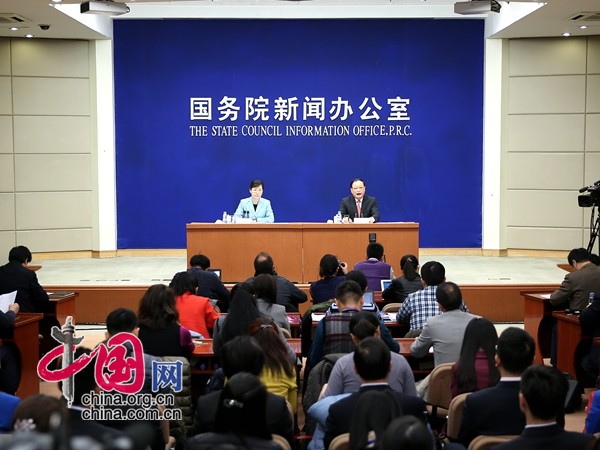
The White Paper of "Traditional Chinese Medicine in China" of the State Council Office and the Press Conference on the Development of Traditional Chinese Medicine
China Wang Zongchao photo
【The host attacked Yan Chun.】Good morning, ladies and gentlemen. Welcome to the press conference of the State Council Information Office. Today, the State Council Press Office published the White Paper on Chinese Medicine in China and held a press conference to introduce the White Paper and the development of Chinese medicine. Present at today’s conference are: Mr. Wang Guoqiang, Deputy Director of the National Health and Family Planning Commission and Director of state administration of traditional chinese medicine. I am Yan Yanchun, spokesperson of the State Council Press Office. First of all, I would like to introduce the white paper "Traditional Chinese Medicine in China".
As an outstanding representative of Chinese civilization, traditional Chinese medicine (TCM) is a medical science gradually formed and continuously enriched by people of all ethnic groups in China during thousands of years of production and life practice and fighting diseases. It has not only made outstanding contributions to the prosperity of the Chinese nation, but also had a positive impact on the progress of world civilization. Since the 18th National Congress of the Communist Party of China, the government of China has placed Chinese medicine at the height of national strategy. At the national health and wellness conference, the Supreme Leader General Secretary emphasized that efforts should be made to promote the revitalization and development of Chinese medicine. The China Municipal Government regards Chinese medicine as an important force in the construction of a healthy China, insists on paying equal attention to both Chinese and western medicine, and promotes the complementary and coordinated development of Chinese medicine and western medicine, so as to jointly protect people’s health in an all-round and full-cycle way. With the rapid development of economy and society, the enhancement of people’s health awareness, the adjustment of medical purpose and the change of medical model, Chinese medicine has shown its unique value more and more, and it has been widely recognized and concerned by the international community.
The white paper "Traditional Chinese Medicine in China" released today is the first time that the China government has published a white paper on the development of traditional Chinese medicine. The white paper systematically introduces the development and characteristics of traditional Chinese medicine, fully introduces the national policies and main measures of developing traditional Chinese medicine in China, and shows the scientific value and cultural characteristics of traditional Chinese medicine. The full text is about 9,000 words, which consists of three parts: preface, text and conclusion. It is published in Chinese, English, French, Russian, German, Spanish, Japanese and Arabic. The Chinese version and the English version have been published by People’s Publishing House and foreign languages press respectively.
I’ll introduce these situations first, and then I’ll ask Mr. Wang Guoqiang to introduce them.
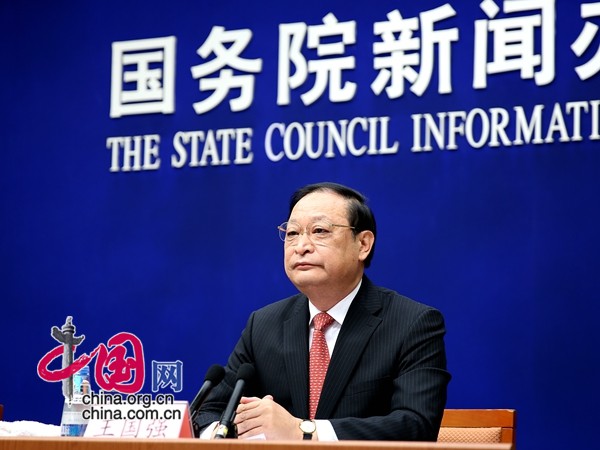
Wang Guoqiang, deputy director of the National Health and Family Planning Commission and director of the state administration of traditional chinese medicine, answered questions from reporters.
China Wang Zongchao photo
【Deputy Director of the National Health and Family Planning Commission and Director state administration of traditional chinese medicine Guoqiang Wang】Good morning, ladies and gentlemen, journalists and friends. I am very glad to meet with friends from the media here, and I am very grateful for your long-term concern and support for the revitalization and development of Chinese medicine. As we all know, Chinese medicine is a medical science gradually formed and constantly enriched and developed by the people of all ethnic groups in China during thousands of years of production and life practice and the struggle against diseases. It contains profound philosophical thoughts of the Chinese nation and is the key to opening the treasure house of Chinese civilization. Now, I would like to introduce the situation to you from four aspects.
First, Chinese medicine is the original medical science of the Chinese nation. Traditional Chinese medicine (TCM) originated in the land of China. In thousands of years of medical practice, it has continuously absorbed and integrated advanced science and technology and humanistic ideas in various periods, and has been constantly innovating and developing. Its theoretical system has become increasingly perfect and its technical methods have become more abundant, forming a unique concept of life, health, disease and prevention. It reveals the law of occurrence and development of human health and diseases from a macro, systematic and holistic perspective. Traditional Chinese medicine attaches importance to the whole, peace, individualization, prevention and health care, and "preventing diseases before they occur". Its use method is simple, and it advocates the sincerity of great doctors, realizing the integration and unity of natural science and humanities. The concept and method of Chinese medicine to maintain health is in line with the new trend of health concept and medical model transformation, and it contains valuable wisdom to solve human health problems.
Two, China to promote the development of traditional Chinese medicine national policies and main measures. The China Municipal Government attaches great importance to and strongly supports the development of Chinese medicine, and makes strategic plans and overall arrangements for Chinese medicine as a unique health resource, an economic resource with great potential, a scientific and technological resource with original advantages, an excellent cultural resource and an important ecological resource. In terms of management system, the state established the state administration of traditional chinese medicine, established the inter-ministerial joint conference system of traditional Chinese medicine in the State Council, and established the local Chinese medicine management department accordingly. In the construction of the rule of law, the State Council promulgated and implemented the Regulations on Traditional Chinese Medicine in People’s Republic of China (PRC), and the National People’s Congress is actively promoting the deliberation of the Law on Traditional Chinese Medicine in People’s Republic of China (PRC). In terms of policy measures, a series of major measures such as "Several Opinions on Supporting and Promoting the Development of Chinese Medicine" have been issued. Since the 18th National Congress of the Communist Party of China, the CPC Central Committee with the Supreme Leader as the core has put the development of Chinese medicine in a more important position, and insisted on "paying equal attention to both Chinese and Western medicine" as one of the important policies for the development of health and health undertakings in the new period. "Healthy China 2030" Planning Outline, as the action program to promote the construction of healthy China in the next 15 years, puts forward a series of tasks and measures to revitalize the development of traditional Chinese medicine and serve the construction of healthy China. The State Council issued the Outline of Strategic Planning for the Development of Traditional Chinese Medicine (2016-2030), which upgraded the development of traditional Chinese medicine to a national strategy and made systematic arrangements for promoting the development of traditional Chinese medicine in the new period. It can be said that the cause of Chinese medicine has entered a new historical development period.
Third, the achievements made in the development of traditional Chinese medicine. It is mainly reflected in the basic establishment of a medical service system of traditional Chinese medicine covering urban and rural areas, the accelerated development of preventive health care services of traditional Chinese medicine, and the obvious improvement of accessibility and accessibility of traditional Chinese medicine services. Traditional Chinese medicine provides a higher service share than the resource share with a lower investment, which should be said to amplify the benefits of deepening medical reform. China government regards talent training as the foundation of career development, and has established a unique system of talent training for traditional Chinese medicine. The scientific research of traditional Chinese medicine has made positive progress, and Tu Youyou won the 2015 Nobel Prize in Physiology or Medicine for discovering artemisinin. Traditional Chinese medicine industry has gradually become a strategic industry with strong development advantages and broad market prospects in national economic and social development. The China Municipal Government attaches importance to and protects the cultural value of traditional Chinese medicine, and actively promotes the construction of the inheritance and dissemination system of traditional Chinese medicine culture. It should be said that at present, a new pattern of all-round development of traditional Chinese medicine has been formed, which includes medical treatment, health care, scientific research, education, industry and culture, and provides the people with health services and guarantees of traditional Chinese medicine covering the whole cycle of "growing strong and old". The complementary and coordinated development of traditional Chinese medicine and western medicine has become a remarkable advantage in the development of health and wellness in China.
4. International exchange and cooperation of traditional Chinese medicine. China is committed to promoting the development of international traditional medicine, and actively advocates the World Health Organization General Assembly to adopt a resolution on traditional medicine. The medical teams sent by China to more than 70 countries basically have Chinese medicine personnel, accounting for about 10% of the total number of medical personnel. At present, Chinese medicine has spread to 183 countries and regions, and it has become an important content for China to carry out cultural exchanges with other countries and promote exchanges and mutual learning between eastern and western civilizations.
At present, China’s economic development has entered a new historical period, and the position and role of traditional Chinese medicine in economic and social development is becoming more and more important. The revitalization and development of traditional Chinese medicine has ushered in a historic opportunity of favorable weather, favorable geographical conditions and harmonious people. China will learn from the achievements of various modern civilizations, persist in making the past serve the present, promote the modernization of traditional Chinese medicine, effectively inherit, develop and make good use of traditional Chinese medicine, and strive to realize the creative transformation and innovative development of traditional Chinese medicine health preservation culture, so as to integrate it with modern health concepts, serve human health and make greater contributions to the development of world civilization.
Thank you, and I would like to answer your concerns.
【host】Thank you, Mr. Wang Guoqiang, for your introduction. Let’s enter the Q&A session.
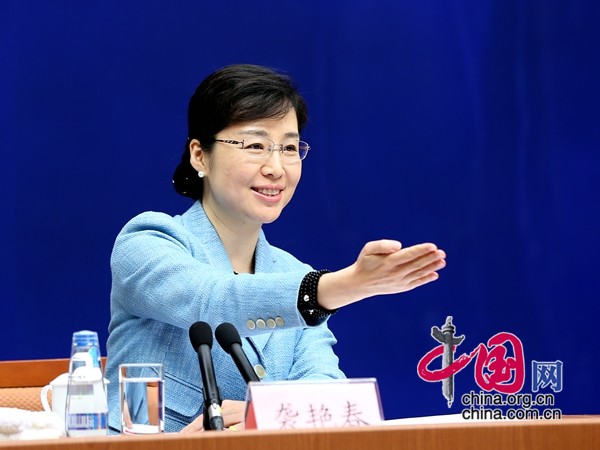
Xi Yanchun, deputy director of the State Council Information Bureau, invited reporters to ask questions.
China Wang Zongchao photo
【Xinhua News Agency Central News Interview Center reporter】China has issued the "Healthy China 2030" Planning Outline, which has become an important grand blueprint and action program for promoting the construction of healthy China in the next 15 years. In this process, Chinese medicine is a unique health resource. What role can Chinese medicine play? What challenges do you think the future development of Chinese medicine, especially at the grassroots level, will face? Under the background of medical supply-side structural reform, where does our confidence come from to maintain the originality and uniqueness of Chinese medicine? Thank you.
【Guoqiang Wang】Your question is very good. As we all know, in August this year, the Central Committee held a health and wellness conference, and the General Secretary delivered an important speech. Later, the Central Committee and the State Council issued the "Healthy China 2030" Planning Outline, which embodies the new ideas, new concepts and new requirements of the CPC Central Committee and the State Council for maintaining people’s health, and especially puts forward that maintaining people’s health should be given priority in the development strategy. In particular, it is pointed out that to realize the transformation from treating diseases as the center to people’s health as the center, it is required to provide people with health services in the whole cycle and process.
I think Chinese medicine plays its due role in the construction of healthy China, which is consistent with the characteristics and essence of Chinese medicine. As we all know, Chinese medicine has a unique concept and method of maintaining health from birth to death.
According to the Outline of Planning, the construction of a healthy China will be promoted from the following five aspects: First, it is necessary to popularize healthy living. I think Chinese medicine should make a great contribution to the popularization of healthy life. As we all know, Chinese medicine emphasizes health care, "treating diseases before they occur", preventing diseases before they occur, preventing diseases after they have occurred, and preventing them from recovering. How to integrate health care into daily life and develop a good lifestyle? Chinese medicine can play a very good role in four seasons, flirting, diet saving, careful use of drugs, and appropriate exercise. This is the aspect of popularizing healthy life and improving the people’s health and cultural literacy of Chinese medicine, which truly reflects that everyone is the first person responsible for their own health. I am the master of my health, I maintain my health, and I understand my health. This is the role that Chinese medicine can play in popularizing healthy life.
Second, Chinese medicine can play a very good role in optimizing health services. Because Chinese medicine has unique advantages and technical methods in "preventing diseases", treating major diseases and recovering diseases. In the Outline of Healthy China Planning, many requirements are put forward for the health service of Chinese medicine, the most important of which is that Chinese medicine should play a leading role in the prevention of diseases, play a synergistic role in the treatment of major diseases and play a central role in the rehabilitation of diseases. I think these three roles reflect the characteristics of Chinese medicine in health service.
Third, Chinese medicine should play an important role in improving health protection. We should not only have a perfect medical security system, but also pay attention to how to save and reduce medical costs and medical expenses. In terms of medical security, I think that the extensive use of Chinese medicine can not only effectively prevent diseases and move forward, but also help to solve difficult problems in disease treatment with relatively simple methods and solve these problems with relatively little expenses. There is no doubt that Chinese medicine is simple and inexpensive, and it can play an important role in preventing diseases at the grassroots level and treating some diseases in a relatively simple way.
Especially in the medical reform, giving full play to the role of traditional Chinese medicine and trying to control the rising medical expenses can really play a role in ensuring the basics, strengthening the grassroots and controlling expenses, and amplifying the benefit of medical reform. One more thing, Chinese medicine should make great achievements in building a healthy environment, because Chinese medicine has accumulated rich ecological wisdom. As we all know, Chinese medicine emphasizes the unity of man and nature, that is, people’s health must adapt to the natural environment, which is a very important essence. Traditional Chinese medicine (TCM) uses natural plant medicines to treat diseases, which protects the ecology, promotes the harmonious symbiosis between man and nature, and uses natural regulation to maintain health. In particular, as we all know, TCM advocates that you can take medicine without taking medicine, and you can use non-drug therapy when you can use non-drug therapy, so many non-drug appropriate technologies have been created, which are environmentally friendly, ecological and economical. Therefore, Chinese medicine should also make great achievements in building a healthy environment.
The last point is that Chinese medicine can also play an important role in developing the health industry. During the "Twelfth Five-Year Plan" period, the total output value of Chinese medicine industry increased by 20%. By 2015, the total output value of Chinese medicine industry reached 786.6 billion, accounting for nearly one third of the total output value of Chinese medicine industry, and the healthy industry of Chinese medicine exceeded 1 trillion, becoming a new economic growth point in China. The ongoing development of health industry and health service industry, including the "Development Plan of Chinese Medicine Health Service" issued by the State Council, all put forward requirements for promoting the development of Chinese medicine in health industry. We are also actively promoting the healthy old-age care and health tourism of traditional Chinese medicine, including promoting the development of health products and diagnosis and treatment equipment of traditional Chinese medicine, which should be an important aspect of the development of health industry. These five aspects are also the five key aspects of building a healthy China, and Chinese medicine can play a very good role.
To achieve these five achievements, we should actively promote the reform of Chinese medicine, including the structural reform on the supply side. When the people need Chinese medicine services, we find that Chinese medicine is still unsuitable in terms of laws, policies and institutional mechanisms. At present, we are actively promoting the comprehensive reform of Chinese medicine, improving the ability of Chinese medicine service to ensure the realization of the tasks and objectives proposed in the Outline of Planning, and more importantly, enabling the broad masses of people to truly enjoy the benefits of Chinese medicine service and play a role in maintaining health. Thank you.
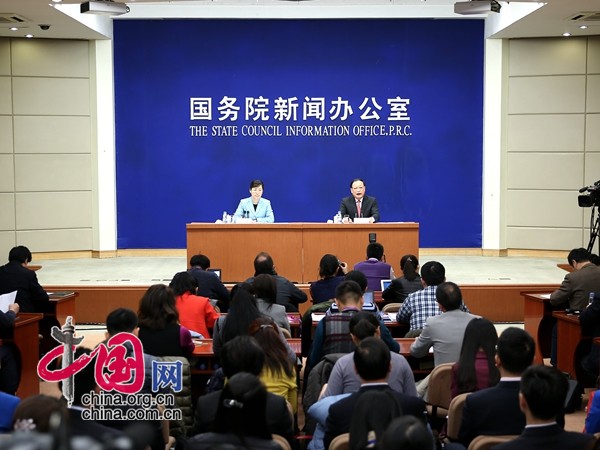
The White Paper of the State Council’s "Traditional Chinese Medicine in China" and the Conference on the Development of Traditional Chinese Medicine. Photo by China Wang Zongchao
【China Daily reporter】Hello, Director Wang. After Tu Youyou won the Nobel Prize, Chinese medicine has been paid more and more attention in the world. This year, some major conferences, such as Rio Olympic Games and G20 Summit, have seen the phenomenon of Chinese medicine fever. Please talk about how to treat this phenomenon.
【Guoqiang Wang】As we all know, after Tu Youyou won the Nobel Prize in 2015, he played a very important role in revitalizing the development of Chinese medicine and boosting the enthusiasm of Chinese people in scientific and technological innovation. As researcher Tu Youyou said when winning the prize, artemisinin is a gift from traditional Chinese medicine to people all over the world, which is a concrete demonstration of traditional Chinese medicine as an original scientific and technological resource in China, and also fully proves the great significance and value of the development of traditional Chinese medicine. The development of Chinese medicine has not only enabled Chinese to enjoy the medical science left by its ancestors for thousands of years, but more importantly, Chinese medicine has also become more and more beautiful in the world in recent years.
Everyone saw the cupping brand on Phelps’ shoulder in Rio Olympics, and some people called it "Chinese seal". During the G20, many foreign guests and journalists visited Chinese medicine services. Afterwards, I also went to Zhejiang to learn about it, and it was really popular. In fact, not only in Rio Olympic Games, but also in Beijing Olympic Games, as we all know, there is a fever of traditional Chinese medicine in itself. Many people seek massage and acupuncture services, and some even think that China’s secret weapon in the Olympic Games is traditional Chinese medicine. In this regard, I would like to tell you a news, including that during the Ninth Global Health Promotion Conference, which I attended not long ago, members of the World Health Organization came to attend the conference, and the forum and experience exhibition of traditional Chinese medicine at the conference were very popular, which became a bright spot and a beautiful business card. I’d like to announce here that this year, the Center for Foreign Communication Studies of China Foreign Languages Bureau conducted the fourth global survey of China’s national image. This survey quoted 9,500 samples from 19 member countries except the European Union in the global sample database, and strictly implemented the international standards of online survey. The survey results show that Chinese medicine is considered as the most representative element of China, with the selection ratio reaching 50%. In Russian, the proportion of choosing Chinese medicine as the representative of China elements is as high as 75%, and in the first survey in 2012, Chinese medicine has not yet entered the top ten, which shows that the international community’s attention to Chinese medicine has increased significantly.
There are two main reasons: First, our country attaches great importance to and supports the development of Chinese medicine, and the influence of Chinese medicine is increasing day by day. First of all, Chinese attaches importance to Chinese medicine, and the people in China are generally using Chinese medicine. I think this is an important prerequisite and foundation for enhancing the international influence of Chinese medicine. Second, the international community pays more attention to the value of Chinese medicine. I visited some countries, and many national leaders talked with me, hoping that China could introduce Chinese medicine to their countries. Their awareness and recognition of Chinese medicine are constantly improving. At present, we have 10 TCM centers abroad, all of which are very popular. Not long ago, I went to the Czech Republic and saw that the appointment of patients in the Czech Chinese Medicine Center had been about half a year later, and the curative effect of Chinese medicine was very recognized by them. In the promotion of the "Belt and Road" strategy, countries along the "Belt and Road" have also expressed their desire to strengthen international exchanges and cooperation with China, hoping to introduce Chinese medicine from China to serve their own people. They also deeply feel that Chinese medicine service is effective, simple and convenient, and the cost is relatively low, because fee control is not only a problem facing China, but also a worldwide problem. How to control the excessive growth of medical expenses and make medical security affordable, we must find some simple and effective methods, and Chinese medicine has a lot to learn from in this respect. At present, the governments of 86 countries and regions have signed agreements with the government of China on cooperation in traditional Chinese medicine, and we are actively promoting this cooperation.
Here, I also want to inform you of a situation, which I just learned recently. The development of traditional Chinese medicine in China is consistent with the development of traditional medicine in the world. In the past decade, according to the statistics of the World Health Organization, the number of countries that have formulated traditional medical policies has increased from 25 to 69, the number of countries that have formulated laws and regulations on herbal medicines has increased from 65 to 119, and the number of countries that have formulated laws and regulations on traditional medical service providers has reached 65. This also shows that the number of countries that have formulated laws and regulations on traditional medicine has increased. Thank you.
[Phoenix TV reporter】Just now, Chinese medicine may be relatively cheap, but recently, at the beginning of this year, especially after the autumn, the price of Chinese herbal medicines skyrocketed again. After the skyrocketing in 2009-2011, the property market skyrocketed at that time, and this time, when the property market skyrocketed, the price of Chinese herbal medicines skyrocketed again. Many people even said that the medicine was sick, so how could patients treat it? I don’t know what do you think of the rapid increase in drug prices, especially the skyrocketing prices of Chinese herbal medicines, especially some precious or better medicinal materials? What measures will be taken next? Thank you.
【Guoqiang Wang】It is an objective fact that the price of Chinese herbal medicines has risen, but how do we treat this matter correctly and objectively? I think we should look at it from two aspects: First, the price of Chinese herbal medicines has been low in the past. Although Chinese herbal medicines are agricultural products, we can see that the prices of other agricultural products are rising, and the prices of Chinese herbal medicines have never been adjusted. This situation directly affects the enthusiasm of drug farmers to plant medicinal materials. Second, there is no reasonable price formation mechanism, which will also affect the quality of Chinese herbal medicine cultivation. Therefore, it is necessary to properly adjust the price of Chinese herbal medicines, which is also an important aspect of developing the sustainable development of Chinese herbal medicines.
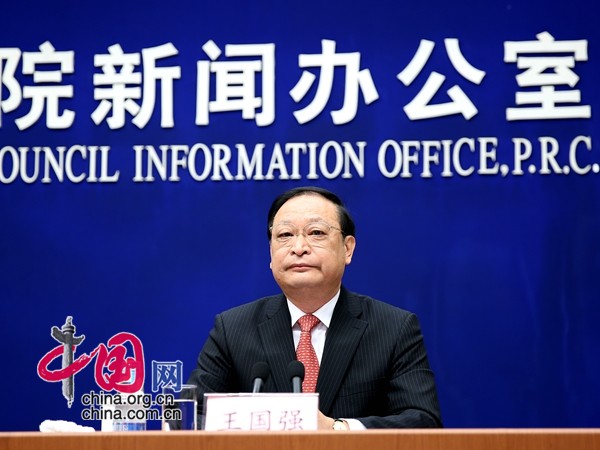
Wang Guoqiang, deputy director of the National Health and Family Planning Commission and director of the state administration of traditional chinese medicine, photo by China Wang Zongchao
The response caused by the price increase of Chinese herbal medicines, especially the rise of some precious and scarce medicinal materials, has aroused everyone’s concern. Some people even say that it is not cheap to eat Chinese medicine now. There is such a view. I think this is also a practical situation. On the one hand, it is very important for us to vigorously promote the standardized cultivation and development of Chinese herbal medicines, so that Chinese herbal medicines can form a scale on the basis of improving quality and ensuring supply. On the other hand, in order to establish a reasonable price adjustment mechanism, some prices should be raised appropriately, but after the output of medicinal materials is large, the prices will also drop. To ensure that the broad masses of the people can use Chinese medicinal materials, including some precious and scarce medicinal materials, we should strengthen scientific research, find substitutes and improve the ability of artificial cultivation in ensuring supply.
In a word, the price reflects an appearance, but we should pay more attention to the problems behind the price, and we are actively coordinating with relevant parties in order to establish a reasonable price formation mechanism. Thank you.
【China Radio International reporter.】We have noticed that folk Chinese medicine has made a very important contribution to maintaining the health of the people, but some of them are difficult to obtain medical licenses because of their academic qualifications and other reasons. In view of this situation, are there any policies or measures to loosen them? Thank you.
【Guoqiang Wang】This is also a problem that has been reflected a lot in the recent period. From the actual work in recent years, the vast majority of folk Chinese medicine practitioners have certain clinical skills and experience, and they have indeed provided necessary services for the medical security of the people at the grassroots level. However, due to the general lack of systematic theoretical education of traditional Chinese medicine in folk Chinese medicine, and the existing evaluation mode and examination method in the examination of doctor qualification system can not well reflect the characteristics of folk Chinese medicine, it is necessary to further improve the examination system that is conducive to evaluating the real ability of folk Chinese medicine practitioners.
Over the years, state administration of traditional chinese medicine and the National Health and Family Planning Commission have adopted various channels to gradually improve the access of folk Chinese medicine practitioners. Mainly from two aspects:
First, the following three measures have been taken to solve the medical qualification of folk Chinese medicine practitioners: First, the "old-fashioned method" has recognized the qualifications of Chinese medicine practitioners (ethnic medicine) who have obtained the qualifications of medical professional and technical titles before the promulgation of the Medical Practitioners Law, and some folk Chinese medicine practitioners have been recognized as doctors. Second, since the end of 2006, we have promulgated the examination method for the qualification of doctors who have learned from traditional medicine and those who do have expertise, that is, Decree No.52 of the Ministry of Health, which stipulates that qualified Chinese medicine practitioners, ethnic medicine practitioners and those who have learned from teachers are encouraged to obtain the qualification to take the qualification examination for doctors. There are also some folk doctors who have obtained medical qualifications in this way. Third, in recent years, we have actively promoted together with the Health and Family Planning Commission, and granted rural doctors the qualifications of doctors with special skills who have mastered the unique methods and are well received by the people, and who have passed the clinical examination, farmers’ evaluation, secondary professional training and examination of traditional Chinese medicine, allowing them to provide services in rural areas with the scope of practice with special skills.
Over the years, through the implementation of this policy and passing the examination in some places, many folk Chinese medicine practitioners have obtained the qualification to practice medicine. As we all know, the Law of People’s Republic of China (PRC) on Traditional Chinese Medicine is now under deliberation to solve the problem of the qualification of private practitioners of traditional Chinese medicine. It is also clearly stipulated in the Law of Traditional Chinese Medicine that, according to the fact that there are training methods such as apprenticeship for Chinese medicine service personnel, on the basis of fully considering the safety of medical risks, those who have learned Chinese medicine by apprenticeship and have expertise in medical practice for many years should consider designing an access system through practical skills and clinical efficacy assessment. Thank you all.
【Guangming Daily reporter】I have a question about talents for Minister Wang. I know that two masters of traditional Chinese medicine have been selected. How is the selection of the third masters of traditional Chinese medicine going? What measures can be taken to inherit their academic ideas? What measures can be taken to avoid the shortage of Chinese medicine talents? Thank you.
【Guoqiang Wang】As we all know, Ministry of Human Resources and Social Security, Health and Family Planning Commission and state administration of traditional chinese medicine have selected 60 masters of traditional Chinese medicine for two sessions, and the selection of 60 masters of traditional Chinese medicine and the influence of the selected masters of traditional Chinese medicine on expanding Chinese medicine have played a very good role in boosting the enthusiasm of Chinese medicine practitioners in learning Chinese medicine, striving for and contributing to Chinese medicine, expanding the influence of society and realizing the praise system of Chinese medicine. To this end, our three departments decided to carry out the selection of the third master of traditional Chinese medicine. At present, the three departments are jointly signing relevant documents, and strive to organize and recommend as soon as possible. The selection of this year’s master of traditional Chinese medicine is aimed at the national health and family planning, Chinese medicine medical treatment, education, scientific research and other institutions, and the number of Chinese medicine personnel engaged in clinical work of Chinese medicine is 30. The recommended candidate should be a provincial-level famous Chinese medicine practitioner, or an old Chinese medicine expert and academic experience inheritance instructor, who has been engaged in Chinese medicine clinical or processing, identification and other clinical use related work for more than 50 years, and has the position of chief physician, chief pharmacist or equivalent professional technology. I hope media friends will actively pay attention to it.
As to what aspects the masters of traditional Chinese medicine have done to support and inherit, there are mainly the following aspects: First, the inheritance studio of masters of traditional Chinese medicine has been established to comprehensively and systematically inherit, study and popularize their academic thoughts, clinical experience and cultivate inheritance talents. The second is to support Chinese medicine masters to participate in the construction of key disciplines of traditional Chinese medicine and serve as academic leaders of the disciplines, so as to better play their role in the inheritance and innovation of academic experience. Third, actively support Chinese medicine masters to participate in the special training programs of Chinese medicine talents, such as inheriting the academic experience of postdoctoral doctors and national old Chinese medicine experts, inheriting and training excellent clinical talents of Chinese medicine, and give full play to the training role of Chinese medicine masters in high-level leading talents of Chinese medicine. Fourth, actively encourage and support the master of traditional Chinese medicine to summarize and spread his academic thoughts and clinical experience by publishing works and participating in academic exchanges. Fifth, increase publicity, give full play to the role of the national commendation system, expand the influence of great Chinese medicine masters, gather together and raise the level of the whole industry. Sixth, the local administrative departments of traditional Chinese medicine and the units where the masters of traditional Chinese medicine work, take targeted and specific measures in terms of funds, projects and personnel to actively do a good job in the academic inheritance of the masters of traditional Chinese medicine and actively create favorable conditions for them to play their roles.
The key to the development of Chinese medicine is talents, and the cultivation of talents of Chinese medicine is different from that of western medicine. Chinese medicine has the characteristics of Chinese medicine. How to establish a lifelong education with higher education of Chinese medicine as the main body, post-graduation education and continuing education as the whole process, and form a training mechanism of talents of Chinese medicine with China characteristics is a very important aspect of our active exploration and reform. Thank you all.
【Rule of law daily reporter】Just now, you mentioned that the Chinese Medicine Law is under review, but many people said that in the published draft Chinese Medicine Law, the industry standards of Chinese medicine and Chinese medicine are still very vague. They are worried that there will be a set of systems and two sets of standards, and that the relevant policies of the Chinese Medicine Administration and the Food and Drug Administration will conflict with each other. What do you think of this?
【Guoqiang Wang】I haven’t got any more information about this information, but the Chinese medicine law must reflect the characteristics of Chinese medicine and contribute to the development of Chinese medicine in the process of deliberation. I believe that through the joint efforts of the National Health and Family Planning Commission, state administration of traditional chinese medicine and the Food and Drug Administration, on the one hand, it will actively promote the implementation of the Chinese medicine law, and on the other hand, how to better establish standards that conform to the characteristics of Chinese medicine and contribute to the development of Chinese medicine in the process of implementation is very important. Indeed, because the characteristics of Chinese medicine are different from those of western medicine institutes, there are differences in theoretical system, medication methods and efficacy evaluation. The standards of Chinese medicine cannot be applied by the standards of western medicine, and it is precisely one aspect that we need to work together to establish quality standards and norms that conform to Chinese medicine, especially Chinese medicine. I believe that with the development of science, with the adjustment of medical model and medical purpose, the principles and functions of traditional Chinese medicine should be gradually revealed and recognized, and it is entirely possible to establish a scientific normative system and evaluation system on this basis. Thank you.
【Economic Daily reporter】Before Director Wang, we were deeply impressed by a sentence. You said that Chinese medicine may be destroyed by Chinese medicine. This is not an alarmist. This sentence also conveys a message, that is to say, the quality and resources of traditional Chinese medicine are now facing difficulties. Do you still insist on this judgment now? In the face of such difficulties, do we have any strategies to solve them? Thank you.
[Wang Guoqiang】Thank you for remembering this sentence I once said. I really didn’t say it alarmist, but I didn’t say it in isolation. I mainly talked about the quality of Chinese medicine and the sustainability of Chinese medicine resources, which will have an impact on the development of Chinese medicine. As we all know, the relationship between Chinese medicine and western medicine is different. Chinese medicine and western medicine are not separated. If a person who knows Chinese medicine does not know Chinese medicine, its properties and compatibility, he is not a good Chinese medicine. Similarly, a person who knows Chinese medicine can’t be a real Chinese medicine practitioner if he doesn’t know Chinese medicine, the principles, methods and prescriptions of Chinese medicine, and why Chinese medicine is processed and mixed in this way. Investigations in various places have found that the quality of medicinal materials planting may be affected by the wild variety, the cultivation of genuine medicinal materials in different places, the use of pesticides and fertilizers in the planting process, and the heavy metals in the soil. What can really be used as medicine is called medicinal materials, which is effective clinically. I have also said that Chinese medicine may be destroyed by Chinese medicine, which is my concern about the quality of Chinese medicine.
In order to solve the practical problems faced by the quality and resources of traditional Chinese medicine, last year, the State issued the Plan for the Protection and Development of Chinese Traditional Medicine (2015-2020), which comprehensively deployed the resource protection and industrial development of Chinese traditional medicine at present and in the future. state administration of traditional chinese medicine will jointly promote the implementation of the plan with the Ministry of Industry and Information Technology, the Food and Drug Administration, the State Forestry Administration and other departments to solve the quality and resources problems of Chinese traditional medicine and ensure the safety of people’s medication.
First, by promoting the fourth general survey of Chinese herbal medicine resources, we should try our best to find out the family background of Chinese herbal medicine resources nationwide, build a dynamic monitoring network of Chinese herbal medicine resources, build a protection system of Chinese herbal medicine seed resources, effectively strengthen the monitoring and protection of Chinese herbal medicine resources in major producing areas, and enhance the ability and level of Chinese herbal medicine resources protection.
Second, we should promote the ecological cultivation of high-quality Chinese herbal medicines, adhere to the guidance of standardization, scale and industrialization of Chinese herbal medicines, build common, large-scale and high-quality Chinese herbal medicine production bases, encourage wild incubation and utilization of mountains, woodlands, wasteland and deserts to build production bases for Chinese herbal medicine cultivation and breeding, ensure the supply of clinical and produced raw materials, adhere to the support of integrated innovation of authentic Chinese herbal medicine production technology, and increase the intensity of Chinese herbal medicine seeds, seedlings and breeding.
Third, we are actively promoting the standardization of Chinese medicine. Focusing on the problems of missing or outdated technical specifications and standards in the whole production process, such as planting Chinese herbal medicines, processing Chinese herbal medicines, producing Chinese herbal pieces, and improving the quality of Chinese patent medicines, we will focus on the optimization of technical specifications in each process of Chinese herbal medicine production, the system construction of Chinese herbal medicine product standards and traceability of Chinese herbal medicine products, improve and revise a number of standards in the whole process of Chinese herbal medicine production, strengthen the methods of supervision, identification and appraisal of Chinese herbal medicines, systematically construct a standardized service support system for Chinese herbal medicines, and promote the Chinese herbal medicine industry to grow, produce and make good medicines. Thank you.
【host】Due to the time, today’s press conference is over. Thanks to Mr. Wang Guoqiang for his very detailed answer. Thank you all.