There will be dusty weather in the north and rainy weather in the south in the coming week.

BEIJING, April 1 (Xinhua) According to the website of the Central Meteorological Observatory, in the coming week, there will be dusty weather in the northern region, sand blowing or floating dust weather in the southern Xinjiang basin and Inner Mongolia, and local sandstorms. On the 2 nd, there will still be sand blowing or floating dust weather in the above areas, and there will be sandstorms in the eastern part of the southern Xinjiang basin. On April 1-2, there was a weak precipitation process from west to east in most parts of the south of the Yangtze River, including heavy rain in southern Guizhou and northwestern Guangxi.
Yesterday, moderate to heavy rain occurred in southwestern Shaanxi, northeastern Sichuan, central and western Guizhou, and northwestern Guangxi, and local heavy rain occurred in Hechi, Guangxi; The rainfall, snow or sleet in northern Xinjiang is 5 ~ 15mm, and the local area is 20 ~ 49mm.
This morning, fog with visibility less than 1 km appeared in Shandong Peninsula, northern Jiangsu, northern Anhui and western Chongqing, and local visibility was less than 200 meters.
Dusty weather in northern China
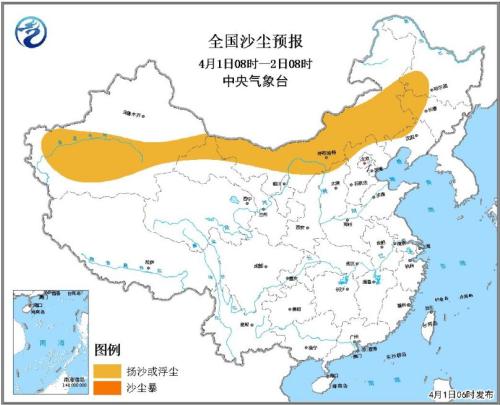
In the coming week, there will be dusty weather in northern China. On April 1, there will be dusty or dusty weather in southern Xinjiang basin, Inner Mongolia, western Gansu, northwestern Shanxi, western Northeast China and northern Hebei, and there will be sandstorms in some places. The Central Meteorological Observatory will continue to issue sandstorm weather forecasts at 06: 00 on April 1 (see Figure 1). On the 2 nd, there will still be sand blowing or floating dust weather in the above areas, and there will be sandstorms in the eastern part of the southern Xinjiang Basin.
In addition, during the day from 1 to 2, there were mild to moderate haze in the central and southern parts of North China, and the local haze was severe; From the night of the 2nd, due to the influence of cold air, the haze weather in the above areas will gradually weaken and dissipate, but there may be floating dust or sand blowing weather in some areas. From the morning of the 1st to the morning, there was heavy fog in northern Jiangsu and northeastern Anhui, and there was strong fog with visibility less than 200 meters in the local area.
Affected by cold air, from April 1 to 3, most areas in Xinjiang, Northwest China, Inner Mongolia, Northeast China, North China and Huanghuai successively cooled down by 6 ~ 10℃, and the local temperature was above 12℃. There were 4 ~ 6 northerly winds in some areas above.
Rainy weather in southern China
From April 1 to 2, there was a weak precipitation process from west to east in most parts of the south of the Yangtze River, among which there was heavy rain in southern Guizhou and northwestern Guangxi. From 3 to 5 days, there will be an obvious precipitation process in the south of Huaihe River, with moderate to heavy rain in Jianghuai, Jianghan, central and northern Jiangnan and local heavy rain.
In addition, on April 1, there was rain and snow in northern Xinjiang, and there was heavy snow in the high-altitude areas along the Tianshan Mountains. The snowfall weakened on the 2 nd.
There will be foggy weather in the Yellow Sea, Bohai Sea and East China Sea.
From the day of April 1st to the night of April 3rd, there will be fog with visibility less than 1km in the Bohai Sea, Bohai Strait, most of the Yellow Sea and the western part of the East China Sea. To this end, the Central Meteorological Observatory continued to issue sea fog forecasts at 06: 00 on April 1.
Specific forecast for the next three days
From 08: 00 on April 1 to 08: 00 on April 2, there were small to medium snow in northern Xinjiang and southern Tibet, and moderate to heavy snow and local snowstorms along Tianshan Mountain in Xinjiang. There are small to moderate rains in the eastern part of Southwest China, Yunnan, central and western Jiangnan, western Jianghuai, Jianghan and other places, and there is heavy rain in southern Guizhou. There are 4 ~ 7 winds in Xinjiang, Inner Mongolia, the eastern part of Northwest China, the western and northern parts of North China. Some areas in western Inner Mongolia, southern Xinjiang basin and northern North China have floating dust or sand blowing weather (see Figure 2).
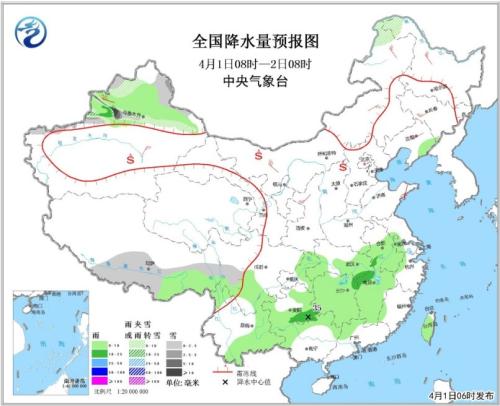
From 08: 00 on April 2 to 08: 00 on April 3, there was light snow or sleet in parts of Xinjiang along the Tianshan Mountains and the southeastern part of the Qinghai-Tibet Plateau; There are small to moderate rains and heavy rains in parts of Ili Valley in Xinjiang, southeastern part of Southwest China, eastern part of Jiangnan and eastern part of Northeast China. There are 4 ~ 7 winds in Xinjiang, Inner Mongolia, western Gansu, Northeast China and North China. There is sand blowing or floating dust in southern Xinjiang basin and other places (see Figure 3).
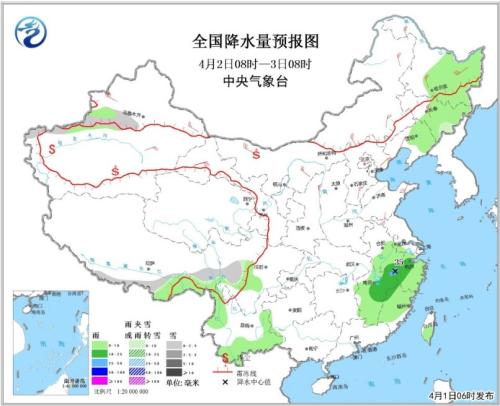
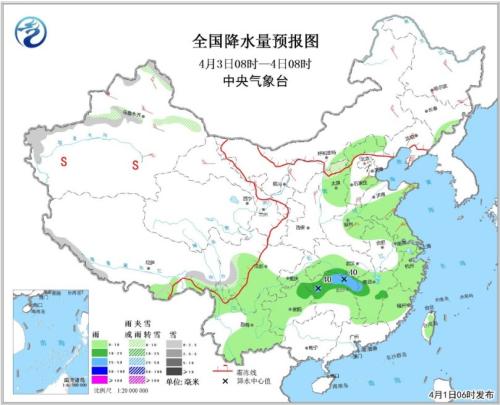
From 08: 00 on April 3 to 08: 00 on April 4, there was light snow or sleet in parts of Xinjiang along the Tianshan Mountains, Altay and southern Qinghai-Tibet Plateau. There are small to moderate rains or showers in the northwestern part of North China, the south-central part of Huanghuai, the eastern part of Jianghuai, the south of the Yangtze River and the southwest, among which there is heavy rain in the northern part of Hunan. There are 4 ~ 6 winds in northern and eastern Xinjiang, Inner Mongolia, Hetao, Northeast China, North China, Huanghuai and eastern Jianghuai. Some areas in southern Xinjiang basin and other places have sand blowing or floating dust weather (see Figure 4).