Free track news! Phase III clinical data of domestic anti-IL-17 monoclonal antibody won BJD.
Autoimmune disease is an inflammatory immune disease characterized by local or systemic abnormal inflammatory immune response, with many kinds of diseases and huge patient population, and has become the second largest disease market after tumor field. No matter at home or abroad, there is still a huge demand for self-immune disease treatment.
According to the statistics of Health and Health Commission, there are about 80 million people with autoimmune diseases in China. However, due to the accessibility of drugs, the level of disease awareness and other reasons, the innovative self-immune drugs have not yet opened up in China-in 2022, the global market size of self-immune drugs is about 131.7 billion US dollars, while the market size of self-immune drugs in China is about 3.6 billion US dollars.
At present, a variety of domestic antibody drugs in the field of self-immunity have intensively entered the commercialization stage. IL-17 is one of the most competitive targets, which has proved its important role in psoriasis, bronchial asthma, chronic obstructive pulmonary disease, rheumatoid arthritis and other diseases.However, the domestic IL-17 monoclonal antibody market is mainly occupied by foreign-funded enterprises, and the domestic IL-17 drugs in the field of psoriasis have not yet ushered in the rush.
Psoriasis, commonly known as "psoriasis", is an immune-mediated, chronic, recurrent, inflammatory and systemic disease, which is induced by both heredity and environment. Its typical clinical manifestation is scaly erythema or plaque. There are nearly 6.5-7 million psoriasis patients in China, of whom about 57% are moderate and severe psoriasis. Psoriasis affects the appearance, which not only brings social obstacles and negative psychological effects to patients’ life, work and marriage, but also complicates arthritis, obesity, hypertension, diabetes, metabolic syndrome, major cardiovascular events and other diseases.
In recent years, with the development of diagnosis of psoriasis and the improvement of public cognition, coupled with the characteristics of psoriasis, such as the tendency to young adults, high recurrence rate and long medication cycle, the clinical end shows a huge demand gap. According to the Research Report on the Investigation Project of Psoriasis Disease Burden and Patients’ Quality of Life in China, nearly 62% of patients in China are dissatisfied with the treatment results of psoriasis. Among them, reducing recurrence has become one of the main demands of psoriasis patients.
Recently, the first NDA anti-IL-17 monoclonal antibody in China-phase III clinical trial data of GR 1501 was published in the authoritative international journal of dermatology, British.
Journal of
Dermatology(BJD) was officially published, which added strong evidence for the excellent efficacy of anti-IL-17 monoclonal antibody in patients with moderate and severe plaque psoriasis.
In the phase III data released this time, celiac monoclonal antibody showed remarkable curative effect on patients with moderate and severe plaque psoriasis in China, reaching the primary endpoint and secondary endpoint, and was well tolerated.
BJD is the official journal of the British Dermatologists Association, which aims to publish the latest research results in the field of dermatology with high quality. As an authoritative journal in the field of dermatology, BJD is widely recognized and respected all over the world (impact factor in 2023: 10.3 points). According to the SCI periodical division of China Academy of Sciences in 2023, BJD is a periodical of medical area 1 and dermatology area 1.
12 weeks PAS1
The response rate of 75 was 90.7%, and the first NDA anti-IL-17 monoclonal antibody in China was effective.
Psoriasis lesion area and severity index (PASI), static clinical assessment of psoriasis (PGA) and lesion body surface area (BSA) are the main indicators for doctors to evaluate and monitor the severity grading of psoriasis. With the influence of psoriasis on patients’ daily life being paid more and more attention, the quality of life index of dermatology (DLQI), a scale tool for evaluating the quality of life, has also been included in the outcome index of patients’ illness.
With the advent of new therapies such as new biological agents and small molecule targeted drugs, the upper limit of psoriasis treatment is constantly refreshing. The newly published "Guidelines for the Diagnosis and Treatment of Psoriasis in China" (2023 edition) specifically defines the purpose of psoriasis treatment for the first time: to achieve complete or almost complete elimination of symptoms and lesions (PASI100 or PASI90). Successful treatment means that PASI is improved by ≥75%, or by 50%~75%, and DLQI score is ≤5. The failure of treatment was that PASI50 or DLQI score > 5.
According to the 2023 edition of the guidelines, the indications officially approved by biological agents in China are moderate and severe plaque psoriasis. When the patient’s condition requires systematic treatment, especially when phototherapy or traditional systematic treatment is ineffective, ineffective or intolerable and the quality of life is obviously affected, biological agents can be considered. It is clearly pointed out that the clinical efficacy of biological agents has been proved to be better than that of traditional treatment, and it is suggested that the complete removal of skin lesions or PASI90 and PGA0/1 should be used as indicators to achieve satisfactory curative effect. By comparison, it can be seen that the therapeutic standard of biological agents is directly related to the highest therapeutic purpose of psoriasis.
The clinical data published this time show that GR1501
The proportion of subjects who reached PASI 75 in the 200mg experimental group was 90.7% (compared with 8.6% in the placebo control group), and the lesions were cleared/almost cleared (PGA
0/1) was 74.4% (compared with 3.6% in placebo control group), which reached the main clinical end point.
The trial also reached the secondary clinical end point: in the experimental group, the response rate of PASI90 was 74.4% at the 12th week, PASI75 was 96.5% at the 52nd week, PASI90 was 84.1%, and PGA0/1 was 83.7%, which maintained a high level of skin lesions improvement and obtained a sustained treatment response.
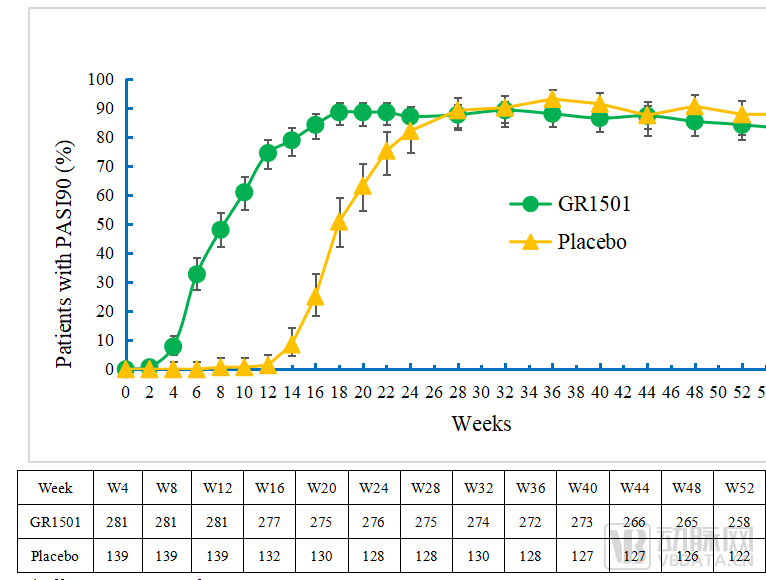
Figure S1
Proportion of subjects who reached PASI90 in 52 weeks (95% CI)
Early onset is quick, long-term control effect is remarkable, and the recurrence rate in 52 weeks is only 0.4%.
A total of 420 patients were randomly assigned to the experimental group (281 patients) or the placebo group (139 patients)-the experimental group was injected once every two weeks for 12 weeks, which was the induction period; After that, it was injected once every 4 weeks until 52 weeks to maintain the treatment period. As a control, patients in the placebo group were injected with placebo in the first 12 weeks, and the drug was induced from 12 weeks to 24 weeks, once every 2 weeks; After that, it was injected every 4 weeks until 52 weeks. After the last injection, all patients were followed up for 12 weeks. Efficacy through PGA
0/1 and PASI 75/90/100.
● Early onset is quick, skin lesions and quality of life are improved rapidly.
The treatment of GR1501 has the characteristics of quick response. At the earliest after the first visit (the second week), the skin lesions improved significantly (reaching PASI)
75)。 From the second week, the PASI score and PGA score in the experimental group were significantly lower than those in the placebo group, and the other indexes also showed statistical differences from the fourth week. The patients in the experimental group reached PASI in the fourth week.
75. The ratio of PASI 90 to PGA 0/1 is significantly higher.
The rapid onset of drugs is very important in improving the treatment satisfaction of patients with psoriasis. Getting the disease under control earlier means that the quality of life can be improved quickly and the patient’s satisfaction can be improved. According to the WHO Global Report on Psoriasis, 94% of patients with psoriasis expect the skin lesions to be cleared quickly, and 76% expect the itching symptoms to be relieved.
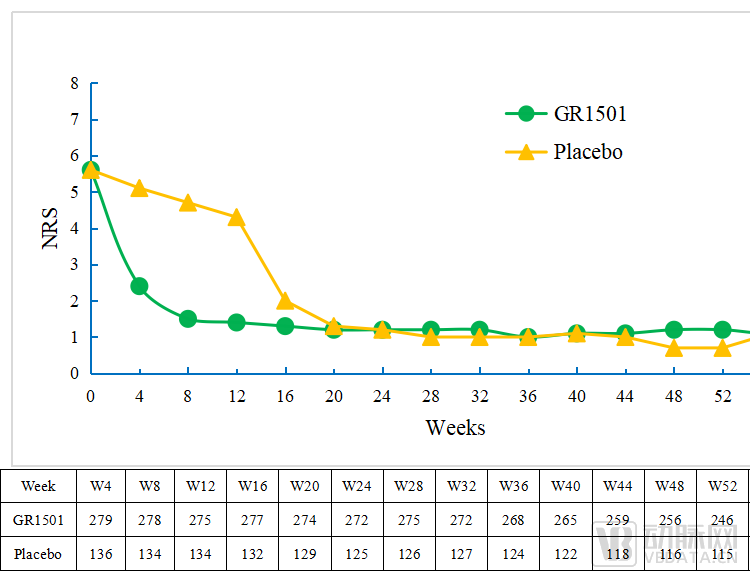
Fig. S5
52-week NRS score scale chart of subjects
According to the NRS score data of pruritus severity, from the first evaluation after administration (the fourth week), the pruritus symptoms in the experimental group were significantly improved compared with those in the placebo control group, and the improvement continued to the follow-up maintenance treatment. From 8 weeks after administration to the end of 60 weeks of follow-up, the NRS score of the median itching severity in the experimental group remained at 1.0, which was more than 4 points higher than the baseline median.
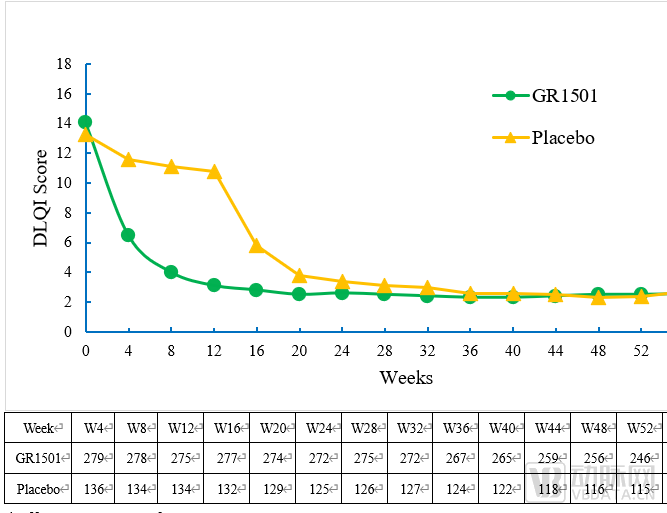
Figure S4
Proportional chart of DLQI score for 52 weeks subjects
Similarly, according to the statistics of dermatology quality of life index (DLQI), from the first evaluation after administration, the quality of life of the experimental group (measured by the baseline change value) was significantly improved compared with that of the placebo control group, and the improvement continued to the follow-up maintenance treatment period. From 12 weeks after administration to the end of 60 weeks of follow-up, the median DLQI score of the experimental group remained at 1.0, which was more than 10 points higher than the baseline.
● Long-term efficacy continued to improve, 52 weeks PASI.
The response rate was 96.5%
The 2023 edition of the guidelines points out that psoriasis is a recurrent disease, and long-term maintenance treatment with biological agents is better than intermittent treatment or on-demand medication to improve the quality of life. Repeated intermittent treatment and long-term treatment will bring great economic and psychological burden to patients. In this clinical data, GR1501 has the characteristics of excellent curative effect improvement, low recurrence rate and no rebound during maintenance treatment.
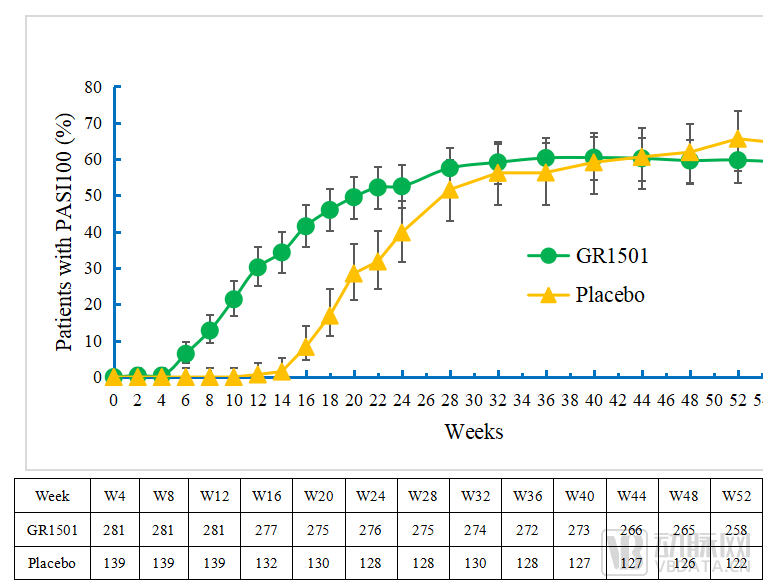
Fig. S2 Proportion of patients who reached PASI100 at 52 weeks (95% CI)
Taking complete remission (PASI 100) as an example, during the induction period (0-12 weeks), PASI in the experimental group
The response rate of 100 showed a rapid climb, and 30.2% of the subjects reached complete remission at the 12th week. After 12 weeks, the experimental group entered the maintenance treatment period, and the frequency of administration decreased from once every 2 weeks to once every 4 weeks, but the curative effect improved until the 52nd week, PASI.
The response rate of 100 showed a continuous improvement.At the 52nd week, 96.5% of the subjects reached PASI75 and 83.7% reached PGA.
0/1, 59.7% of the subjects reached PASI 100.
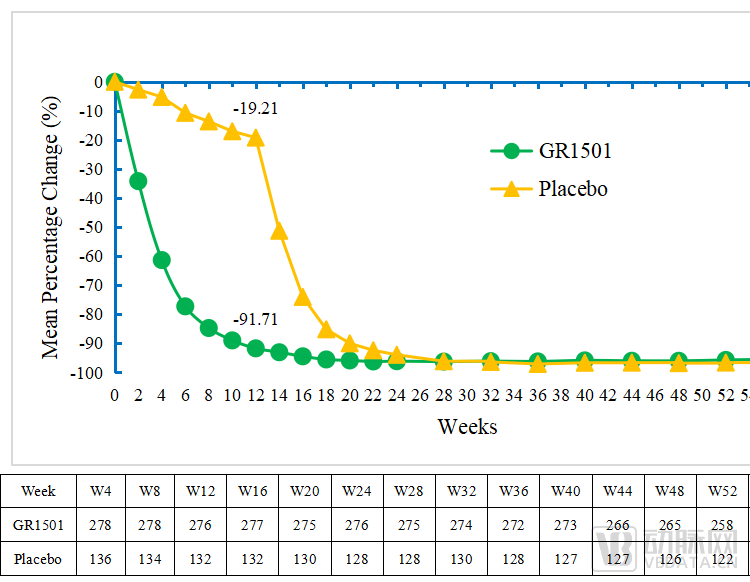
Figure S3
52-week PASI baseline average percentage change
This means that during the maintenance treatment period (that is, from the 12th week to the 52nd week), celiac monoclonal antibody is 200mg.
Q4W maintenance dose can make most subjects maintain a high level of skin lesions improvement and obtain a sustained treatment response.
It is worth noting that the experiment set up a redistribution mechanism, and the patients in the placebo group were redistributed to receive GR1501 active treatment after 12 weeks, and the response rate increased rapidly. Since then, from the 24th week, the curative effect response is similar to that of the original experimental group, and lasts until the 52nd week.
In addition, in PASI
On the index of 100, the efficacy maintenance response of celiac monoclonal antibody at the 52nd and 60th weeks showed potential advantages. During the follow-up period of drug withdrawal (12 weeks after the last administration), the subjects can still maintain a good disease control rate, showing a good advantage in maintaining curative effect.
● After 52 weeks, the recurrence rate was only 0.4%, with no rebound and good tolerance.
The recurrence rate (the maximum improvement is reduced by more than 50% compared with the baseline) is low. During the long-term medication period (52 weeks), one case recurred in the experimental group, accounting for 0.4%. It is considered that the natural course of psoriasis leads to recurrence, and the non-withdrawal reaction leads to recurrence. After 52 weeks of follow-up, there were no rebound cases, which showed good disease control and safety advantages of drug withdrawal.
In addition, GR1501 recombinant human IgG4 monoclonal antibody has low immunogenicity, and the risk of drug-resistant antibodies and allergic reactions is relatively low. ADCC and CDC mediated by IgG4 type 4 are weaker, which can reduce the risk of adverse reactions.
This clinical trial also showed good safety and tolerance. No common adverse reactions (≥10%) were observed in the experiment, and no hepatitis B tuberculosis was reactivated. The most commonly reported adverse drug reactions (ADR) are upper respiratory tract infection and injection site reaction, which are similar to drugs with the same target.
Domestic IL-17 monoclonal antibody will be listed soon, and there is more imagination in the psoriasis market.
In March 2019, Novartis IL-17 monoclonal antibody Scochizumab (Keshanting) was approved for listing in China, and entered the medical insurance at a reduced price in 2020, which quickly opened the domestic psoriasis biological agent market and created a high variety certainty and recognition. Novartis’ 2023 annual report shows that the annual revenue of Skochiyou monoclonal antibody reached $4.98 billion. Last October, FDA approved a new dosage form for intravenous injection, which was used to treat adult psoriatic arthritis, ankylosing spondylitis and non-radiological axial spinal arthritis.
Behind the sales peak of nearly $5 billion is the psoriasis drug market with low penetration rate of biological agents. According to Jost Sullivan’s data, in 2021, the market size of psoriasis drugs in China was US$ 1.1 billion, and it is expected to grow to US$ 9.5 billion in 2030, with a compound annual growth rate of 27.1%. Among them, the market share of biopharmaceuticals is 29.3% in 2021, and it is estimated that it will rise to 50.3% in 2030, with broad market prospects.
At the same time, the competition of domestic IL-17 drugs has also begun. Zhixiang Jintai Sailiqi monoclonal antibody and Hengrui Funazizumab, which published positive clinical data, led the domestic track, and their listing applications have been accepted by the Food and Drug Administration. In addition, Sansheng Guojian and Kangfang Bio have entered the phase III clinical stage, and Junshi Bio, Huaaotai Bio, Chuangxiang Bio and Quanxin Bio also have pipeline layout.
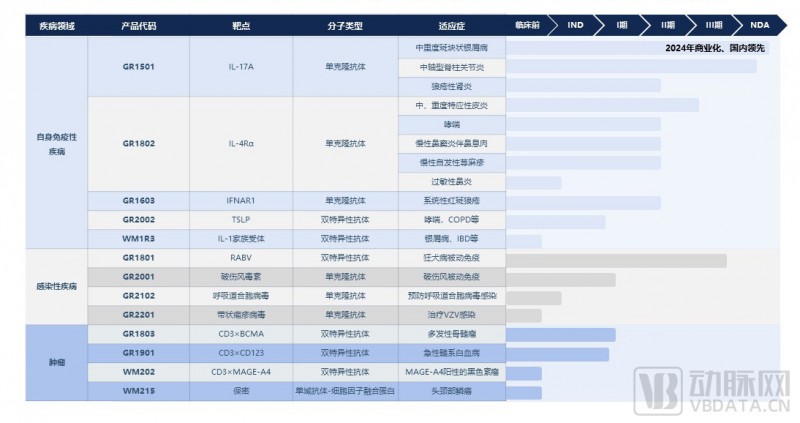
Product pipeline diagram of Zhixiang Jintai under research
Zhixiang Jintai announced that the application for listing of new drugs for moderate and severe plaque psoriasis indications of celiac monoclonal antibody was accepted in March 2023; The application for marketing new drugs with indications of radiologically positive axial spinal arthritis (ankylosing spondylitis) was accepted in January 2024. At present, both indications are in the evaluation stage of new drug listing.
With the listing of domestic IL17A monoclonal antibody, the psoriasis biological agent market will usher in a new climax, and it will also introduce a new development cycle into the domestic self-exemption field that is still in the blue ocean. More domestic imagination about IL-17 monoclonal antibody is coming soon.