Towards "Common Progress": Review and Prospect of China’s Import Trade
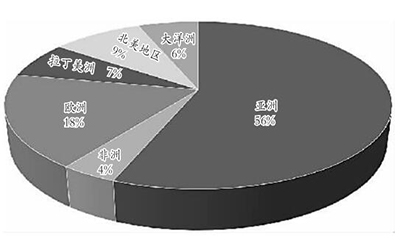
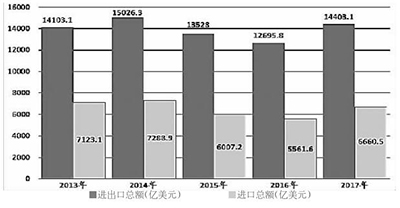
editorial comment/note
The first China International Import Expo (hereinafter referred to as "China International Import Expo(CIIE)") being held in Shanghai has attracted more than 3,600 enterprises from 172 countries, regions and international organizations around the world. In addition to regular projects such as commodity exhibitions and business contracts, the first Hongqiao International Economic and Trade Forum was held at the same time to discuss key issues of global economic and trade development around the theme of "stimulating new vitality of global trade and creating a new pattern of openness and win-win".
As the Supreme Leader General Secretary said in his keynote speech at the opening ceremony, hosting the China International Import Expo(CIIE) is a major decision made by China with a view to promoting a new round of high-level opening-up and a major measure taken by China to open its market to the world. How to fully understand the development opportunities that China International Import Expo(CIIE) has brought to China and the world, conform to the historical trend of mighty progress, promote economic linkage and integration among countries, and jointly build an open world economy? In this issue, think tank experts are invited to make in-depth analysis and suggestions.
Historical dimension: In the 40 years of reform and opening up, China’s purchasing power has greatly increased and its import trade has developed rapidly.
Over the past 40 years of reform and opening up, China has embarked on a world-renowned road of economic growth, and its economic structure and industrial structure have also evolved, and its position in the global value chain has steadily improved. Among them, the rapid development of China’s foreign trade has not only promoted the economic development of China, but also promoted the world economy to a certain extent, becoming one of the "engines" of world economic growth.
In the initial stage of economic development, the contribution of exports to the economy has received more attention; At the present stage, the importance of import is clearly highlighted. The strong growth of China’s demand reflects the increasing trend of China’s purchasing power, and at the same time, it also brings a huge expanding market to the world.
Judging from the changes in economic data, since 1978, China has continuously promoted the structural adjustment of foreign trade and the structural reform of the supply side by expanding the scale and improving the quality of imports, and achieved great results. At present, China has become the largest consumer market country in the world. China’s imports of goods accounted for 0.8% of the world’s total in 1978, ranking 29th, and rose to 9.7%, ranking 2nd in 2017. In the same period, the import scale jumped from $10.9 billion in 1978 to $1,841 billion in 2017, an increase of 169 times.
From the evolution of social life, Chinese people’s consumption concepts and behaviors have undergone major changes, and they are gradually moving towards rational consumption, personalized consumption and environment-friendly consumption. People pay more and more attention to product quality and service, and pursue consumption that conforms to their own lifestyles. In this process, service trade is becoming the new engine of China’s foreign trade development and deepening opening up. 2013 — In 2016, the total import and export of services increased by 8.1% annually. In 2017, the added value of service industry was 42,703.2 billion yuan, accounting for 51.6% of the national GDP. It is estimated that in the next five years, service consumption will reach about 50% of China’s new consumption. Among them, the emerging service trade represented by digital trade has grown rapidly, which has optimized the trade structure and improved the quality of development, making China at the world leading level in some fields.
From the relationship between China and the world, before the reform and opening up, China failed to establish close economic, cultural and social ties with the outside world, and the intersection of interests was very limited. After the reform and opening up, China has gradually integrated into the global market and grown into the fastest growing and most potential consumer market in the world. In the new era, "buyer China" has become an important force in international trade. 2013 — In 2016, according to the constant dollar price, the average annual contribution rate of China’s final consumption to the world consumption growth was 23.4%, while the average annual contribution rates of the United States, the euro zone and Japan were 23%, 7.9% and 2.1% respectively. It is estimated that by 2020, the amount of outbound M&A transactions in China will reach US$ 300 billion, and China will remain the active protagonist of global cross-border M&A for a long time to come. In the past, China mainly relied on the rapid development of demographic dividend, but in the future, it will rely more on capital dividend and technology dividend, which will play an important role in promoting the growth of world trade.
World dimension: "One Belt, One Road" has opened the door wider and wider.
China’s open door will not be closed, but will only get wider and wider. In 2013, General Secretary of the Supreme Leader put forward the Belt and Road Initiative, and the level of China’s opening up to the outside world was raised to a new height. Focusing on policy communication, facility connectivity, smooth trade, financial intermediation and popular support, China has actively expanded its strategic cooperation with countries along the Belt and Road, providing a platform for countries and regions along the Belt and Road to participate in the world economic value circulation on an equal footing, which has greatly promoted trade liberalization and investment facilitation. If we say that the improvement of China’s foreign trade level from "grain for cars" to "car for cars" reflects the upgrading of China’s "market height", then in the five years since the Belt and Road construction, China’s market has been interconnected and integrated with more and more regions in the world, which reflects the expansion of China’s "market breadth".
"One Belt, One Road" advocates a new road of economic globalization, bringing a large interconnected market with fairer standards and better structure to the world. In 2017, the total import volume of China reached US$ 1,841 billion, while the average annual import volume of China and countries along the Belt and Road exceeded US$ 650 billion, accounting for about one third of the total annual import volume. China is an important partner of major countries along the Belt and Road Initiative. Among the top 10 Belt and Road countries in foreign trade volume, China is the first export destination of South Korea, Singapore, Russia and Thailand, the second export destination of Malaysia and other countries, and the third export destination of India. In 2017, the top 10 countries in China’s import volume from countries along the Belt and Road were South Korea, Malaysia, Vietnam, Thailand, Russia, Singapore, Saudi Arabia, Indonesia, South Africa and the Philippines. The imports of the above ten countries accounted for 75.5% of China’s total imports from countries along the Belt and Road.
Future dimension: Take China International Import Expo(CIIE) as a new platform to promote the construction of a community of human destiny.
On November 5, 2018, the first China International Import Expo opened in Shanghai. At the opening ceremony, General Secretary of the Supreme Leader issued a firm declaration of "Building an Innovative and Inclusive Open World Economy", which was inspiring. Looking forward to the future, how should China further enhance the level of import trade and make due contributions to the world economy?
Maintain the high-quality development of the domestic economy and ensure the sustained and stable domestic purchasing power.In the process of China’s economy changing from high-speed growth to high-quality development, we should grasp the following key points to enhance China’s purchasing power: First, we should pay attention to the consumption upgrading needs of major consumer groups. At present, there are 400 million middle-income groups in China. At present, the domestic consumer goods production and consumption service environment can not meet their needs. In the future, China’s imports should be constantly innovated and iterated in time to adapt to and lead the consumption needs of major domestic consumer groups. The second is to pay attention to the demand for emerging consumer content. In the information age, emerging consumption content, such as online consumption, intelligent consumption and shared consumption, is becoming increasingly popular. In the future, the scale of cross-border flow of emerging consumption will further increase, the proportion of commodity consumption will decrease, and the proportion of service consumption will further increase.
Reasonably set the level of import tariffs and continue to expand the scale of imports.Imported goods and services are regulated by the tariff level. Appropriate use of import tariffs as an "economic lever" can effectively protect domestic related industries and regulate domestic economic development. Since China’s entry into WTO, China’s trade-weighted tariff level has been decreasing. In the future, reducing import tariffs will also become an important policy tool for China government to promote domestic production development and meet social consumption. The setting of import tariffs has a "double-edged sword" effect. On the premise of promoting trade facilitation, the setting of import tariffs can also be used as an important policy tool to counter trade wars and be used reasonably and effectively.
Actively participate in the economic development of trading partners and promote the upgrading of industries and products.Taking the "Belt and Road" construction as an example, China should further promote the production development of countries along the route by importing goods and services; Through the production and processing in China, the level of imported goods and services will be improved, and then the position of the country of origin in the global value chain will be improved. At the same time, China should sum up the existing experience and mode of economic and trade cooperation zone construction in time, and continue to build economic and trade cooperation zones.
Promote the construction of trade facilitation system and promote the construction of a more open and free global trading system.China should speed up the expansion of the signing scope of free trade agreements and gradually form a free trade network with more scale effect and influence.
Continue to actively implement the contents of the Trade Facilitation Agreement.According to the statistics of the World Economic Forum, if the customs clearance efficiency between China and the main trading partners in Central Asia can be improved by 25% on the existing basis, the scale of regional trade will increase by 35 billion US dollars. Therefore, jointly improving the level of trade facilitation will be beneficial to the trade exchanges of cooperative countries and effectively improve the level of global trade facilitation.
At present, the world economy is slowly recovering. No matter in terms of growth speed or scale, China still plays the role of the locomotive of the world economy, bringing economic development, industrial upgrading, income promotion, employment opportunities and many other dividends to developing countries. China will keep in mind and follow the law of "communication leads to common progress, while closure leads to retreat", and make China contributions to promoting global economic and trade development and building a community of human destiny by promoting import trade and further opening up.
(Author: Chongyang Financial Research Institute, Renmin University of China)